x

Hand-painted oil on canvas in your size and frame, made to order by our artists.





























Pick from our preset sizes that match the artwork's original proportions.

You may enter your own dimensions to fit a specific frame or space. If your selected size does not match the original image's proportions, we will either crop the artwork or extend the painting with additional hand-painted elements. A digital mockup will be sent for your approval before production begins.
Please note that the on-screen preview does not reflect the actual cropping or extension. Only the mockup will accurately show the final composition.
While custom sizes are available, we recommend selecting a dimension from the predefined list to preserve the original proportions.
Worldwide Delivery () in 3/4 weeks instead of standard 5 weeks. (18 July). No compromise on quality.


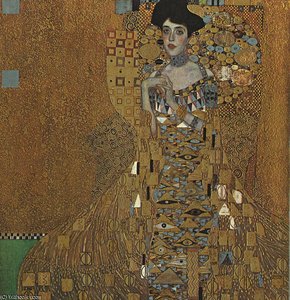
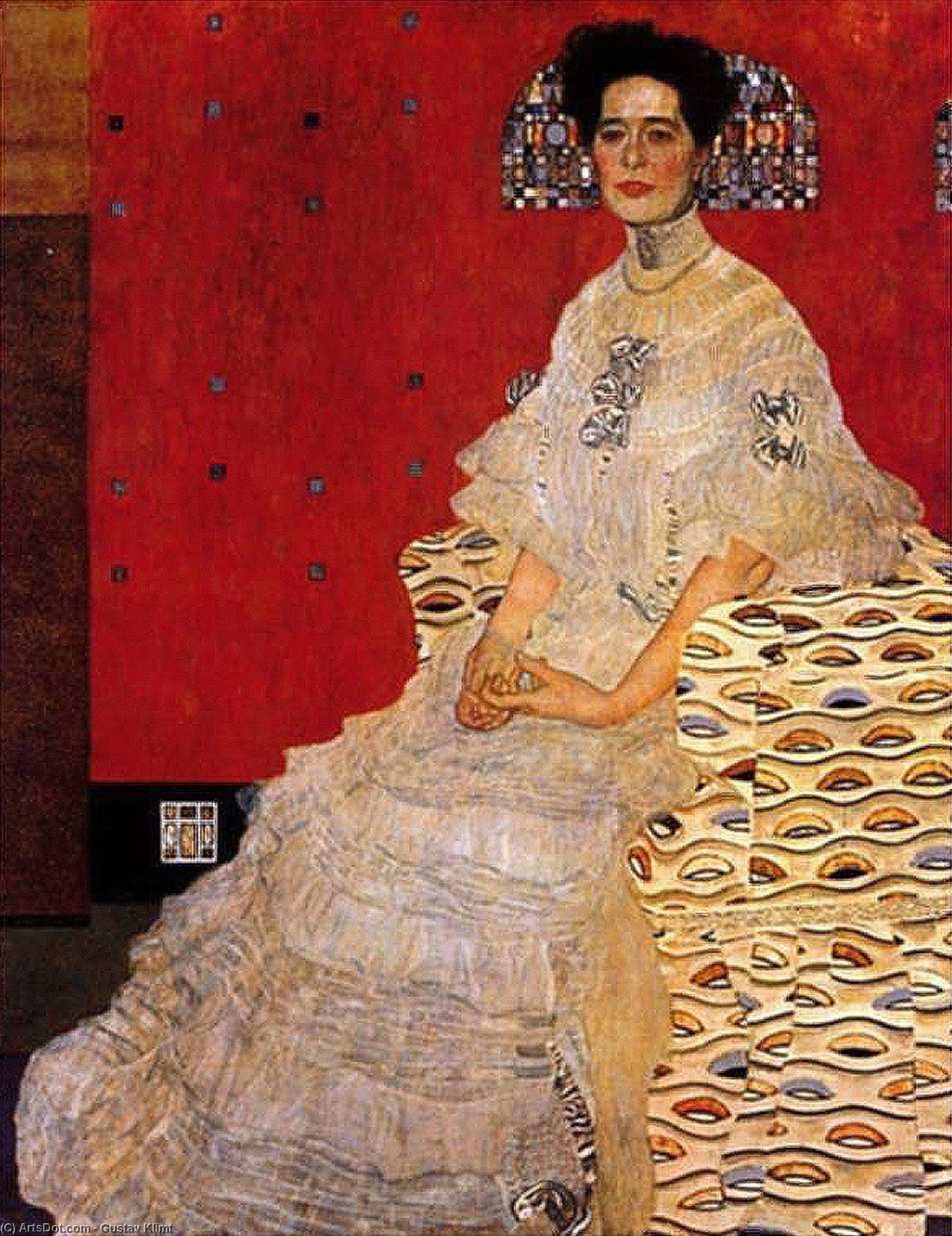
Bildnis Fritza Riedler, 1906 - Österreichische Galerie, Vienna
Reproduction Size
Painted in 1906, this captivating portrait exemplifies Gustav Klimt's signature style during his celebrated Golden Phase. More than a mere likeness, it offers a window into the opulent world of early 20th-century Viennese society and embodies the artistic ideals of the Vienna Secession movement.
This artwork is deeply rooted in Art Nouveau, characterized by its organic lines, flowing forms, and emphasis on decorative beauty. As a leading figure in the Vienna Secession – a group of artists who rebelled against the conservative artistic establishment – Klimt pushed boundaries with his innovative approach to portraiture. He rejected traditional realism in favor of stylized representation, incorporating rich ornamentation and symbolic elements.
The subject, Fritza Riedler, a prominent figure within Viennese high society, is presented with an air of both sophistication and enigmatic distance. Klimt positions her centrally within the frame, facing the viewer directly. This frontal composition lends formality but doesn’t invite intimacy; instead, it creates a sense of observation, almost as if we are viewing a carefully constructed icon rather than a candid portrait.
Klimt masterfully employs oil paint and, crucially, gold leaf (or pigment) to achieve the painting’s shimmering effect. The meticulous layering of these materials creates a tactile richness and elevates the work beyond simple representation. Notice how the gold isn't merely decorative; it integrates seamlessly into the patterns and forms, unifying the composition and imbuing it with a sense of luxuriousness.
The painting is rich in symbolic detail. The repeating eye-like motifs adorning the chair are particularly striking – they can be interpreted as representing surveillance, judgment, or perhaps an awareness of being observed. The woman’s aloof expression and the flattened perspective contribute to a feeling of psychological complexity and restrained emotion. Despite the lavish surroundings, there's an underlying sense of isolation and melancholy.
A striking color palette dominates: deep reds, shimmering golds, creamy whites, and dark browns create a dramatic contrast. The vibrant red background serves to accentuate the figure, while the gold highlights add a touch of ethereal beauty. This combination evokes both warmth and a subtle sense of unease, reflecting the complexities of the subject’s inner world.
This portrait is more than just an aesthetically pleasing artwork; it's a cultural artifact that encapsulates a pivotal moment in art history. A reproduction of this piece would serve as a stunning focal point in any interior, adding a touch of Viennese elegance and intellectual depth to your space. It’s ideal for collectors who appreciate Klimt’s unique vision and the enduring legacy of the Art Nouveau movement.

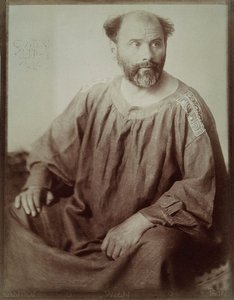
1862 - 1918 , Austria
Delve into the world of Gustav Klimt with our top 25 masterpieces! Explore his iconic paintings – 'The Kiss,' 'Portrait of Adele,' and more. Discover museum-quality reproductions & curated decor ideas. Explore the full collection online at Most-Famous-Paintings.com.

Journey into Art Nouveau's golden age! Explore 10 masterpieces by Klimt, Mucha & more. Discover captivating stories behind iconic paintings, floral motifs & flowing lines. Find museum-quality art reproductions for your home at .

Explore 10 iconic portrait paintings – from Mona Lisa to Van Gogh’s self-portraits. Discover the stories behind these masterpieces, artistic techniques & find museum-quality art reproductions for your home at Most-Famous-Paintings.com.

Journey through 25 iconic artworks at the Metropolitan Museum of Art! Explore Van Gogh, Monet, Rembrandt & more. Discover art history, inspiring stories, and museum-quality reproductions to elevate your home decor. Explore the full collection on Most-Famous-Paintings.com.

Discover the revolutionary Vienna Secession art movement! Explore Klimt, Olbrich & more. Learn about its history, characteristics & lasting influence on modern art. High-quality reproductions available.


Stay updated with the latest art news, exclusive offers, and decoration ideas.
Tell us about your project and our art experts will provide you with 3 personalized art suggestions.
Let Us Curate 3 Options Just for You - Free!


 Buy print
 Send
Send Share
Share
 Details

 Download
 Similars
 X-Ray
X-Ray Diaporama

 Read More







 Glass option is only available in size under 110 CM