x


Hand-painted oil on canvas in your size and frame, made to order by our artists.





























Pick from our preset sizes that match the artwork's original proportions.

You may enter your own dimensions to fit a specific frame or space. If your selected size does not match the original image's proportions, we will either crop the artwork or extend the painting with additional hand-painted elements. A digital mockup will be sent for your approval before production begins.
Please note that the on-screen preview does not reflect the actual cropping or extension. Only the mockup will accurately show the final composition.
While custom sizes are available, we recommend selecting a dimension from the predefined list to preserve the original proportions.
Worldwide Delivery () in 3/4 weeks instead of standard 5 weeks. (18 July). No compromise on quality.


The Snail (L'escargot), eller
Reproduction Size
Henri Matisse's *The Snail* (L'escargot), created in 1953, is not a depiction of the mollusk itself, but rather a monumental exploration of color, shape, and the very essence of composition. This late-career masterpiece, measuring an impressive 287 x 288 cm, stands as a pivotal work demonstrating Matisse’s innovative approach to artmaking – specifically his groundbreaking use of *papier découpé* (cut paper).
Rejecting traditional painting methods in favor of this new technique, Matisse meticulously cut forms from vividly colored papers and arranged them onto a ground. This wasn’t simply collage; it was a deliberate process of reduction and distillation, stripping imagery down to its most essential elements. The resulting composition is dynamic and seemingly spontaneous, yet carefully balanced. Bold, saturated hues – blues, greens, yellows, and reds – interlock and overlap, creating a sense of movement and energy. The swirling arrangement evokes the spiral form of a snail shell, but remains abstract enough to allow for multiple interpretations. This work exemplifies Matisse’s Fauvist roots, though evolved into something entirely new and personal.
Created towards the end of his life when illness limited his ability to paint conventionally, *The Snail* represents a remarkable artistic rebirth for Matisse. Confined to a wheelchair, he found liberation in this method, describing it as “drawing with scissors.” This period saw him create large-scale ‘cut-outs’ that were often conceived as designs for architectural spaces – stained glass windows or murals. *The Snail*, originally intended as a design for the dining room of the James Thrall Soby residence in New York, demonstrates this ambition to integrate art into everyday life. It reflects a shift away from representational painting towards pure visual expression and decorative arts.
While Matisse resisted imposing specific meanings onto his work, *The Snail* invites contemplation. The spiral form can be seen as representing growth, evolution, or the cyclical nature of life. The vibrant colors evoke joy, vitality, and a celebration of sensory experience. Some scholars suggest the composition reflects Matisse’s own internal world – a swirling vortex of emotions and memories. Ultimately, the beauty of ‘The Snail’ lies in its ambiguity; it is open to individual interpretation and emotional resonance.
*The Snail* possesses an undeniable visual power. Its scale is immersive, drawing the viewer into a world of pure color and form. The work evokes feelings of optimism, energy, and playful exuberance. It’s a testament to Matisse's belief in the ability of art to uplift and inspire. Its influence can be seen in countless contemporary artists who continue to explore abstraction, color theory, and the possibilities of collage.
Owning a high-quality reproduction of *The Snail* allows you to experience the joy and energy of this iconic work firsthand, bringing a touch of modern artistry into your world.


1869 - 1954 , France
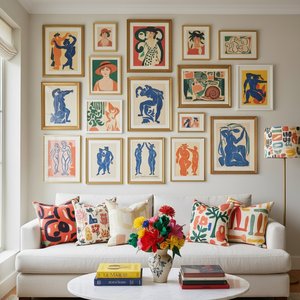
Journey through Henri Matisse's 25 most iconic paintings! Explore Fauvism, vibrant colors & the stories behind masterpieces like 'The Dance'. Find museum-quality art reproductions and curated decor ideas to elevate your space. Discover all masterpieces on Most-Famous-Paintings.com.

Explore 10 Fauvist masterpieces by Matisse, Derain & Vlaminck that ignited Modern Art! Discover bold colors, expressionist landscapes & the history of this revolutionary movement. Find museum-quality prints at Most-Famous-Paintings.com.
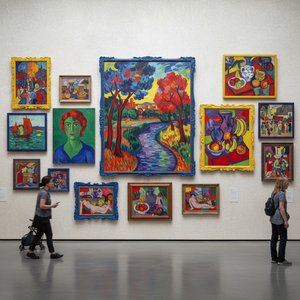
Explore the revolutionary world of Fauvism! Discover 10 masterpieces by Matisse, Derain & Vlaminck that defined this bold art movement. Find museum-quality reproductions and vibrant canvas prints to elevate your home decor at .
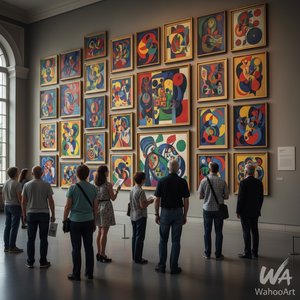
Journey through Wassily Kandinsky's 25 most iconic abstract paintings. Explore his revolutionary use of color, form & spiritual expressionism. Find museum-quality Kandinsky reproductions and elevate your home decor with Most-Famous-Paintings.com. Discover all masterpieces on Most-Famous-Paintings.com!

Journey through 25 iconic artworks at the Metropolitan Museum of Art! Explore Van Gogh, Monet, Rembrandt & more. Discover art history, inspiring stories, and museum-quality reproductions to elevate your home decor. Explore the full collection on Most-Famous-Paintings.com.


Stay updated with the latest art news, exclusive offers, and decoration ideas.
Tell us about your project and our art experts will provide you with 3 personalized art suggestions.
Let Us Curate 3 Options Just for You - Free!


 Buy print
 Send
Send Share
Share
 Details

 Download
 Similars
 X-Ray
X-Ray Diaporama


 Read More







 Glass option is only available in size under 110 CM