Wishlist Shopping Cart Cart
Buy print Buy printBuy Image Buy Image SendSend
DetailsDetails Add to favorites Add to favorites DownloadDownload SimilarsSimilars X-RayX-Ray DiaporamaDiaporama

untitled (5315)

Admire Jan van Eyck's masterpiece – Untitled (5315), capturing the vibrant energy of a medieval cityscape with a monumental cathedral and intricate detail. Explore Early Netherlandish art!

Jan van Eyck (c. 1390-1441): Pioneer of Early Netherlandish painting, celebrated for his mastery of oil paint & groundbreaking realism. Explore the Ghent Altarpiece & Arnolfini Portrait!

Hand Made Oil Reproduction

Hand-painted oil on canvas in your size and frame, made to order by our artists.

P118B $10
P118H $10
P118W $10
P438Z $10
P508JH $12
P508YH $12
P805H $10
P805Z $10
P919BZ $10
P919G $10
P919XJ $10
P959ZH $10
P968JZ $12
W106C $8
W218G $10
W218JH $8
W218Y $10
W307PJ $10
W316G $10
W316PJ $8
W316Y $10
W398PJ $8
W4111J $10
W500HY $15
W500JH $15
W692G $12
W849H $8
W940BG $15
W953PJ $8

Standard
custom
CM
INCH

Pick from our preset sizes that match the artwork's original proportions.

width
height

You may enter your own dimensions to fit a specific frame or space. If your selected size does not match the original image's proportions, we will either crop the artwork or extend the painting with additional hand-painted elements. A digital mockup will be sent for your approval before production begins.
Please note that the on-screen preview does not reflect the actual cropping or extension. Only the mockup will accurately show the final composition.
While custom sizes are available, we recommend selecting a dimension from the predefined list to preserve the original proportions.

Examples of what can be changed: Replace face with customer photo; Add pet (e.g., replace cat with dog); Include hidden message in background; Change background landscape or elements.
After order, Most-Famous-Paintings.com team will email client for instructions and provide a mockup preview

Worldwide Delivery () in 3/4 weeks instead of standard 5 weeks. (18 July). No compromise on quality.

why_choose_icon
Free Worldwide Express Shipping
why_choose_icon
High-Quality Linen Canvas
why_choose_icon
Full Shipping Insurance
why_choose_icon
Customs Tax Refund Guarantee
why_choose_icon
True Color Matching Guarantee
why_choose_icon
60-Day Return Policy (Defects Only)
why_choose_icon
100% Money-Back Guarantee
why_choose_icon
Bulk Discount Offer

Total Price

-

reproduction

untitled (5315)

Reproduction Medium

Reproduction Size

-

Total Price

-

Quick Facts

  • Notable elements or techniques: Revolutionary oil painting
  • Artistic style: Realism
  • Location: Private Collection
  • Artist: Jan van Eyck
  • Influences: Medieval Art
  • Medium: Oil paint

Art Quiz

There is only one correct answer for each question.

Question 1:
What is Jan van Eyck primarily known for?
Question 2:
The image description mentions a prominent building in the cityscape. What is this likely to represent?
Question 3:
According to the biographical information, Jan van Eyck was described as possessing qualities that were important for his success.
Question 4:
The image description highlights the lively atmosphere of the city depicted. What artistic technique contributed to capturing this feeling?
Question 5:
Based on the additional research links, where can you find more information about Jan van Eyck?

Artwork Description

A Window into Medieval Faith: Examining Jan van Eyck’s Untitled (5315)

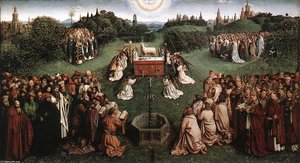
Jan van Eyck's "Untitled (5315)" stands as a cornerstone of Early Netherlandish painting, embodying the artistic fervor and intellectual curiosity that characterized the burgeoning Renaissance in Northern Europe. Captured with meticulous detail—likely executed around 1430—this cityscape scene transcends mere representation; it’s an invitation into a world steeped in symbolism and illuminated by groundbreaking advancements in pigment technology. The photograph showcases a serene depiction of a townscape, dominated by a monumental church or cathedral whose spire pierces the hazy sky. Two smaller buildings flank the central edifice, anchoring the composition within a believable urban setting. Scattered figures populate the scene—likely portraying everyday life—adding dynamism to the stillness of the painted vista.
  • Style: The painting exemplifies the meticulous realism championed by Van Eyck and his contemporaries, marking a decisive break from preceding Gothic traditions. This style prioritizes precise observation and accurate depiction of textures and forms, reflecting a humanist fascination with understanding the natural world.
  • Technique: What distinguishes “Untitled (5315)” is its masterful application of oil paint—a technique pioneered by Van Eyck—which allowed for unprecedented luminosity and depth compared to tempera paints. Layers upon layers of translucent glaze create an ethereal glow, capturing subtle nuances of color and light that would have been impossible with traditional mediums.
  • Historical Context: Created during the Burgundian Netherlands’ golden age, this artwork reflects the intellectual climate fostered by humanist scholars like Erasmus and Pico della Mirandola. The church's prominent position symbolizes faith and spiritual aspiration—a core theme prevalent in medieval art and thought.
Symbolism: Beyond its visual splendor, “Untitled (5315)” is laden with symbolic significance. The cross atop the cathedral spire serves as a potent emblem of Christian piety, representing divine grace and redemption. Furthermore, the architectural elements—the towering walls and arched windows—suggest stability and permanence, mirroring the enduring values upheld by the medieval Church. The figures within the cityscape are not merely incidental; they embody humanity’s connection to God and contribute to the overall narrative of faith and contemplation.

The Revolution of Light: Van Eyck's Pioneering Use of Oil Paint

Jan van Eyck’s embrace of oil paint represents a pivotal moment in artistic history. Prior to this innovation, artists relied primarily on tempera—pigments bound with egg yolk—which produced muted colors and lacked the brilliance achievable with oil mediums. Van Eyck's breakthrough dramatically expanded the palette available to painters, allowing for richer hues and greater tonal range. Crucially, oil paint enabled a technique known as glazing—applying thin layers of translucent pigment over dried underlayers—resulting in unparalleled luminosity and depth. This revolutionary approach profoundly influenced subsequent generations of artists and cemented Van Eyck’s legacy as one of the most influential figures in European art.

Emotional Resonance: Capturing the Spirit of Medieval Urban Life

“Untitled (5315)” transcends mere visual representation; it evokes a palpable sense of tranquility and contemplation. The muted palette—dominated by earthy tones—contrasts subtly with the ethereal glow emanating from the church spire, creating an atmosphere that invites viewers to reflect on faith and spirituality. The depiction of everyday life—the figures traversing the streets—grounds the scene in human experience, reminding us of the interconnectedness between humanity and divine presence. Ultimately, this artwork speaks to a deeper yearning for beauty, harmony, and spiritual understanding—qualities that continue to resonate with audiences today.

Artist Biography

A Life Illuminated: The World of Jan van Eyck

Jan van Eyck, a name synonymous with the dawn of Early Netherlandish painting and the revolutionary use of oil paint, remains an enigmatic figure despite his monumental impact on art history. Born around 1390 in Maastricht, nestled within what is now the Netherlands, Van Eyck emerged from a family steeped in artistic tradition—his elder brother Hubert also practiced the painter’s craft, though details surrounding his work remain elusive. While precise biographical details are scarce, particularly concerning his formative years, it's clear that Jan possessed an innate talent and quickly ascended to prominence within the artistic circles of his time. By 1422, he had already established a workshop in The Hague, employing assistants and undertaking commissions that signaled his mastery of the craft. This early success wasn’t solely based on artistic skill; Van Eyck was a man of intelligence and trustworthiness, qualities that would soon draw him into the service of powerful patrons.

Service to Burgundy: Diplomacy and Artistic Flourishing

A pivotal moment in Van Eyck's career arrived with his appointment to the Burgundian court, first under John III the Pitiless and later Philip the Good. This wasn’t merely a patronage arrangement; Van Eyck was entrusted with diplomatic missions, demonstrating the Duke’s confidence in his discretion and intellect. These journeys across Europe—including ventures to Portugal and Spain—exposed him to diverse cultures and artistic influences, subtly shaping his evolving style. The court provided not only financial security but also access to resources that allowed Van Eyck to pursue ambitious projects, pushing the boundaries of what was artistically achievable. He wasn’t simply a painter *for* the Burgundian elite; he became an integral part of their world, reflecting and enhancing their prestige through his art. This unique position afforded him a level of artistic freedom rarely enjoyed by painters of the era, allowing for experimentation and innovation that would forever alter the course of painting.

The Alchemy of Oil: A Revolution in Technique

While not the inventor of oil paint—its use predates Van Eyck—he is undeniably its master perfecter. Prior to his innovations, tempera was the dominant medium, offering limited blending capabilities and a relatively matte finish. Van Eyck unlocked the full potential of oil paint through meticulous layering of translucent glazes, achieving an unprecedented level of detail, luminosity, and realism. This technique allowed for subtle gradations in tone, richer colors, and the creation of textures that mimicked life itself. The effect was transformative; surfaces appeared to glow from within, fabrics possessed a tactile quality, and portraits captured not just likeness but also psychological depth. His mastery wasn’t simply technical—it was an alchemical process, transforming pigments into something akin to living reality. This innovation didn't go unnoticed; it became the foundation for generations of painters who followed, fundamentally changing the landscape of Western art.

Masterpieces and Enduring Legacy

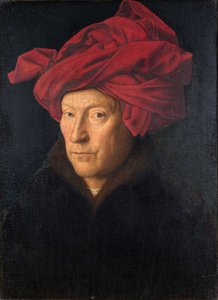
Van Eyck’s artistic legacy is cemented by a relatively small but profoundly influential body of work. The Ghent Altarpiece (1432), a monumental polyptych, stands as his most ambitious undertaking—a complex tapestry of religious symbolism and technical brilliance. Equally renowned is the Portrait of Giovanni Arnolfini and His Wife (1434), a groundbreaking work in portraiture celebrated for its realism, intricate detail, and enigmatic symbolism. Other notable works include the Dresden Triptych, showcasing his skill in depicting religious scenes with remarkable clarity, and the striking Man in a Blue Turban, a testament to his ability to capture individual character. These paintings aren’t merely visual representations; they are windows into another world—a world meticulously rendered with an almost obsessive attention to detail. Van Eyck's influence extends far beyond these iconic works, shaping the development of Early Netherlandish painting and inspiring countless artists for centuries to come. He died in Bruges in 1441, leaving behind a legacy that continues to resonate today, reminding us of the power of art to illuminate the human experience.
Jan van Eyck

Jan van Eyck

1390 - 1441 , Netherlands

Quick Facts

  • Artistic Movement Or Style: Early Netherlandish painting
  • Artists Or Movements Influenced By This Artist: ['Early Netherlandish painters']
  • Date Of Birth: c. 1390
  • Date Of Death: 1441
  • Full Name: Jan van Eyck
  • Nationality: Flemish
  • Notable Artworks:
    • Ghent Altarpiece
    • Arnolfini Portrait
    • Dresden Triptych
    • Man in Blue Turban
  • Place Of Birth: Maastricht, Netherlands
Explore artworks organized by themes, styles, and characteristics.