Wishlist Shopping Cart Cart
Buy print Buy printBuy Image Buy Image SendSend
DetailsDetails Add to favorites Add to favorites DownloadDownload SimilarsSimilars X-RayX-Ray DiaporamaDiaporama

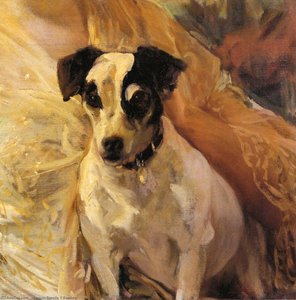
Mother

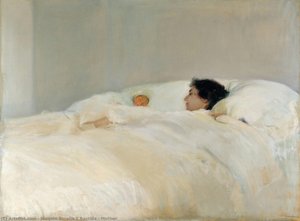
Joaquin Sorolla’s "Mother" (1895) captures profound intimacy & emotion through masterful light, depicting a tender moment between mother and child – a timeless masterpiece.

Joaquín Sorolla: A Spanish master of light and color! Witness his vibrant portraits & beach scenes capturing the essence of Mediterranean life. Explore his legacy today!

Hand Made Oil Reproduction

Hand-painted oil on canvas in your size and frame, made to order by our artists.

P118B $10
P118H $10
P118W $10
P438Z $10
P508JH $12
P508YH $12
P805H $10
P805Z $10
P919BZ $10
P919G $10
P919XJ $10
P959ZH $10
P968JZ $12
W106C $8
W218G $10
W218JH $8
W218Y $10
W307PJ $10
W316G $10
W316PJ $8
W316Y $10
W398PJ $8
W4111J $10
W500HY $15
W500JH $15
W692G $12
W849H $8
W940BG $15
W953PJ $8

Standard
custom
CM
INCH

Pick from our preset sizes that match the artwork's original proportions.

width
height

You may enter your own dimensions to fit a specific frame or space. If your selected size does not match the original image's proportions, we will either crop the artwork or extend the painting with additional hand-painted elements. A digital mockup will be sent for your approval before production begins.
Please note that the on-screen preview does not reflect the actual cropping or extension. Only the mockup will accurately show the final composition.
While custom sizes are available, we recommend selecting a dimension from the predefined list to preserve the original proportions.

Examples of what can be changed: Replace face with customer photo; Add pet (e.g., replace cat with dog); Include hidden message in background; Change background landscape or elements.
After order, Most-Famous-Paintings.com team will email client for instructions and provide a mockup preview

Worldwide Delivery () in 3/4 weeks instead of standard 5 weeks. (18 July). No compromise on quality.

why_choose_icon
Free Worldwide Express Shipping
why_choose_icon
High-Quality Linen Canvas
why_choose_icon
Full Shipping Insurance
why_choose_icon
Customs Tax Refund Guarantee
why_choose_icon
True Color Matching Guarantee
why_choose_icon
60-Day Return Policy (Defects Only)
why_choose_icon
100% Money-Back Guarantee
why_choose_icon
Bulk Discount Offer

Total Price

-

reproduction

Mother

Reproduction Medium

Reproduction Size

-

Total Price

-

Quick Facts

  • Influences:
    • Claude Monet
    • Berthe Morisot
  • Subject or theme: Domestic portraiture
  • Medium: Oil on canvas
  • Year: 1900
  • Dimensions: 73 x 51 cm
  • Notable elements or techniques: Radiant light; Impressionistic brushstrokes
  • Artistic style: Sorollaesque

Art Quiz

There is only one correct answer for each question.

Question 1:
What is the primary emotion conveyed by Sorolla’s painting ‘Mother’?
Question 2:
The painting depicts a woman lying in bed with her baby. What is Sorolla’s masterful technique that contributes to the emotional impact?
Question 3:
Sorolla’s artistic influences included classical Roman art. How did this influence manifest in his approach to composition?
Question 4:
What is the significance of the white color dominating the scene?
Question 5:
The painting was created in 1900. What event inspired Sorolla to depict this intimate moment between mother and child?

Artwork Description

A Portrait Steeped in Tranquility: Sorolla’s Reverie

Joaquín Sorolla y Bastida (1863 – 1923), a Valencian painter whose canvases shimmer with the golden hues of Mediterranean summers, stands as one of Spain's foremost Impressionists. His artistic vision wasn’t merely about capturing visual appearances; it was about distilling emotion into pigment—a feat achieved through masterful observation and an unwavering devotion to light. Sorolla’s life itself mirrored this preoccupation with ephemeral beauty: orphaned young, he navigated hardship with resilience and pursued his passion for art relentlessly, ultimately establishing himself as a celebrated figure in the European artistic landscape.
  • Subject Matter & Composition: The painting depicts a woman lying peacefully in bed with her infant daughter. Sorolla’s deliberate positioning of the figures—the mother turned towards her child, heads emerging from a sea of white—creates an intimate tableau that transcends mere representation. It's less about documenting reality and more about conveying a profound sense of serenity and maternal tenderness.
  • Style & Technique: Sorolla’s signature style is undeniably Impressionistic, albeit infused with elements of Luminism – a technique championed by Ilya Repin and Vasily Surikov that prioritizes capturing the effects of light on surfaces. He employed loose brushstrokes layered upon one another to achieve an ethereal luminosity, skillfully blending colours to create subtle gradations and shimmering highlights. The use of white pigment—particularly prominent in the bedding—amplifies this effect, symbolizing purity and innocence.

Historical Context: Valencia’s Belle Époque Embrace

Sorolla's artistic output flourished during Spain’s Belle Époque (roughly 1870-1900), a period of cultural optimism fueled by industrial progress and burgeoning bourgeois aspirations. Valencia, Sorolla’s birthplace, experienced considerable urban development and artistic revival during this era—a context that undoubtedly influenced his creative sensibilities. The painting reflects the prevailing mood of quiet contemplation and domestic harmony characteristic of upper-middle-class life in Spain at the time.
  • Symbolism: The white bedding serves as a powerful symbol of maternal purity and spiritual grace—a deliberate choice reflecting Sorolla’s humanist convictions. Furthermore, the gaze exchanged between mother and daughter embodies unconditional love and connection—themes recurrent throughout Sorolla's oeuvre.

Emotional Impact & Artistic Legacy

Sorolla’s ability to evoke palpable emotion through his art is undeniable. The painting transcends mere visual pleasure; it invites contemplation on themes of motherhood, vulnerability, and the beauty of everyday life. Critics have lauded Sorolla's masterful handling of light—particularly its diffusion across the white bedding—as capturing “the very soul” of his subject matter. His influence extends far beyond his own lifetime, inspiring generations of artists who sought to emulate his luminous palette and expressive brushwork. Sorolla’s legacy continues to resonate today, reminding us that art possesses the capacity to illuminate not only what we see but also what we feel.
  • Interior Design Inspiration: Sorolla's aesthetic—characterized by its airy lightness and understated elegance—offers valuable insights for interior designers seeking to create spaces imbued with tranquility and warmth. Consider incorporating pale hues, textured fabrics, and strategically placed mirrors to achieve a similar luminous effect.

Reproductions & Preservation Considerations

High-quality reproductions of Sorolla’s paintings are available through reputable art dealers and online platforms—allowing collectors worldwide to experience the artist's unparalleled mastery of light and colour. However, it is crucial to acknowledge that Sorolla’s original canvases remain fragile artifacts of history, necessitating careful preservation practices to safeguard their enduring beauty for future generations.

Artist Biography

A Life Bathed in Light: The World of Joaquín Sorolla

Joaquín Sorolla y Bastida, a name synonymous with the radiant light and vibrant energy of Spain, was more than just a painter; he was a chronicler of his nation’s soul. Born in Valencia in 1863, Sorolla's early life was marked by tragedy. Orphaned at the tender age of two following a cholera epidemic that claimed both parents, young Joaquín and his sister were raised by their maternal aunt and uncle. This early experience with loss perhaps instilled within him a profound appreciation for the fleeting beauty of life – a sentiment that would permeate his art. Though hardship shadowed his beginnings, it did not dim the spark of artistic talent that quickly became apparent. He received initial instruction in Valencia, demonstrating an aptitude that led to studies under established artists like Cayetano Capuz and José Benlliure, eventually culminating in a four-year grant to study in Rome. It was there, amidst the classical grandeur of Italy, that Sorolla began to forge his unique artistic path, absorbing influences while simultaneously developing a style distinctly his own.

From Historical Narratives to Sun-Drenched Realism

Sorolla’s early work reflected the prevailing academic trends of the time – large-scale historical and mythological scenes. However, a pivotal shift occurred as he returned to Spain and began to truly observe the world around him. He found himself captivated by the everyday lives of his countrymen, particularly those along the Valencian coast. The intense Mediterranean sunlight, the shimmering sea, and the vibrant energy of the people became his primary subjects. This transition wasn’t immediate; Sorolla continued to explore social realism with works like Sad Inheritance (1899), a powerful depiction of children afflicted by polio bathing in the sea – a painting that garnered significant acclaim but also revealed a darker, more compassionate side to his artistic vision. Sad Inheritance, exhibited at the Universal Exhibition in Paris, brought him widespread recognition and cemented his position as a leading figure in Spanish art. Yet, it was his increasingly focused exploration of light and color, inspired by Impressionism though never fully embracing its tenets, that would define his legacy. He wasn’t merely *depicting* light; he was attempting to *capture* its very essence, the way it danced on water, illuminated skin, and transformed ordinary moments into scenes of extraordinary beauty.

Master of Luminism: A Unique Artistic Voice

Sorolla's technique became instantly recognizable – a bravura display of brushwork, characterized by loose, energetic strokes that conveyed movement and atmosphere. He worked *en plein air* whenever possible, directly confronting the challenges of capturing fleeting light conditions. This dedication to painting outdoors resulted in canvases brimming with life and immediacy. His beach scenes, perhaps his most iconic works, are not simply picturesque representations of leisure; they are studies in luminosity, reflections, and the joyful interaction between people and their environment. Paintings like Children on the Seashore and Sewing the Sail exemplify this mastery – figures bathed in golden light, rendered with a remarkable sense of spontaneity and vitality. He wasn’t interested in meticulous detail; rather, he sought to convey the *impression* of reality, prioritizing atmosphere and emotion over precise representation. This approach earned him comparisons to Impressionists like Monet and Renoir, but Sorolla's work possessed a unique Spanish character – a warmth, intensity, and emotional depth that set it apart.

Legacy and Enduring Influence

By the early 20th century, Joaquín Sorolla was internationally renowned. He exhibited widely throughout Europe and the United States, receiving numerous accolades and commissions. His most ambitious undertaking, Vision of Spain, a series of fourteen monumental murals commissioned by the Hispanic Society of America, remains a testament to his artistic vision and technical skill. Though he suffered a stroke in 1920 that curtailed his painting activity, Sorolla’s influence continued to grow after his death in 1923. His work inspired generations of artists, not only in Spain but around the world. Today, his paintings are held in major museums globally, including the Museo Sorolla in Madrid – a former home transformed into a dedicated space for showcasing his art. Sorolla’s legacy extends beyond his technical brilliance; he captured a specific moment in Spanish history and culture, immortalizing the beauty of its landscapes and the spirit of its people. He remains a master of light, color, and emotion—a painter whose work continues to resonate with audiences today, reminding us of the power of art to illuminate our world.

Key Achievements & Recognition

  • 1892: Gold medal at the National Exhibition in Madrid for Another Marguerite.
  • 1894: Acclaimed for The Return from Fishing: Hauling the Boat, acquired by the Musée du Luxembourg.
  • 1899: Grand Prix and medal of honor at the Universal Exhibition in Paris for Sad Inheritance.
  • 1900-1923: Extensive exhibitions throughout Europe and the United States, establishing international recognition.
  • 1912-1928: Commissioned to create Vision of Spain for the Hispanic Society of America (completed posthumously).
  • Present Day: Works held in major museums worldwide, including the Museo Sorolla in Madrid.
Joaquín Sorolla y Bastida

Joaquín Sorolla y Bastida

1863 - 1923 , Spain

Quick Facts

  • Artistic Movement Or Style: Realism, Luminism, Impressionism
  • Artists Who Influenced This Artist:
    • Francisco Pradilla
    • Jules Bastien-Lepage
    • Adolph von Menzel
  • Date Of Birth: February 27, 1863
  • Date Of Death: August 10, 1923
  • Full Name: Joaquín Sorolla y Bastida
  • Nationality: Spanish
  • Notable Artworks:
    • Italian Girl with Flowers
    • Bathing Time
    • White Slave Trade
    • Typical Sorianos
    • Children on the Seashore
    • Sewing the Sail
  • Place Of Birth: Valencia, Spain
Explore artworks organized by themes, styles, and characteristics.