x

Hand-painted oil on canvas in your size and frame, made to order by our artists.





























Pick from our preset sizes that match the artwork's original proportions.

You may enter your own dimensions to fit a specific frame or space. If your selected size does not match the original image's proportions, we will either crop the artwork or extend the painting with additional hand-painted elements. A digital mockup will be sent for your approval before production begins.
Please note that the on-screen preview does not reflect the actual cropping or extension. Only the mockup will accurately show the final composition.
While custom sizes are available, we recommend selecting a dimension from the predefined list to preserve the original proportions.
Worldwide Delivery () in 3/4 weeks instead of standard 5 weeks. (18 July). No compromise on quality.


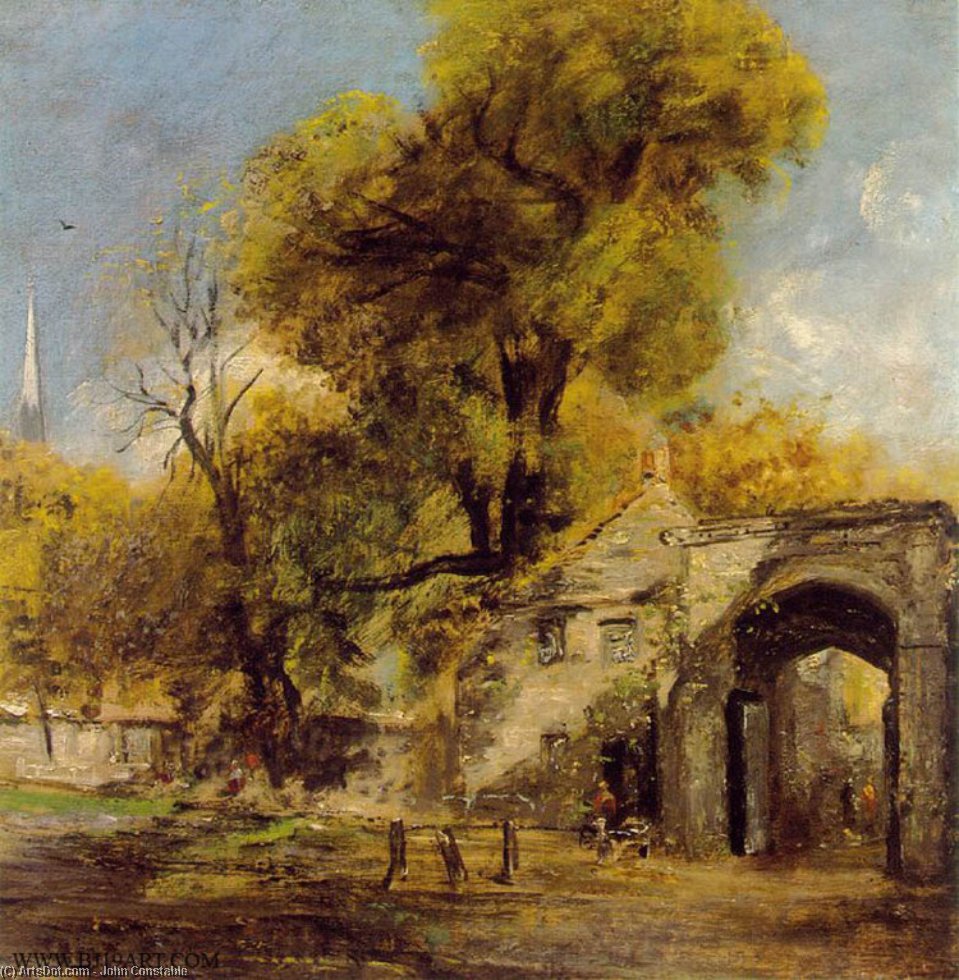
Harnam gate, salisbury
Reproduction Size
John Constable's *Harnham Gate, Salisbury*, painted between 1820 and 1821, is more than a depiction of an English landscape; it’s a poignant evocation of a world steeped in tranquility and the gentle rhythms of rural life. The painting invites us to pause and breathe with the scene, offering a window into a time when the connection between humanity and nature felt profoundly intimate. Constable, a master of observation and emotional resonance, doesn't simply *show* us Salisbury; he allows us to *feel* its essence – the cool dampness of the stone gate, the rustling leaves of ancient trees, and the quiet dignity of the passing horses.
Constable stands as a pivotal figure in 19th-century British art, a champion of Romantic ideals expressed through his deeply personal landscapes. Unlike many of his contemporaries who favored grand historical narratives or dramatic mythological scenes, Constable found inspiration in the everyday beauty surrounding him – specifically, the Stour Valley and, as evidenced here, the Wiltshire countryside. *Harnham Gate, Salisbury* exemplifies this dedication to portraying the familiar with a fresh, emotive perspective. The painting’s technique is particularly noteworthy; Constable employed a distinctive broken brushstroke, layering pigments to create an atmospheric luminosity that captures the fleeting effects of light and weather. This wasn't merely about accurate representation but about conveying the *feeling* of being present in that moment. He built up his surfaces with layers of paint, often using palette knives as well as brushes, creating a textured surface that seems to vibrate with life. The subtle gradations of tone and color demonstrate his mastery of atmospheric perspective, drawing the viewer’s eye into the distance towards the spire of Salisbury Cathedral – a symbol of faith and enduring presence.
The choice of *Harnham Gate* as the focal point is significant. This medieval gate served not just as an entrance to the city but also as a threshold between the rural world and the urban center, representing a transition – perhaps even a tension – between nature and civilization. Constable’s patron, John Fisher, was Bishop of Salisbury during this period, which explains his frequent visits to the area. The cathedral spire visible in the distance isn't merely a topographical detail; it anchors the scene within a broader historical and spiritual context. The inclusion of figures—a lone pedestrian and two horses—adds a human element, suggesting a harmonious coexistence with the landscape. These aren’t heroic or dramatic figures but ordinary individuals going about their daily lives, reinforcing Constable’s commitment to portraying the beauty found in the commonplace.
*Harnham Gate, Salisbury* continues to captivate viewers today because it speaks to a universal longing for connection with nature and a simpler way of life. Constable’s ability to infuse his landscapes with such palpable emotion is what sets him apart. He wasn't simply painting what he saw; he was painting how it *felt* to be there, to experience the sights, sounds, and smells of the English countryside. The painting serves as a powerful reminder of the enduring beauty of the natural world and the importance of preserving these spaces for future generations. A reproduction of this masterpiece brings not just an image into your home but a sense of peace, tranquility, and a connection to a rich artistic heritage.
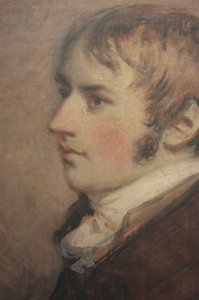
1776 - 1837 , United Kingdom

Explore the serene landscapes of John Varley I, a key figure in British Romanticism. Discover his unique watercolour style, collaboration with William Blake & lasting artistic legacy. Learn about collecting Varley's work.

Explore the life & art of Johan Christian Dahl, Norway's first great Romantic painter. Discover his iconic landscapes, cultural impact, and lasting legacy with Most-Famous-Paintings.

Explore the emotional power of Romantic landscape painting! Discover the sublime & picturesque aesthetics, key artists like Friedrich & Cole, and lasting influence on art history. Find your perfect piece at Most-Famous-Paintings.

Explore the captivating world of James Ward (1769-1859), a master of British Romantic landscape & animal painting. Discover his iconic 'Gordale Scar' and exquisite portraits – a timeless art investment. Learn about his influences, style, and enduring legacy.

Explore the captivating world of Thomas Girtin, a pioneer of Romantic watercolour painting. Discover his innovative techniques, key masterpieces & lasting influence on British art history. Learn about collecting Girtin's work today.


Stay updated with the latest art news, exclusive offers, and decoration ideas.
Tell us about your project and our art experts will provide you with 3 personalized art suggestions.
Let Us Curate 3 Options Just for You - Free!


 Buy print
 Send
Send Share
Share
 Details

 Download
 Similars
 X-Ray
X-Ray Diaporama

 Read More







 Glass option is only available in size under 110 CM