x


Hand-painted oil on canvas in your size and frame, made to order by our artists.





























Pick from our preset sizes that match the artwork's original proportions.

You may enter your own dimensions to fit a specific frame or space. If your selected size does not match the original image's proportions, we will either crop the artwork or extend the painting with additional hand-painted elements. A digital mockup will be sent for your approval before production begins.
Please note that the on-screen preview does not reflect the actual cropping or extension. Only the mockup will accurately show the final composition.
While custom sizes are available, we recommend selecting a dimension from the predefined list to preserve the original proportions.
Worldwide Delivery () in 3/4 weeks instead of standard 5 weeks. (18 July). No compromise on quality.


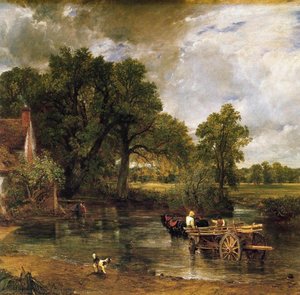
The Hay-Wain (detail)
Reproduction Size
John Constable's *The Hay-Wain*, completed in 1821, is more than just a depiction of the English countryside; it’s an emotional testament to a landscape deeply loved and meticulously observed. This iconic painting, now residing within the National Gallery in London, transcends its subject matter – a simple rural scene of agricultural life – to become a powerful symbol of national identity and artistic innovation. The detail showcased in reproductions offered by platforms like Most-Famous-Paintings.com allows viewers to appreciate the subtle nuances that elevate this work beyond mere representation into the realm of poetic expression.
Constable wasn’t striving for grand historical narratives or dramatic allegories; his ambition lay in capturing the fleeting beauty of the everyday world around him. *The Hay-Wain* is a quintessential example of this approach, portraying a scene on the River Stour between Suffolk and Essex – specifically, the idyllic Dedham Vale, an area intimately connected to Constable’s personal history. His father owned land there, providing both financial security and a constant source of inspiration. The painting isn't simply *of* Dedham Vale; it *is* Dedham Vale as filtered through the lens of memory and affection. The composition centers on a hay wagon navigating the shallow waters, pulled by horses and accompanied by figures engaged in their daily routines. Willy Lott’s Cottage, a landmark that Constable revisited frequently in his work, anchors the left side of the canvas, lending a sense of permanence to the transient scene. The meticulous rendering of light and atmosphere—the dappled sunlight filtering through the trees, the reflections on the water—demonstrates Constable's mastery of oil paint and his dedication to capturing the ephemeral qualities of nature.
While often categorized within the Romantic movement, Constable’s approach diverged from many of his contemporaries. He rejected the prevailing emphasis on dramatic compositions and idealized forms, instead prioritizing direct observation and a faithful rendering of natural light and color. This commitment to “truth to nature,” as he termed it, was revolutionary for its time. He drew inspiration from earlier masters like Claude Lorrain and Jacob van Ruisdael, admiring their atmospheric effects and compositional balance, but infused his work with a distinctly English sensibility. *The Hay-Wain*, initially titled *Landscape: Noon*, wasn’t intended as a grand statement or historical depiction; it was an attempt to convey the emotional resonance of a specific place at a particular moment. This focus on personal experience and subjective perception marked a significant shift in artistic priorities, paving the way for later movements like Impressionism. The painting's initial reception was mixed, with some critics finding its subject matter too commonplace for such a large-scale canvas; however, it gradually gained recognition as a masterpiece of English landscape painting.
Beyond its aesthetic beauty, *The Hay-Wain* carries subtle layers of symbolism. The hay wagon itself represents the cycle of agricultural life, the bounty of the land, and the enduring connection between humanity and nature. The figures depicted are not individualized portraits but rather archetypes representing rural laborers, embodying a sense of community and tradition. Constable’s deliberate choice to depict a working landscape—rather than an idealized pastoral fantasy—suggests a respect for the dignity of labor and the importance of preserving traditional ways of life. The painting evokes a feeling of tranquility and harmony, inviting viewers to immerse themselves in the beauty of the English countryside. However, it's important to acknowledge that this idyllic vision was painted during a period of significant social and economic change, with industrialization rapidly transforming the landscape. In this context, *The Hay-Wain* can also be interpreted as a nostalgic lament for a vanishing way of life—a yearning for a simpler, more harmonious past.

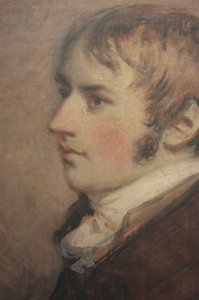
1776 - 1837 , United Kingdom
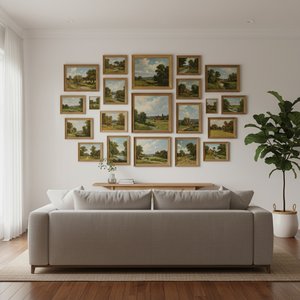
Journey through John Constable's 25 most celebrated landscapes. Explore Romanticism, Dedham Vale & his masterful use of light in iconic paintings like 'Hay Wain'. Find museum-quality art reproductions and elevate your home decor on Most-Famous-Paintings.com.

Explore 25 iconic John Singer Sargent paintings – from dazzling portraits to Impressionist landscapes. Discover the stories behind Madame X, El Jaleo & more! Find museum-quality art reproductions and elevate your home decor with Most-Famous-Paintings.com.

Journey through 10 Romantic landscape masterpieces by Friedrich, Turner & Cole. Explore emotional art, sublime nature scenes & iconic 19th-century paintings. Find museum-quality reproductions for your home at Most-Famous-Paintings.com – discover the full collection online!
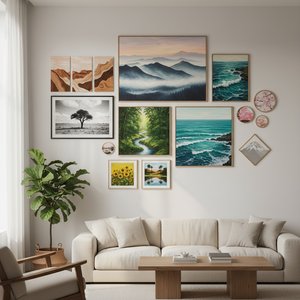
Journey through 10 breathtaking landscape paintings by Monet, Van Gogh & more! Explore iconic artworks, artistic techniques & find inspiration for your home decor. Museum-quality reproductions at Most-Famous-Paintings.com. Discover all masterpieces on Most-Famous-Paintings.com
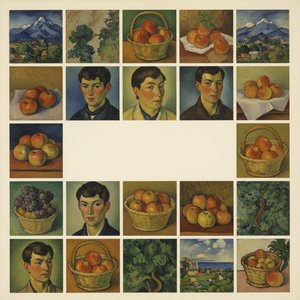
Journey through 25 iconic artworks by Paul Cézanne – a master of Impressionism and Post-Impressionism. Explore his landscapes, still lifes, and the stories behind these timeless masterpieces. Discover museum-quality reproductions & curated decor at Most-Famous-Paintings.com.


Stay updated with the latest art news, exclusive offers, and decoration ideas.
Tell us about your project and our art experts will provide you with 3 personalized art suggestions.
Let Us Curate 3 Options Just for You - Free!


 Buy print
 Send
Send Share
Share
 Details

 Download
 Similars
 X-Ray
X-Ray Diaporama


 Read More







 Glass option is only available in size under 110 CM