Wishlist Shopping Cart Cart
Buy print Buy printBuy Image Buy Image SendSend
DetailsDetails Add to favorites Add to favorites DownloadDownload SimilarsSimilars X-RayX-Ray DiaporamaDiaporama

Circle

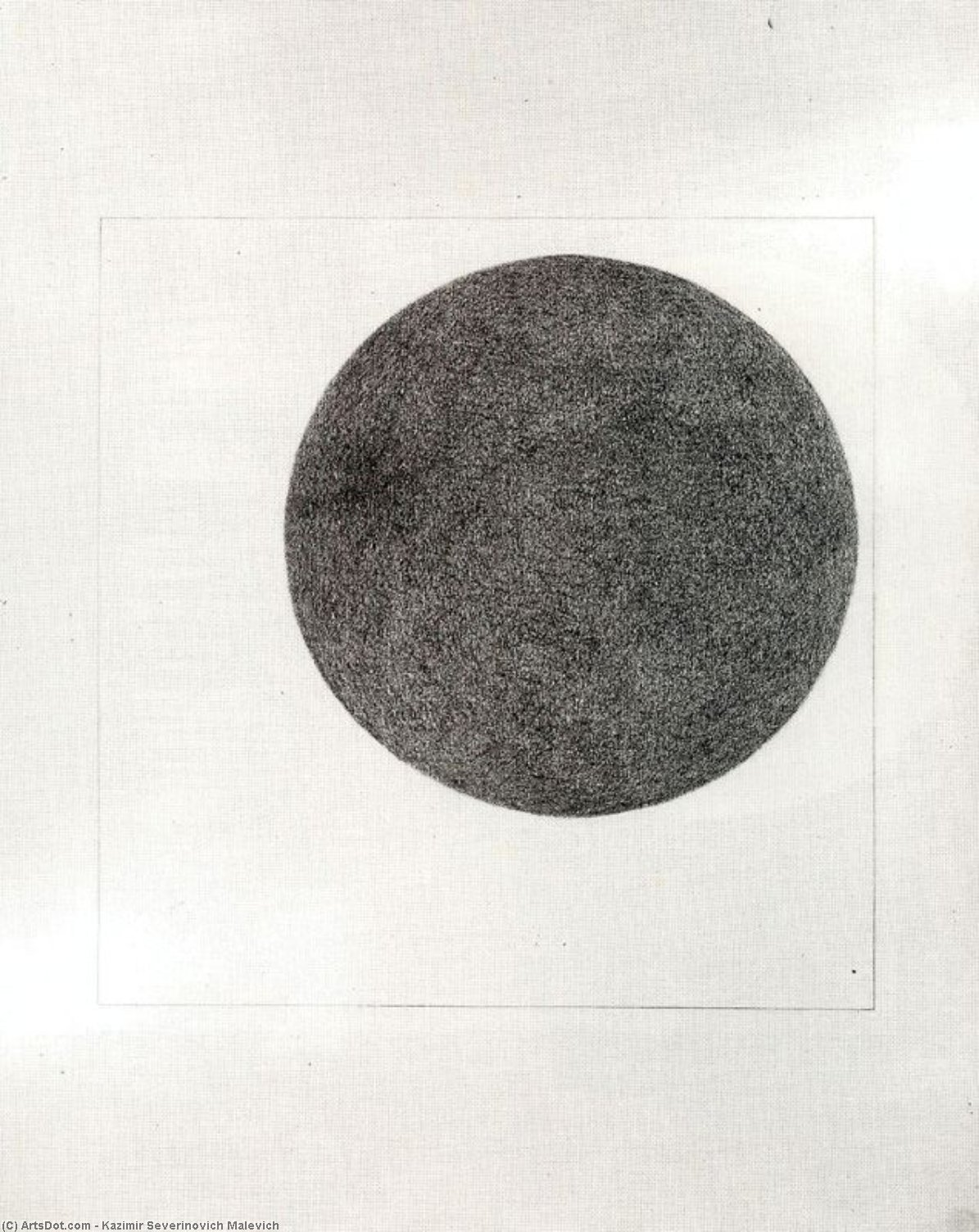
Explore Kazimir Malevich’s ‘Circle,’ a meticulously detailed monochrome drawing embodying Suprematism. Admire its textured dot pointillism & balanced composition – a key piece of 20th-century art.

Kazimir Malevich (1878-1935): Ukrainian founder of Suprematism & pioneer of abstract art. Explore iconic works like Black Square, geometric forms, & pure feeling's impact on 20thC art.

Hand Made Oil Reproduction

Hand-painted oil on canvas in your size and frame, made to order by our artists.

P118B $10
P118H $10
P118W $10
P438Z $10
P508JH $12
P508YH $12
P805H $10
P805Z $10
P919BZ $10
P919G $10
P919XJ $10
P959ZH $10
P968JZ $12
W106C $8
W218G $10
W218JH $8
W218Y $10
W307PJ $10
W316G $10
W316PJ $8
W316Y $10
W398PJ $8
W4111J $10
W500HY $15
W500JH $15
W692G $12
W849H $8
W940BG $15
W953PJ $8

Standard
custom
CM
INCH

Pick from our preset sizes that match the artwork's original proportions.

width
height

You may enter your own dimensions to fit a specific frame or space. If your selected size does not match the original image's proportions, we will either crop the artwork or extend the painting with additional hand-painted elements. A digital mockup will be sent for your approval before production begins.
Please note that the on-screen preview does not reflect the actual cropping or extension. Only the mockup will accurately show the final composition.
While custom sizes are available, we recommend selecting a dimension from the predefined list to preserve the original proportions.

Examples of what can be changed: Replace face with customer photo; Add pet (e.g., replace cat with dog); Include hidden message in background; Change background landscape or elements.
After order, Most-Famous-Paintings.com team will email client for instructions and provide a mockup preview

Worldwide Delivery () in 3/4 weeks instead of standard 5 weeks. (18 July). No compromise on quality.

why_choose_icon
Free Worldwide Express Shipping
why_choose_icon
High-Quality Linen Canvas
why_choose_icon
Full Shipping Insurance
why_choose_icon
Customs Tax Refund Guarantee
why_choose_icon
True Color Matching Guarantee
why_choose_icon
60-Day Return Policy (Defects Only)
why_choose_icon
100% Money-Back Guarantee
why_choose_icon
Bulk Discount Offer

Total Price

-

reproduction

Circle

Reproduction Medium

Reproduction Size

-

Total Price

-

Quick Facts

  • Location: Private Collection
  • Subject or theme: Geometric Abstraction
  • Movement: Suprematism
  • Medium: Graphite/Charcoal on Paper
  • Notable elements or techniques: Pointillism; Geometric Form
  • Title: Circle

Art Quiz

There is only one correct answer for each question.

Question 1:
What artistic movement is Kazimir Malevich’s ‘Circle’ associated with?
Question 2:
The technique employed in creating this artwork involves:
Question 3:
What is the predominant color scheme of ‘Circle’?
Question 4:
The artwork's composition emphasizes:
Question 5:
Symbolically, the circle in ‘Circle’ is often interpreted as representing:

Artwork Description

Kazimir Malevich’s Circle: A Testament to Pure Feeling

Malevich's "Circle," created in 1923, stands as a monumental achievement within the Suprematist movement—a radical departure from representational art that sought to liberate visual expression from illusionistic conventions. This deceptively simple painting embodies the core tenets of Malevich’s philosophy: prioritizing pure feeling and geometric abstraction over any semblance of recognizable imagery. It's more than just a shape; it’s a declaration of artistic freedom and an exploration of fundamental concepts within modern art history.

The Suprematist Vision

Born in Kyiv Oblast, Kazimir Severinovich Malevich (1878-1935) embarked on his artistic journey with initial explorations into Impressionism, Symbolism, Fauvism, and Cubism—styles prevalent during the early 20th century. However, a transformative trip to Paris in 1912 ignited his passion for European avant-garde movements, propelling him toward a decisive break from traditional aesthetics. Recognizing the limitations of depicting reality, Malevich championed Suprematism – a movement founded on the belief that art should transcend visual perception and communicate directly with the viewer’s subconscious mind.

Pointillist Technique: Dots as Building Blocks

The execution of "Circle" exemplifies Malevich's masterful application of pointillism—a technique pioneered by Georges Seurat and embraced wholeheartedly by Malevich himself. Hundreds, perhaps thousands, of tiny dots meticulously arranged on paper create a textured surface that subtly suggests depth without resorting to perspective. Graphite or charcoal was used as the medium, lending an understated elegance to the artwork’s materiality. This painstaking process underscores Malevich's commitment to achieving maximum expressive impact through precise control over color and texture—a deliberate rejection of academic conventions.

Symbolism Beyond Geometry

While seemingly devoid of recognizable forms, "Circle" carries profound symbolic weight. Representing wholeness, unity, and eternity – concepts central to Orthodox Christianity and reflecting Malevich’s spiritual convictions – the circle transcends its geometric simplicity. Its repetition reinforces this idea of completeness, mirroring the cosmos itself and symbolizing a quest for transcendence beyond the confines of earthly experience. The stark contrast between the pale cream background and the dark central circle amplifies this visual impact, emphasizing the painting's contemplative mood.

A Legacy Enduring Influence

“Black Circle” and “Suprematist Painting. Rectangle and Circle,” alongside Malevich’s architectural designs—particularly his collaboration with Lazar Markovich Khidekel—demonstrate the lasting influence of Suprematism on Russian art and design. Malevich's unwavering belief in pure feeling as the basis for artistic creation continues to inspire artists today, cementing his place as a pivotal figure in the history of modern abstraction. Explore museum-quality reproductions at Most-Famous-Paintings.com and discover the timeless beauty of this groundbreaking masterpiece.

Artist Biography

Kazimir Malevich: A Pioneer of Abstract Art

Early Life and Influences

  • Born in Kyiv Oblast, Ukraine in 1878 to a Polish family, Kazimir Severinovich Malevich’s early life was shaped by the rural Ukrainian landscape and its rich folk culture.
  • His upbringing instilled in him an appreciation for traditional artistic expressions that would later subtly influence his work.
  • Formal training began in Kyiv, but Malevich quickly sought broader artistic horizons, moving towards Moscow and eventually engaging with the burgeoning avant-garde movements of Europe.
  • Key Influences: Early exposure to folk art, combined with a desire for modern expression, formed the foundation of his unique style.

Artistic Development & Key Movements

  • Initially, Malevich explored various styles including Impressionism, Symbolism, Fauvism, and Cubism. A pivotal trip to Paris in 1912 exposed him to the latest developments in European art.
  • He gradually moved away from representational forms, seeking a purely artistic language based on geometric shapes and color.
  • This led to the development of Suprematism around 1915 – an abstract movement focused on “the supremacy of pure feeling” in art.
  • Suprematism rejected any attempt to depict objects from the visible world, instead prioritizing basic geometric forms like squares, circles, and rectangles.

Major Achievements & Notable Works

  • Black Square (1915): Arguably his most famous work, it represents a radical departure from traditional art and is considered a foundational piece of abstract painting.
  • White on White (1918): A series exploring the purity of form and color, featuring white geometric shapes against a white background – pushing abstraction to its limits.
  • Stroyuschiysya dom [House under Construction] (1916): An early example of Suprematism showcasing his unique perspective on Ukrainian culture through abstract forms.
  • He also wrote extensively on art theory, articulating the philosophical principles behind Suprematism and advocating for a new artistic consciousness.

Historical Significance & Legacy

  • Malevich’s work profoundly impacted the development of 20th-century abstract art, influencing movements like Minimalism and Constructivism.
  • He challenged conventional notions of representation and paved the way for non-objective art.
  • His ideas about pure feeling and geometric abstraction continue to resonate with artists today.
  • Despite facing political persecution under Stalin – initially supported, then suppressed – Malevich persevered in his practice and teaching.
  • Influence on Later Artists: He directly influenced artists like El Lissitzky and indirectly shaped countless others through the enduring legacy of Suprematism.

Later Life & Death

  • In his later years, Malevich revisited figurative painting, attempting to synthesize his abstract principles with representational forms.
  • He continued to teach and write about art until his death in Leningrad (now St. Petersburg) in 1935.
  • His work remained relatively obscure for decades after his death but experienced a resurgence of interest in the latter half of the 20th century, solidifying his place as one of the most important figures in modern art history.
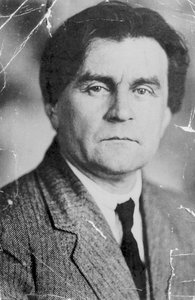
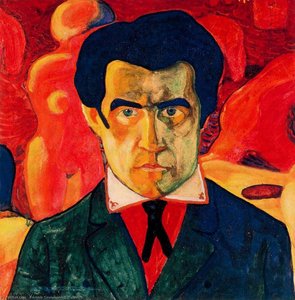
Kazimir Malevich

Kazimir Malevich

1878 - 1935 , Ukraine

Quick Facts

  • Artistic Movement Or Style: Suprematism, Abstract Art
  • Artists Or Movements Influenced By This Artist:
    • Minimalism
    • Constructivism
    • El Lissitzky
  • Artists Who Influenced This Artist:
    • Cubism
    • Fauvism
    • Impressionism
  • Date Of Birth: 1878
  • Date Of Death: 1935
  • Full Name: Kazimir Severinovich Malevich
  • Nationality: Ukrainian/Russian
  • Notable Artworks:
    • Black Square
    • White on White
    • House under Construction
  • Place Of Birth: Kyiv, Ukraine
Explore artworks organized by themes, styles, and characteristics.