x


 Acrylic On CanvasWallArtCubist Expressionism
 1912Early Medieval
 43.0 x 34.0 cm
 Museum of Fine Arts
Hand-painted oil on canvas in your size and frame, made to order by our artists.





























Pick from our preset sizes that match the artwork's original proportions.

You may enter your own dimensions to fit a specific frame or space. If your selected size does not match the original image's proportions, we will either crop the artwork or extend the painting with additional hand-painted elements. A digital mockup will be sent for your approval before production begins.
Please note that the on-screen preview does not reflect the actual cropping or extension. Only the mockup will accurately show the final composition.
While custom sizes are available, we recommend selecting a dimension from the predefined list to preserve the original proportions.
Worldwide Delivery () in 3/4 weeks instead of standard 5 weeks. (18 July). No compromise on quality.


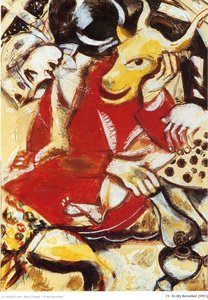
Compositional Study for ‘To Russia, to the Asses and Others’
Reproduction Size
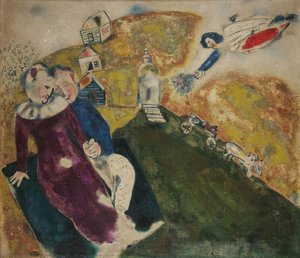
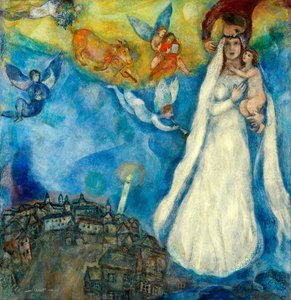
Marc Chagall's "Compositional Study for 'To Russia, to the Asses and Others'" isn’t merely a painting; it’s a portal. Created in 1912 during a pivotal period of artistic experimentation, this intimate work offers a tantalizing glimpse into the mind of one of the 20th century's most beloved artists. Measuring just 43 x 34 centimeters, its modest size belies the profound emotional resonance and layered symbolism contained within. The painting immediately draws the eye with its vibrant palette – a joyous collision of pinkish reds, blues, and yellows that feels both intensely personal and universally evocative. It’s a scene plucked from a dream, or perhaps a cherished folktale, brimming with figures suspended in an atmosphere of whimsical disorientation.
Born Moishe Shagal in Liozna, Belarus – a town that would forever remain etched into his artistic memory – Chagall’s early life was deeply intertwined with Jewish folklore and Orthodox religious traditions. This heritage profoundly shaped his visual language, informing his use of recurring motifs like flying figures, animals imbued with symbolic weight, and landscapes rendered with an almost hallucinatory intensity. However, Vitebsk wasn't merely a birthplace; it served as the wellspring for his artistic identity. During his time in Paris, Chagall immersed himself in the vibrant atmosphere of La Ruche, a Montparnasse study colony where he encountered the revolutionary currents of Fauvism, Cubism, and Futurism. These encounters didn’t overwhelm his established style; instead, they subtly enriched it, adding angularity to his forms and liberating color from its traditional constraints. The composition itself is directly related to “To Russia, Asses and Others,” a larger painting completed in 1912, suggesting this study was either a preparatory sketch or an early iteration of the final work.
The scene depicted is deliberately ambiguous, inviting multiple interpretations. At its heart lies a man perched atop what appears to be a donkey or horse – a potent symbol of both earthly labor and perhaps even sacrifice. Beside him stands another figure, seemingly observing this unusual tableau. Most strikingly, the central figure is depicted without a head, a recurring motif in Chagall’s work that speaks to themes of loss, memory, and the ephemeral nature of existence. The breastfeeding infant, positioned prominently near the left side, represents innocence, vulnerability, and the cycle of life – a direct reference to biblical narratives and Jewish traditions surrounding motherhood and renewal. The overall effect is one of unsettling beauty, as if we’ve stumbled upon a fragment of a collective unconscious, a dreamscape rendered in vibrant color.
Chagall’s technique in this “Compositional Study” is characterized by loose brushstrokes and an intuitive approach to color. He employs a flattened perspective, reminiscent of primitive art, creating a sense of immediacy and emotional intensity. The dark background serves to heighten the luminosity of the figures and colors, drawing the viewer into the scene. The painting’s power lies not in precise representation but in its ability to evoke feeling – a sense of wonder, melancholy, and perhaps even a touch of disorientation. It's a testament to Chagall’s skill in translating personal experience and deeply held beliefs onto canvas. A reproduction of this work offers a unique opportunity to bring this evocative image into your home, allowing you to contemplate its rich symbolism and absorb the emotional depth that defines Chagall’s extraordinary vision. Most-Famous-Paintings.com offers meticulously crafted hand-painted reproductions, ensuring that you can experience the beauty and power of this iconic artwork in stunning detail.

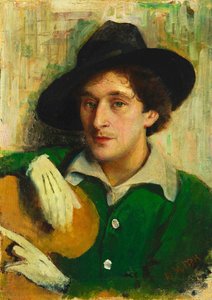
1887 - 1985 , Belarus
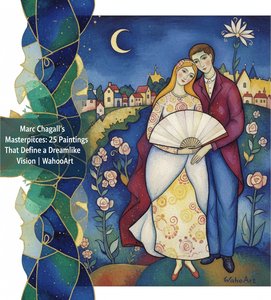
Journey into the dreamlike world of Marc Chagall! Explore 25 iconic paintings, from 'I and the Village' to his vibrant surrealist masterpieces. Discover the stories & techniques behind these timeless artworks – find museum-quality Chagall reproductions on Most-Famous-Paintings.com.
Explore 25 iconic René Magritte paintings & delve into the world of surrealism. Discover the stories behind 'The Son of Man', 'Golconda' & more. Find museum-quality art reproductions and elevate your home decor with Most-Famous-Paintings.com.

Journey through 25 iconic artworks at the Metropolitan Museum of Art! Explore Van Gogh, Monet, Rembrandt & more. Discover art history, inspiring stories, and museum-quality reproductions to elevate your home decor. Explore the full collection on Most-Famous-Paintings.com.
Journey through Henri Matisse's 25 most iconic paintings! Explore Fauvism, vibrant colors & the stories behind masterpieces like 'The Dance'. Find museum-quality art reproductions and curated decor ideas to elevate your space. Discover all masterpieces on Most-Famous-Paintings.com.
Explore 25 iconic artworks from Washington DC's National Gallery of Art! Discover masterpieces by Cézanne, Matisse & Picasso. Find museum-quality art reproductions and elevate your home decor with timeless paintings. Explore the full collection online at Most-Famous-Paintings.com.


Stay updated with the latest art news, exclusive offers, and decoration ideas.
Tell us about your project and our art experts will provide you with 3 personalized art suggestions.
Let Us Curate 3 Options Just for You - Free!


 Buy print
 Send
Send Share
Share
 Details

 Download
 Similars
 X-Ray
X-Ray Diaporama
 Read More







 Glass option is only available in size under 110 CM