x


 EtchingOtherNaive Primitivism
 1956Modern
 29.0 x 23.0 cm
Hand-painted oil on canvas in your size and frame, made to order by our artists.
Pick from our preset sizes that match the artwork's original proportions.

You may enter your own dimensions to fit a specific frame or space. If your selected size does not match the original image's proportions, we will either crop the artwork or extend the painting with additional hand-painted elements. A digital mockup will be sent for your approval before production begins.
Please note that the on-screen preview does not reflect the actual cropping or extension. Only the mockup will accurately show the final composition.
While custom sizes are available, we recommend selecting a dimension from the predefined list to preserve the original proportions.
Worldwide Delivery () in 3/4 weeks instead of standard 5 weeks. (18 July). No compromise on quality.


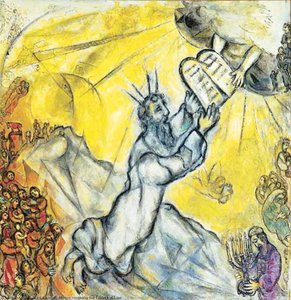
God appears to Moses in the burning bush (Exodus, III, 1 6)
Reproduction Size
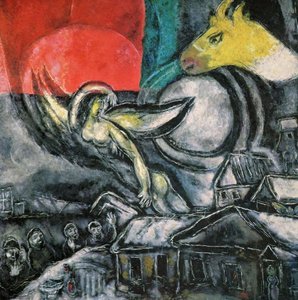
This exquisite hand-painted reproduction captures Marc Chagall’s profoundly personal interpretation of the biblical narrative recounted in Exodus III, 1-6 – the moment when God appears to Moses in the burning bush. Created in 1956, a period marked by both reflection and continued artistic exploration for the renowned artist, this work embodies Chagall's signature style: a captivating blend of naive realism and dreamlike symbolism. The etching’s stark black and white palette amplifies the scene’s spiritual intensity, drawing the viewer into a realm where earthly concerns dissolve before the majesty of the divine.
Born Moishe Shagal in 1907 in Liozna, Belarus – a town that would forever shape his artistic vision – Chagall’s work is deeply rooted in his Hasidic Jewish heritage. This piece reflects this influence powerfully. The kneeling figure, rendered with a simple yet expressive quality characteristic of Chagall's primitivist style, evokes the posture of prayer and contemplation. The surrounding landscape, though abstracted, hints at the familiar contours of Liozna, transforming a specific place into a universal symbol of faith and remembrance. The inclusion of indistinct figures in the background suggests a community gathered around this pivotal moment, reinforcing the narrative’s communal significance.
Chagall's technique is immediately recognizable – a deliberate departure from academic precision. He employs bold, expressive brushstrokes and flattened perspectives, creating an effect that feels both immediate and timeless. The etching’s naive quality isn’t a sign of artistic deficiency but rather a conscious choice to access deeper emotional truths. This approach aligns with the broader primitivist movement of the early 20th century, which sought inspiration in folk art and pre-Christian traditions. The use of black and white further enhances this effect, stripping away extraneous detail to focus on the essential elements of the scene: faith, obedience, and the encounter with the divine.
The burning bush itself is a potent symbol – representing God’s presence amidst chaos and uncertainty. Moses' kneeling posture signifies humility and reverence before the Almighty. The composition as a whole speaks to themes of revelation, obedience, and the transformative power of faith. Chagall masterfully conveys the emotional weight of this encounter, inviting viewers to contemplate their own relationship with spirituality and belief. This artwork transcends mere illustration; it’s an invitation into Chagall's deeply felt world, a world where dreams and reality intertwine.
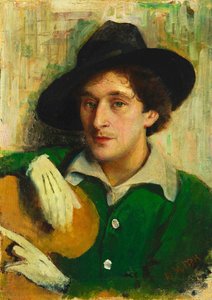
1887 - 1985 , Belarus

Explore the profound history of biblical art! Discover Renaissance masterpieces by Giotto & more. Uncover symbolism, artistic techniques, and lasting influence. Expert insights at Most-Famous-Paintings.
Journey into the surreal world of Max Ernst! Explore 25 iconic paintings, from Dada to abstract expressionism. Discover the stories behind his masterpieces & find museum-quality art reproductions for your home decor at Most-Famous-Paintings.com.

Journey through 10 legendary etching masterpieces by Rembrandt, Dürer & Goya. Explore the history of printmaking and discover timeless art for your home. Find museum-quality reproductions at Most-Famous-Paintings.com.

Explore the revolutionary world of Naïve Art & Primitivism! Discover how artists challenged academic traditions with raw emotion & unique styles. Learn about Picasso, Rousseau & more at Most-Famous-Paintings.
Delve into the power of 'Mars Black' with 10 iconic paintings by masters like Rembrandt & Caravaggio. Explore dramatic chiaroscuro, gothic art, and timeless beauty. Find museum-quality reproductions & elevate your home decor on .


Stay updated with the latest art news, exclusive offers, and decoration ideas.
Tell us about your project and our art experts will provide you with 3 personalized art suggestions.
Let Us Curate 3 Options Just for You - Free!


 Buy print
 Send
Send Share
Share
 Details

 Download
 Similars
 X-Ray
X-Ray Diaporama
 Read More




































 Glass option is only available in size under 110 CM