x

 Early Netherlandish Painting
 1467
1467 223.0 x 72.0 cm
 Muzeum Narodowe
Hand-painted oil on canvas in your size and frame, made to order by our artists. ( Buy Print Buy Image)





























Pick from our preset sizes that match the artwork's original proportions.

You may enter your own dimensions to fit a specific frame or space. If your selected size does not match the original image's proportions, we will either crop the artwork or extend the painting with additional hand-painted elements. A digital mockup will be sent for your approval before production begins.
Please note that the on-screen preview does not reflect the actual cropping or extension. Only the mockup will accurately show the final composition.
While custom sizes are available, we recommend selecting a dimension from the predefined list to preserve the original proportions.
Worldwide Delivery () in 3/4 weeks instead of standard 5 weeks. (18 August). No compromise on quality.


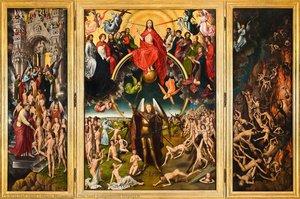
Last Judgment Triptych (left wing)
Reproduction Size
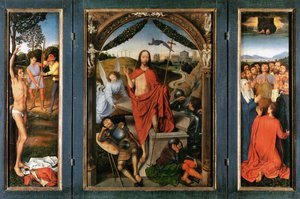
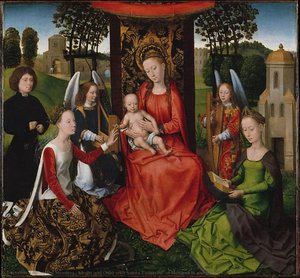
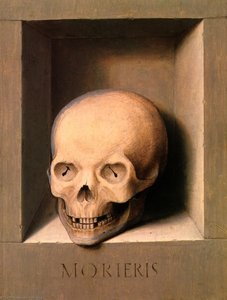
Hans Memling’s “Last Judgment Triptych,” specifically its left wing panel housed at the Muzeum Narodowe in Gdańsk, Poland, stands as an unparalleled achievement of Early Netherlandish art—a testament to meticulous observation, profound spiritual contemplation, and breathtaking artistic skill. Measuring 223 x 72 cm and executed in oil on wood between 1467 and 1471, this monumental artwork transcends mere depiction; it embodies the anxieties and aspirations of its era while continuing to resonate powerfully with audiences today.
Commissioned by Angelo Tani, a prominent Medici agent residing in Bruges, Belgium, the triptych’s genesis lies within the burgeoning humanist spirit of the Renaissance, yet firmly rooted in medieval Christian iconography. Memling's workshop meticulously recreated biblical scenes with astonishing realism—a hallmark of his distinctive style—capturing not only visual accuracy but also conveying complex emotional nuances.
The panel’s composition is strikingly deliberate, mirroring the pyramidal structure favored by artists throughout Europe. At its apex sits Christ Almighty, radiating divine authority as he holds aloft a book—the Evangelium Libri Dei—representing the record of human life and judgment. To his right, St Michael, clad in gleaming armor and wielding a flaming sword, embodies righteous retribution, preparing to cast down those deemed unworthy of salvation into Hell.
Painted during a period marked by religious fervor and intellectual curiosity, “The Last Judgment” reflects the anxieties surrounding papal authority and the impending apocalypse prevalent in fifteenth-century Europe. Memling’s technique—characterized by layering thin glazes of oil paint to achieve luminous color and subtle tonal variations—demonstrates an unparalleled level of artistic sophistication. He meticulously studied anatomical detail and drapery folds, striving for a level of realism that surpassed anything achieved by his contemporaries.
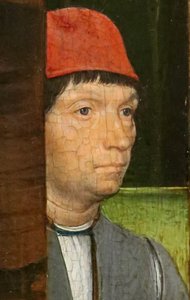
The inclusion of a donor portrait—that of Angelo Tani himself—further elevates the artwork’s significance as a testament to patronage and humanist ideals. It serves as a poignant reminder that art was not merely decorative but also imbued with moral and spiritual purpose, reflecting the values and beliefs of its time.
"The Last Judgment" continues to inspire artists and collectors alike, offering an enduring glimpse into the profound contemplation of faith and mortality—a masterpiece that transcends temporal boundaries and speaks directly to the human spirit. Its luminous colors and intricate detail invite viewers to contemplate the eternal questions of life and death, cementing Memling’s legacy as one of the greatest painters of his era.

Germany

Explore the profound mastery of light and shadow in Dutch Golden Age art. From Rembrandt's chiaroscuro to Vermeer's luminosity, discover the techniques that defined an era and learn how to bring these museum-quality masterpieces into your home through expert oil reproductions.


Stay updated with the latest art news, exclusive offers, and decoration ideas.
Tell us about your project and our art experts will provide you with 3 personalized art suggestions.
Let Us Curate 3 Options Just for You - Free!


 Preview
 Send
Send Share
Share
 Details

 Download
 Similars
 X-Ray
X-Ray Diaporama
 Read More







 Glass option is only available in size under 110 CM