x


 Oil On CanvasWallArtEarly Netherlandish Painting
 1488
1488 130.0 x 160.0 cm
 The Louvre
Hand-painted oil on canvas in your size and frame, made to order by our artists.





























Pick from our preset sizes that match the artwork's original proportions.

You may enter your own dimensions to fit a specific frame or space. If your selected size does not match the original image's proportions, we will either crop the artwork or extend the painting with additional hand-painted elements. A digital mockup will be sent for your approval before production begins.
Please note that the on-screen preview does not reflect the actual cropping or extension. Only the mockup will accurately show the final composition.
While custom sizes are available, we recommend selecting a dimension from the predefined list to preserve the original proportions.
Worldwide Delivery () in 3/4 weeks instead of standard 5 weeks. (18 July). No compromise on quality.


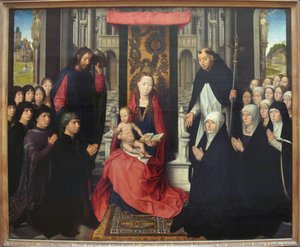
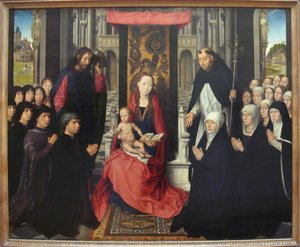
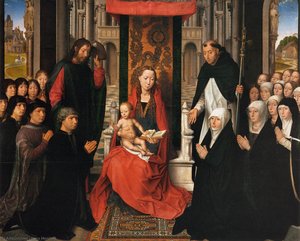
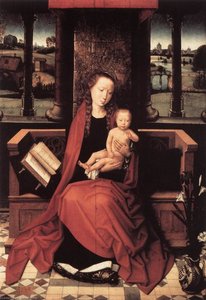
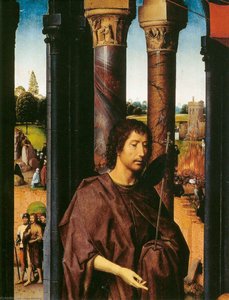
Virgin and Child with Sts James and Dominic
Reproduction Size
Hans Memling (c. 1430 – August 11, 1494), born in Seligenstadt, Germany, stands as a pivotal figure in Early Netherlandish painting—a movement characterized by exquisite realism, meticulous observation of nature, and profound spiritual contemplation. Though his formative years were spent primarily within the Rhineland’s artistic milieu, Memling's trajectory ultimately led him to Bruges, Belgium, where he established himself as one of the foremost artists of his time and cultivated a prolific workshop that disseminated his distinctive style across Europe.
Early Life & Apprenticeship: Precise biographical details surrounding Memling’s birth remain elusive, yet scholarly consensus suggests he emerged from Mainz around 1430. His artistic education commenced under the tutelage of Rogier van der Weyden, a titan of Flemish painting whose mastery of oil paint and sculptural modeling profoundly shaped Memling's technique. This apprenticeship instilled in him an unwavering dedication to capturing the subtleties of human form and drapery—a hallmark of his oeuvre.
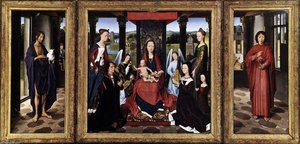
“Virgin and Child with Sts James and St. Dominic Presenting the Donors and their Family,” commonly known as “The Virgin of Jacques Floreins,” exemplifies Memling’s unparalleled skill in blending meticulous detail with harmonious composition. Painted around 1485-1490, this oil on panel masterpiece embodies the sacred conversation theme prevalent in northern Italy during the Renaissance—a stylistic choice that distinguishes it from its counterparts in Northern Europe.
The painting's central figures – Mary and Jesus – are depicted with serene dignity amidst a richly ornamented chapel setting. Two saints, James and Dominic, flank Mary, presenting the donors—Jacques Floreins and his wife—who kneel before them in humble reverence. Memling’s masterful use of color—particularly luminous blues and reds—creates an atmosphere of ethereal beauty and spiritual illumination.
Memling's technique is characterized by painstaking layering of glazes—a method perfected during his Bruges period—that achieves remarkable depth and luminosity. He meticulously rendered textures, from the folds of drapery to the smooth skin of Mary’s face, demonstrating an astonishing command of anatomical precision. Furthermore, Memling skillfully employed perspective—albeit subtly—to convey a sense of spatial realism that anticipates developments in Renaissance art.
“The Virgin of Jacques Floreins” emerged during a period of fervent religious devotion and artistic experimentation in Bruges—a city renowned for its patronage of the arts. The painting reflects the humanist ideals of the era, emphasizing human dignity and moral virtue alongside Christian faith. The inclusion of saints James and Dominic underscores the importance of monastic piety and spiritual contemplation within medieval Christendom.
More than just a depiction of biblical narrative, Memling’s masterpiece evokes profound emotions—compassion, reverence, and wonder—inspiring viewers to contemplate the mysteries of faith and human experience. Its enduring beauty continues to captivate audiences centuries later, cementing Memling's place as one of the greatest artists of the Early Renaissance and securing his legacy as a champion of artistic excellence.
Explore Memling’s “Virgin & Child” masterpiece! A stunning Early Netherlandish painting of the Virgin Mary with Sts James & Dominic, showcasing intricate detail & serene beauty.
Discover Antoniazzo Romano (1430-1508) – a leading Early Renaissance painter of the Roman school, known for his iconic depictions of the Virgin Mary, Byzantine influences, and frescoes blending medieval & new styles. A founder of Accademia di San Luca.
Learn about Francesco Laurana (1430-1502) – Croatian & Italian sculptor & medallist. Explore his Renaissance works, including busts & architectural designs in Naples, Sicily & France.

Germany

Journey into the world of Early Netherlandish painting! Explore 10 masterpieces by Jan van Eyck, Rogier van der Weyden & more. Discover stunning detail, symbolism & Renaissance art for your home decor. Find museum-quality reproductions on Most-Famous-Paintings.com

Explore the captivating world of Early Netherlandish painting! Discover Jan van Eyck & other Flemish masters, their revolutionary techniques, hidden symbolism, and lasting legacy. A comprehensive guide for art enthusiasts.

Journey through 25 iconic Claude Monet masterpieces! Explore Impressionism’s beauty, from Water Lilies to Rouen Cathedral. Discover stunning art reproductions & curated decor ideas – explore the full collection online at Most-Famous-Paintings.com.

Journey into the Early Netherlandish Renaissance! Explore 10 iconic paintings by Jan van Eyck, Rogier van der Weyden & more. Discover stunning detail, symbolism, and oil painting techniques. Find museum-quality art reproductions for your home at Most-Famous-Paintings.com.

Explore the captivating world of Early Netherlandish painting! Discover Jan van Eyck, Hans Memling & more. Uncover symbolism, techniques & the legacy of these Flemish masters. A comprehensive guide for art enthusiasts.


Stay updated with the latest art news, exclusive offers, and decoration ideas.
Tell us about your project and our art experts will provide you with 3 personalized art suggestions.
Let Us Curate 3 Options Just for You - Free!


 Buy print
 Send
Send Share
Share
 Details

 Download
 Similars
 X-Ray
X-Ray Diaporama
 Read More







 Glass option is only available in size under 110 CM