x


Hand-painted oil on canvas in your size and frame, made to order by our artists.





























Pick from our preset sizes that match the artwork's original proportions.

You may enter your own dimensions to fit a specific frame or space. If your selected size does not match the original image's proportions, we will either crop the artwork or extend the painting with additional hand-painted elements. A digital mockup will be sent for your approval before production begins.
Please note that the on-screen preview does not reflect the actual cropping or extension. Only the mockup will accurately show the final composition.
While custom sizes are available, we recommend selecting a dimension from the predefined list to preserve the original proportions.
Worldwide Delivery () in 3/4 weeks instead of standard 5 weeks. (18 July). No compromise on quality.


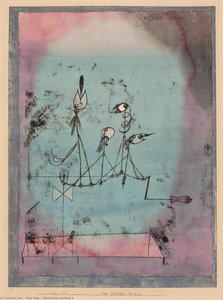
Fire Wind 1
Reproduction Size
Paul Klee’s “Fire Wind 1,” a captivating black and white drawing, isn't merely an image; it’s a meticulously constructed exploration of energy, movement, and the very essence of mechanical process. Completed in 1924 during a period of intense experimentation for the artist, this work embodies Klee’s signature blend of Constructivist rigor with his deeply personal, emotionally resonant style. The drawing immediately commands attention with its dynamic asymmetry – a deliberate disruption that mirrors the chaotic yet controlled energy depicted within. It's a piece that invites prolonged observation, revealing layers of intricate detail and subtle shifts in perspective that speak to Klee’s masterful control over line and form.
The composition centers around a roughly rectangular structure, reminiscent of a box or machine, surrounded by a swirling vortex of radiating lines. These aren't static elements; they pulsate with implied motion, suggesting a complex system in operation – perhaps a factory, a power plant, or even the internal workings of a human mind. The use of hatching and cross-hatching creates a remarkable textural depth, lending weight to the seemingly abstract forms. Notice how Klee employs varying line thicknesses to define spatial relationships; bolder lines delineate the central structure, while thinner, more delicate lines trace the pathways of energy radiating outwards. This careful manipulation of line not only establishes form but also contributes significantly to the drawing’s overall sense of dynamism.
“Fire Wind 1” firmly resides within the artistic currents of its time, exhibiting a clear dialogue with both Constructivism and Futurism. The geometric precision and emphasis on mechanical representation are hallmarks of Constructivist art, a movement that sought to strip away decorative elements and focus on the underlying structure of objects and systems. Simultaneously, the swirling lines and sense of accelerated motion align with the Futurist fascination with speed, dynamism, and the modern world. Klee, however, transcends simple imitation; he synthesizes these influences into something uniquely his own – a deeply personal interpretation filtered through his distinctive artistic sensibility.
The drawing’s origins lie in a period of intense experimentation for Klee, marked by a desire to explore new ways of representing the world. He was grappling with questions about form, function, and the relationship between art and technology. This exploration is evident in “Fire Wind 1,” where he attempts to capture not just the appearance of a machine but also its underlying processes – the flow of energy, the transmission of information, the very heartbeat of industrial activity. The aged paper, with its subtle imperfections and slightly uneven surface, further enhances this sense of historical depth, suggesting that this drawing is not merely a product of its time but a testament to Klee’s enduring legacy.
Beyond its formal qualities, “Fire Wind 1” is rich in symbolic meaning. The radiating lines can be interpreted as representing power, force, or even the transmission of energy – perhaps symbolizing the flow of electricity, steam, or data. The central structure could represent a core element within this system, while the swirling lines suggest the interconnectedness and complexity of the whole. Yet, despite its technical sophistication, the drawing also possesses a palpable emotional quality. There’s an underlying sense of unease, a hint of anxiety evoked by the chaotic arrangement and lack of grounding. It's not simply a celebration of industrial progress; it’s a meditation on the potential consequences of unchecked technological advancement.
Klee’s masterful use of monochrome further amplifies this emotional impact. The absence of color forces the viewer to focus entirely on form, line, and texture – heightening our awareness of the drawing's intricate details and subtle nuances. “Fire Wind 1” is a powerful reminder that even in the most abstract forms, art can convey profound emotions and insights into the human condition. It’s a work that continues to resonate with viewers today, inviting us to contemplate the relationship between technology, society, and our own inner worlds.
Most-Famous-Paintings offers exceptional high-quality reproductions of “Fire Wind 1,” meticulously crafted by skilled artisans using archival materials. Whether you choose a canvas print, an aluminum composite panel, or a fine art paper option, you’ll experience the full impact of Klee's vision. Consider framing options such as sawtooth hangers or heavy-duty angle mounts to perfectly complement your chosen medium. Each reproduction is created with the utmost care and attention to detail, ensuring that it faithfully captures the original drawing’s dynamism and emotional depth. Investing in a Most-Famous-Paintings reproduction of “Fire Wind 1” isn't just acquiring an image; it’s bringing home a piece of art history – a testament to Paul Klee’s genius and his enduring legacy.
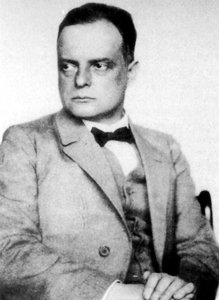
1879 - 1940 , Switzerland
Explore the power of black, white & gray abstraction in modern interior design. Discover how minimalist art impacts spatial perception & creates sophisticated hotel spaces. Expert insights for designers.
Explore 25 iconic artworks by Kazimir Malevich, pioneer of Suprematism & abstract art. Discover the stories behind 'Black Square' and more! Find museum-quality prints & elevate your home decor with Most-Famous-Paintings.com.

Explore the captivating world of Paul Klee! Discover his innovative art, Bauhaus influence, & unique symbolic language. Expert analysis & high-quality reproductions at Most-Famous-Paintings.

Delve into the power of 'Ivory Black' with 10 iconic paintings by masters like Rembrandt & Caravaggio. Explore dramatic chiaroscuro, gothic moods & timeless art history. Find museum-quality reproductions and elevate your home decor at

Explore the profound world of Abstract Expressionism with Most-Famous-Paintings. Discover its history, emotional power & key artists like Pollock & Rothko. Expert insights for collectors & art lovers.


Stay updated with the latest art news, exclusive offers, and decoration ideas.
Tell us about your project and our art experts will provide you with 3 personalized art suggestions.
Let Us Curate 3 Options Just for You - Free!


 Buy print
 Send
Send Share
Share
 Details

 Download
 Similars
 X-Ray
X-Ray Diaporama

 Read More







 Glass option is only available in size under 110 CM