


x


 Acrylic On CanvasWallArtNeo-Plasticism
 1913Early Medieval
 88.0 x 115.0 cm
 Kröller-Müller Museum
Hand-painted oil on canvas in your size and frame, made to order by our artists.





























Pick from our preset sizes that match the artwork's original proportions.

You may enter your own dimensions to fit a specific frame or space. If your selected size does not match the original image's proportions, we will either crop the artwork or extend the painting with additional hand-painted elements. A digital mockup will be sent for your approval before production begins.
Please note that the on-screen preview does not reflect the actual cropping or extension. Only the mockup will accurately show the final composition.
While custom sizes are available, we recommend selecting a dimension from the predefined list to preserve the original proportions.
Worldwide Delivery () in 3/4 weeks instead of standard 5 weeks. (18 July). No compromise on quality.


Composition no. II
Reproduction Size
Piet Mondrian's *Composition no. II*, painted in 1913, isn’t merely a painting; it’s an architectural meditation on the very essence of reality. Emerging from his early work depicting the Dutch landscape – particularly the evocative River ’t Gein – this piece represents a pivotal shift in Mondrian’s artistic trajectory, marking his decisive move towards abstraction and the nascent principles of Neo-Plasticism. Initially rooted in the naturalistic traditions of the Hague School, Mondrian began to dismantle representation, stripping away the illusion of depth and embracing instead a rigorously constructed system of lines and colors intended to capture something far more profound: the universal harmony underlying all existence.
The canvas unfolds as a carefully orchestrated grid, dominated by rectangles and squares in varying shades of muted yellow, brown, gray, and pale pink. These aren’t arbitrary hues; Mondrian meticulously selected them from his limited palette – primary colors plus black and white – believing they possessed the purest expressive potential. The crisp, black lines that delineate each shape are not simply boundaries but active participants in the composition, creating a dynamic tension between form and space. Notice how these lines don't converge or recede; instead, they intersect and overlap, generating a sense of layered depth without resorting to traditional perspective. This deliberate flattening of space reflects Mondrian’s belief that art should transcend the limitations of the physical world and tap into a higher, more spiritual realm.
It's crucial to understand *Composition no. II*'s genesis within Mondrian’s earlier work depicting the River ’t Gein. The initial paintings of this area – particularly those capturing the farmstead nestled amongst the trees – served as a springboard for his radical transformation. He didn’t simply paint what he saw; instead, he distilled the essence of these landscapes—the lines of the riverbank, the verticality of the trees, the horizontal expanse of the water—into their most fundamental components. The reflection in the water, a key element in many of these earlier works, is here reduced to an almost ghostly suggestion, a subtle echo of its former self. This process of reduction mirrors Mondrian’s broader philosophical project: to uncover the underlying structure of reality through simplification and abstraction.
Mondrian himself articulated his intentions during this period with remarkable clarity: “I construct lines and colour combinations on a flat surface with the aim of depicting the general beauty as consciously as possible.” This statement encapsulates the core of Neo-Plasticism – an aesthetic philosophy rooted in the belief that art should be purely abstract, devoid of representational content. *Composition no. II* embodies this principle perfectly. The geometric forms aren’t meant to evoke specific objects or scenes; rather, they are vehicles for expressing a fundamental order and balance. The black lines act as anchors, providing stability and structure, while the colors contribute to a sense of harmony and resonance. It's a visual representation of a search for universal truth—a belief that through reducing form and color to their most essential elements, one could achieve a profound connection with the underlying order of the cosmos.
Painted in 1913, *Composition no. II* stands as a pivotal work in Mondrian’s development and a cornerstone of modern art. Its influence can be seen in countless subsequent abstract paintings and designs. The painting's enduring appeal lies not only in its formal rigor but also in its emotional resonance. It evokes a sense of calm contemplation, inviting the viewer to engage with the underlying structure of reality—a structure that Mondrian believed was accessible through the disciplined application of line and color. Today, reproductions of *Composition no. II* offer a unique opportunity to experience this profound vision firsthand, bringing a touch of timeless elegance and intellectual depth to any space.

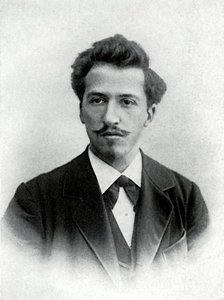
1872 - 1944 , Netherlands
Explore 10 defining masterpieces of Geometric Abstraction! Discover Kandinsky, Mondrian & Malevich’s iconic works. Find museum-quality art reproductions and curated decor ideas to elevate your home at Most-Famous-Paintings.com.
Journey through Wassily Kandinsky's 25 most iconic abstract paintings. Explore his revolutionary use of color, form & spiritual expressionism. Find museum-quality Kandinsky reproductions and elevate your home decor with Most-Famous-Paintings.com. Discover all masterpieces on Most-Famous-Paintings.com!
Explore 25 iconic Fernand Léger paintings that defined the Machine Age & Cubism. Discover the stories behind his bold colors, geometric forms & avant-garde style. Find museum-quality art reproductions on Most-Famous-Paintings.com.

Journey through 25 iconic artworks at the Metropolitan Museum of Art! Explore Van Gogh, Monet, Rembrandt & more. Discover art history, inspiring stories, and museum-quality reproductions to elevate your home decor. Explore the full collection on Most-Famous-Paintings.com.
Explore 25 iconic artworks by Kazimir Malevich, pioneer of Suprematism & abstract art. Discover the stories behind 'Black Square' and more! Find museum-quality prints & elevate your home decor with Most-Famous-Paintings.com.


Stay updated with the latest art news, exclusive offers, and decoration ideas.
Tell us about your project and our art experts will provide you with 3 personalized art suggestions.
Let Us Curate 3 Options Just for You - Free!


 Buy print
 Send
Send Share
Share
 Details

 Download
 Similars
 X-Ray
X-Ray Diaporama
 Read More







 Glass option is only available in size under 110 CM


