x


 Oil On CanvasWallArtBritish Landscape School
 176419th Century
 76.0 x 64.0 cm
 National Gallery of Victoria
Hand-painted oil on canvas in your size and frame, made to order by our artists.





























Pick from our preset sizes that match the artwork's original proportions.

You may enter your own dimensions to fit a specific frame or space. If your selected size does not match the original image's proportions, we will either crop the artwork or extend the painting with additional hand-painted elements. A digital mockup will be sent for your approval before production begins.
Please note that the on-screen preview does not reflect the actual cropping or extension. Only the mockup will accurately show the final composition.
While custom sizes are available, we recommend selecting a dimension from the predefined list to preserve the original proportions.
Worldwide Delivery () in 3/4 weeks instead of standard 5 weeks. (18 July). No compromise on quality.


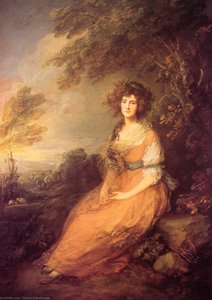
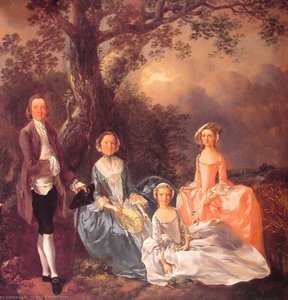
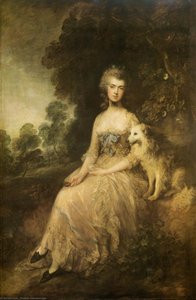
Elizabeth Wrottesly
Reproduction Size
The Suffolk countryside holds a profound significance in the artistic legacy of Thomas Gainsborough (1727 – 1788), arguably Britain’s most celebrated painter of the Georgian era. Born into a family involved in wool trading, young Gainsborough defied convention by prioritizing artistic pursuits over the family business, recognizing and nurturing an extraordinary talent that would propel him to international acclaim.
His formative years were spent absorbing the beauty of Suffolk's rolling hills and meadows – landscapes that would become central to his oeuvre. Unlike many artists of his time who favored idealized depictions, Gainsborough approached nature with a remarkable honesty and immediacy, capturing fleeting moments of light and atmosphere with effortless grace.
Gainsborough’s distinctive style is characterized by a luminous palette dominated by pastel hues – greens, blues, yellows – that evoke the serenity and vibrancy of the English countryside. He employed loose brushstrokes and subtle gradations of color to create an illusion of depth and movement, anticipating the Impressionistic techniques that would emerge decades later.
His meticulous attention to detail is balanced by a willingness to forgo precise rendering in favor of capturing the essence of his subjects. This approach resulted in paintings imbued with a palpable sense of spontaneity and emotion – qualities that resonate powerfully with viewers even today.
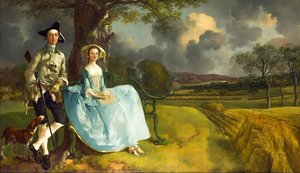
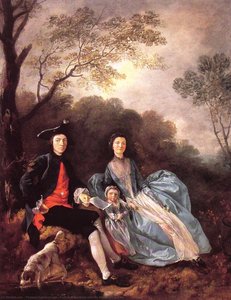
Considered Gainsborough’s masterpiece, “Elizabeth Wrottesly” exemplifies his masterful blend of landscape and portraiture. The painting depicts Elizabeth Wrottesly, a young woman known for her beauty and grace, posed amidst a meticulously rendered pastoral scene. The verdant foliage and dappled sunlight serve as a backdrop to Wrottesly's figure, symbolizing fertility and renewal.
The inclusion of a feather – delicately positioned in Wrottesly’s hand – adds another layer of symbolic meaning. Feathers have long been associated with aspiration and nobility, reflecting Wrottesly’s elevated social standing and embodying the artist’s desire to elevate his subject beyond mere physical appearance.
Gainsborough's work emerged during a period of significant artistic innovation in Britain. He spearheaded the establishment of the Royal Academy in 1769, marking a pivotal moment in British art history and fostering a collaborative environment for artists to experiment with new ideas.
His influence extended far beyond his own lifetime, inspiring generations of painters who embraced his pioneering approach to landscape painting. Gainsborough’s legacy continues to endure as a testament to the transformative power of observation and artistic vision – qualities that remain eternally relevant in our contemporary world.


1727 - 1788 , United Kingdom

Explore 10 iconic portrait paintings – from Mona Lisa to Van Gogh’s self-portraits. Discover the stories behind these masterpieces, artistic techniques & find museum-quality art reproductions for your home at Most-Famous-Paintings.com.
Explore 25 captivating portraits by Sir Joshua Reynolds, a master of British art. Discover stories behind his iconic paintings, elegant style & historical influence. Find museum-quality reproductions and elevate your home decor on Most-Famous-Paintings.com.
Journey through 10 breathtaking landscape paintings by Monet, Van Gogh & more! Explore iconic artworks, artistic techniques & find inspiration for your home decor. Museum-quality reproductions at Most-Famous-Paintings.com. Discover all masterpieces on Most-Famous-Paintings.com
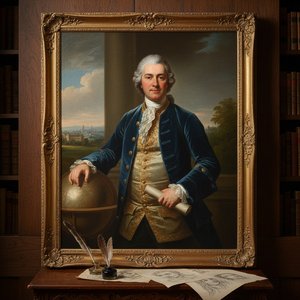
Explore the life & work of Thomas Hudson, a leading 18th-century British portraitist. Discover his mastery of the 'Grand Manner,' influential style, and lasting impact on British art. Learn about his notable portraits like Judge William Noel & Alexander Van Aken.
Commission a timeless oil portrait from skilled artists at Most-Famous-Paintings. Preserve your family's legacy with museum-quality paintings, crafted to cherish for generations. Expert guidance & personalized service.


Stay updated with the latest art news, exclusive offers, and decoration ideas.
Tell us about your project and our art experts will provide you with 3 personalized art suggestions.
Let Us Curate 3 Options Just for You - Free!


 Buy print
 Send
Send Share
Share
 Details

 Download
 Similars
 X-Ray
X-Ray Diaporama
 Read More







 Glass option is only available in size under 110 CM