x

 Oil On CanvasWallArtRococo and Landscape
 1777
1777 147.0 x 180.0 cm
 National Gallery
Hand-painted oil on canvas in your size and frame, made to order by our artists.





























Pick from our preset sizes that match the artwork's original proportions.

You may enter your own dimensions to fit a specific frame or space. If your selected size does not match the original image's proportions, we will either crop the artwork or extend the painting with additional hand-painted elements. A digital mockup will be sent for your approval before production begins.
Please note that the on-screen preview does not reflect the actual cropping or extension. Only the mockup will accurately show the final composition.
While custom sizes are available, we recommend selecting a dimension from the predefined list to preserve the original proportions.
Worldwide Delivery () in 3/4 weeks instead of standard 5 weeks. (18 July). No compromise on quality.


The Watering Place
Reproduction Size
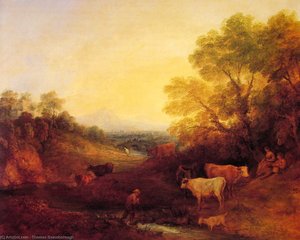
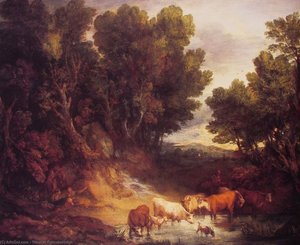
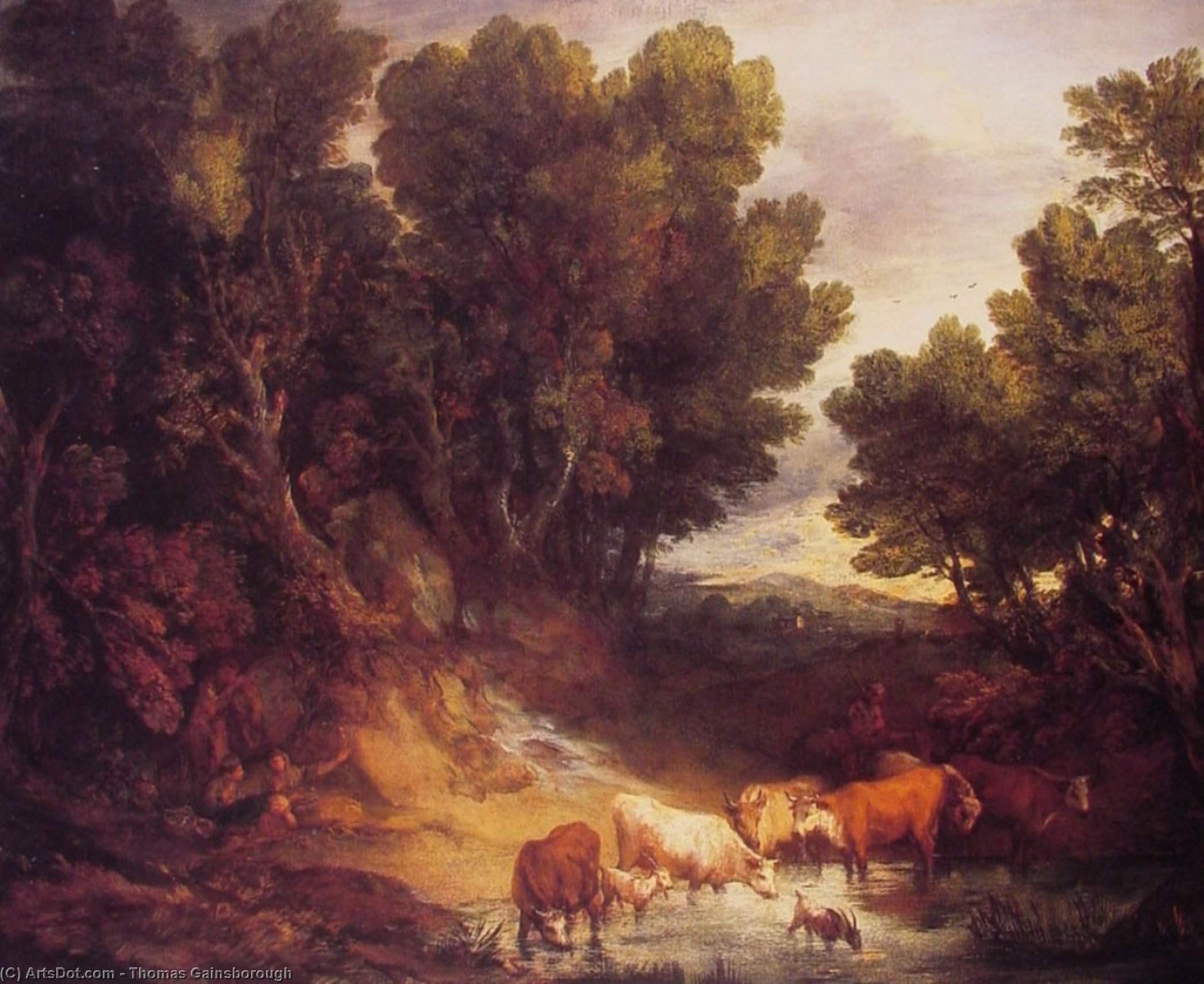
Thomas Gainsborough's "The Watering Place," painted in 1777, isn’t merely a depiction of cows drinking from a stream; it’s an invitation to step into a pocket of profound peace. This oil on canvas, currently residing within the hallowed halls of the National Gallery in London, captures a quintessential English scene – one that speaks volumes about the burgeoning appreciation for nature and rural life during the late 18th century. The painting immediately draws the eye with its soft, diffused light, a hallmark of Gainsborough’s masterful technique, creating an atmosphere both luminous and subtly melancholic. It's a scene brimming with quiet observation, suggesting a moment suspended in time, far removed from the bustle of urban existence.
The composition itself is carefully orchestrated. Nine cows, rendered with remarkable detail and individual character, occupy the foreground, their forms interacting with the landscape in a way that feels utterly natural. They aren’t posed dramatically; instead, they graze, drink, and simply *are*, embodying a sense of contentedness. The presence of a solitary figure, positioned discreetly near the watering hole, adds an element of human connection to this otherwise purely animalistic tableau. This individual isn't a dominant force in the scene, but rather a silent witness, perhaps a shepherd or farmer, subtly reminding us of our own place within the natural world. The artist’s use of color is particularly noteworthy – muted greens and browns dominate, punctuated by the creamy whites of the cows and the cool blues of the stream. These earthy tones contribute significantly to the painting's overall sense of serenity.
“The Watering Place” firmly establishes Gainsborough as a key figure in the Rococo movement, though with a distinctly English sensibility. While retaining the Rococo’s emphasis on elegance and lightness – evident in the graceful lines of the cows and the delicate brushstrokes – Gainsborough departs from the more overtly ornate styles prevalent at the time. He prioritizes observation over elaborate decoration, focusing instead on capturing the authentic beauty of the British countryside. This shift reflects a broader trend within English art during this period, moving away from the heavily influenced French style towards a celebration of native landscapes and traditions. Interestingly, Gainsborough’s work was deeply indebted to the Italian landscape painter Francesco Zuccarelli, whose Arcadian scenes – idealized depictions of rural life – were immensely popular throughout Europe. However, Gainsborough transforms these influences into something uniquely his own, imbuing them with a palpable sense of realism and emotional depth.
Gainsborough’s command of light is arguably the painting's most compelling feature. He employs a subtle yet effective chiaroscuro technique – a dramatic contrast between light and shadow – to sculpt the forms of the cows and create a sense of volume and depth. The light, seemingly originating from an unseen source, gently illuminates the scene, highlighting the textures of the fur, grass, and water. This masterful manipulation of light not only enhances the beauty of the landscape but also imbues the painting with a profound emotional resonance. The way the shadows fall across the figures suggests a quiet contemplation, inviting the viewer to linger and absorb the atmosphere. The artist’s attention to detail extends beyond mere representation; he uses light and shadow to convey mood and feeling, transforming a simple pastoral scene into a powerful meditation on nature and human experience.
“The Watering Place” offers a fascinating glimpse into the social and cultural landscape of 18th-century England. It reflects a growing appreciation for the countryside, fueled by the rise of leisure travel and a desire to escape the confines of urban life. Gainsborough’s paintings frequently depicted rural scenes, celebrating the dignity and simplicity of peasant life – a subject that resonated deeply with a society increasingly aware of its own social inequalities. The painting's quiet intimacy and understated beauty speak to a yearning for connection with nature and a recognition of the value of simple pleasures. Today, “The Watering Place” remains a beloved masterpiece, continuing to captivate viewers with its timeless appeal and profound sense of tranquility. A high-quality reproduction from Most-Famous-Paintings.com allows you to bring this exquisite scene into your home or office, offering a constant reminder of the beauty and serenity found in the natural world.


1727 - 1788 , United Kingdom

Journey through 25 iconic artworks at the Metropolitan Museum of Art! Explore Van Gogh, Monet, Rembrandt & more. Discover art history, inspiring stories, and museum-quality reproductions to elevate your home decor. Explore the full collection on Most-Famous-Paintings.com.
Journey through Katsushika Hokusai’s 25 most iconic artworks, including *The Great Wave*. Explore the ukiyo-e master's history, style & timeless Japanese woodblock prints. Find museum-quality reproductions for your home at Most-Famous-Paintings.com.
Explore 25 iconic artworks from Washington DC's National Gallery of Art! Discover masterpieces by Cézanne, Matisse & Picasso. Find museum-quality art reproductions and elevate your home decor with timeless paintings. Explore the full collection online at Most-Famous-Paintings.com.
Journey through John Constable's 25 most celebrated landscapes. Explore Romanticism, Dedham Vale & his masterful use of light in iconic paintings like 'Hay Wain'. Find museum-quality art reproductions and elevate your home decor on Most-Famous-Paintings.com.

Journey through 25 iconic James Abbott McNeill Whistler paintings! Explore his masterpieces of Aestheticism, from 'Nocturne in Black and Gold' to captivating portraits. Find museum-quality art reproductions & elevate your home decor with Most-Famous-Paintings.com. Discover the full collection online.


Stay updated with the latest art news, exclusive offers, and decoration ideas.
Tell us about your project and our art experts will provide you with 3 personalized art suggestions.
Let Us Curate 3 Options Just for You - Free!


 Buy print
 Send
Send Share
Share
 Details

 Download
 Similars
 X-Ray
X-Ray Diaporama
 Read More







 Glass option is only available in size under 110 CM