x

 OilWallArtPost-Impressionism
 1946Modern
 61.0 x 76.0 cm
 Laing Art Gallery
Adquiera una imagen digital de alta resolución y optimizada, muy superior a la vista previa en línea.
Cada archivo es preparado meticulosamente por nuestros especialistas internos mediante el uso de herramientas avanzadas y un experto retoque manual. Nos aseguramos de que cada imagen posea una claridad excepcional, una precisión cromática impecable y un detalle minucioso.
El archivo final se entrega por correo electrónico en un plazo de 72 horas, optimizado para su uso inmediato en entornos profesionales, editoriales y de impresión. Esta es la misma calidad en la que confían los estudios de diseño, las editoriales y las galerías de primer nivel.
Descarga un archivo de alta resolución para exhibición personal, impresión y proyectos creativos. ( Pedir impresión Encargar reproducción pintada a mano)
Al elegir Most-Famous-Paintings.com, no solo está adquiriendo una imagen; está recibiendo una obra de arte digital mejorada profesionalmente, elaborada con precisión y respaldada por una garantía de satisfacción. Esto es todo lo que incluye su pedido, automáticamente:

Recibirá su archivo de imagen digital en alta resolución por correo electrónico en un plazo de 72 horas tras realizar su pedido, listo para su uso inmediato.

Su obra de arte se optimiza profesionalmente mediante herramientas avanzadas de IA y edición manual, garantizando el máximo detalle, claridad y precisión cromática.

¿Has borrado o perdido tu archivo por error? No te preocupes: te lo volveremos a enviar en cualquier momento, sin coste adicional.

Disfrute de su obra de arte al instante sin aduanas, aranceles ni gastos de envío; las descargas digitales siempre están libres de impuestos.

Garantizamos que su imagen digital refleje los colores originales con la mayor fidelidad posible, mediante el uso de herramientas profesionales y gestión del color.

Si no está satisfecho con su imagen digital, la revisaremos o le reembolsaremos el 100% en un plazo de 60 días, sin preguntas.

¿No está satisfecho? Obtenga un reembolso completo dentro de los 60 días posteriores a la recepción de su archivo digital, sin necesidad de explicaciones.

Compra 3 imágenes, ahorra 10% - Compra 5, ahorra 15% - Compra 10+, ahorra 20%. Ideal para proyectos creativos, galerías y agencias.
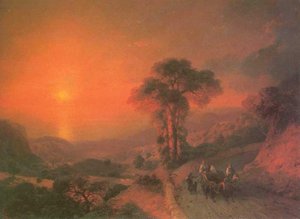
In the quietude of 1946, David Bomberg captured a moment of profound serenity in Sunset, the Bay, North Devon. This evocative masterpiece serves as a window into a world where the elements of earth, water, and sky converge in a harmonious dance of color. The painting presents a breathtaking vista of the Devon coastline, where the vast expanse of the Atlantic meets a sky heavy with dramatic, swirling clouds. As the sun begins its descent, it casts a warm, golden glow across the horizon, illuminating the crests of gentle waves and turning the heavens into a canvas of vibrant oranges, deep purals, and soft ambers. The composition is masterfully balanced, leading the eye from the textured, grassy foreground—a grounded, tactile presence—out toward the infinite depth of the ocean, where small, distant boats float like silent witnesses to the day's end.
The technique employed in this work reflects Bomberg’s unique ability to blend structural form with emotional resonance. While his earlier years were marked by the rigorous experimentation of Cubism and Futurism, this mid-century piece showcases a more lyrical approach to landscape. The brushwork is purposeful and rich, creating a sense of movement within the clouds and a rhythmic pulse in the water. There is a palpable weight to the colors; they are not merely applied to the surface but seem to emanate from within the scene itself. For the discerning collector or interior designer, this painting offers a sophisticated interplay of light and shadow that can anchor a room, providing a focal point that is both intellectually stimulating and visually soothing.
To understand Sunset, the Bay, North Devon, one must consider the hand of David Bomberg, a pivotal figure in the British avant-garde. Having emerged from the influential 'Whitechapel Boys' circle and studied under the legendary Walter Sickert, Bomberg possessed a deep understanding of how to translate the raw energy of nature into structured art. By 1946, the world was emerging from the shadows of global conflict, and there is an undeniable sense of peace and reconstruction present in this coastal scene. The painting acts as a sanctuary, inviting the viewer to escape the complexities of human history and reconnect with the timeless, rhythmic cycles of the natural world.
Symbolically, the sunset represents more than just a temporal marker; it is a meditation on transition and the beauty found in endings. The contrast between the solid, verdant land and the fluid, ever-changing sea speaks to the duality of permanence and flux. For those looking to adorn a living space or a professional gallery, this reproduction offers an unparalleled emotional impact. It brings with it an atmosphere of tranquility and warmth, making it an ideal selection for creating an environment of reflection and grace. Owning such a piece is not merely about possessing a landscape; it is about inviting the enduring spirit of the English coast into one's personal sanctuary.

Nacido en Birmingham, hijo de inmigrantes judíos polacos, Abraham y Rebecca Bomberg. La familia se mudó a Whitechapel, Londres, en 1895.
Inicialmente estudió en la Escuela Técnica de Arte y Artesanía de la Ciudad y el Condado antes de formarse como litógrafo en Birmingham.
Estudió bajo Walter Sickert en la Escuela de Arte Westminster (1908-1910), donde se vio influenciado por el enfoque de Sickert en la forma y la vida urbana.
Gran exposición a Paul Cézanne a través de la exposición de 1910 de Roger Fry "Manet y los Postimpresionistas".
Asistió a la Escuela de Arte Slade (1911), ganando el Premio Tonks por su dibujo del compañero estudiante Isaac Rosenberg.
Las experiencias como soldado privado durante la Primera Guerra Mundial impactaron profundamente su visión artística, lo que llevó a un alejamiento de la abstracción.
La década de 1920 vio a Bomberg adoptar un estilo más figurativo, centrándose en retratos y paisajes dibujados directamente de la naturaleza.
Desarrolló una técnica cada vez más expresionista, marcada por el impasto texturizado y la intensidad emocional.
Extensos viajes por Oriente Medio (especialmente Palestina) y Europa influyeron significativamente en su obra posterior. Sus representaciones de Jerusalén son particularmente notables.

1890 - 1957 , Reino Unido


Manténgase al día con las últimas noticias de arte, ofertas exclusivas e ideas de decoración.
Cuéntanos sobre tu proyecto y nuestros expertos en arte te ofrecerán 3 sugerencias de obras personalizadas.
Dejamos que nosotros seleccionemos 3 opciones exclusivas para ti – ¡Gratis!


 Vista previa
 Compartir
 Compartir
 Ver detalles

 Descargar
 Ver similares
 Radiografía
 Presentación de diapositivas
 Leer más