x

 OilWallArtPost-Impressionism
 1946Modern
 61.0 x 76.0 cm
 Laing Art Gallery
Impresiones giclée o en lienzo de calidad de museo con producción rápida y opciones de acabado flexibles. ( Encargar reproducción pintada a mano Comprar descarga)





























Elija entre nuestros tamaños predefinidos que respetan las proporciones originales de la obra.

Puede introducir sus propias dimensiones para adaptarse a un marco o espacio específico. Si el tamaño seleccionado no coincide con las proporciones de la imagen original, recortaremos la obra de arte o extenderemos la imagen con un borde con efecto espejo o de color sólido. Se enviará una maqueta digital para su aprobación antes de que comience la producción.
Tenga en cuenta que la vista previa en pantalla no refleja el recorte o la extensión real. Solo la maqueta mostrará con precisión la composición final.
Aunque existen tamaños personalizados, recomendamos seleccionar una dimensión de la lista predefinida para preservar las proporciones originales.
Envío a todo el mundo () en 2 semanas en lugar de las 4/5 semanas estándar. (18 agosto)


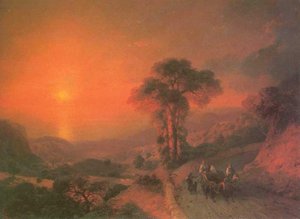
Sunset, the Bay, North Devon
Tamaño de la reproducción
In the quietude of 1946, David Bomberg captured a moment of profound serenity in Sunset, the Bay, North Devon. This evocative masterpiece serves as a window into a world where the elements of earth, water, and sky converge in a harmonious dance of color. The painting presents a breathtaking vista of the Devon coastline, where the vast expanse of the Atlantic meets a sky heavy with dramatic, swirling clouds. As the sun begins its descent, it casts a warm, golden glow across the horizon, illuminating the crests of gentle waves and turning the heavens into a canvas of vibrant oranges, deep purals, and soft ambers. The composition is masterfully balanced, leading the eye from the textured, grassy foreground—a grounded, tactile presence—out toward the infinite depth of the ocean, where small, distant boats float like silent witnesses to the day's end.
The technique employed in this work reflects Bomberg’s unique ability to blend structural form with emotional resonance. While his earlier years were marked by the rigorous experimentation of Cubism and Futurism, this mid-century piece showcases a more lyrical approach to landscape. The brushwork is purposeful and rich, creating a sense of movement within the clouds and a rhythmic pulse in the water. There is a palpable weight to the colors; they are not merely applied to the surface but seem to emanate from within the scene itself. For the discerning collector or interior designer, this painting offers a sophisticated interplay of light and shadow that can anchor a room, providing a focal point that is both intellectually stimulating and visually soothing.
To understand Sunset, the Bay, North Devon, one must consider the hand of David Bomberg, a pivotal figure in the British avant-garde. Having emerged from the influential 'Whitechapel Boys' circle and studied under the legendary Walter Sickert, Bomberg possessed a deep understanding of how to translate the raw energy of nature into structured art. By 1946, the world was emerging from the shadows of global conflict, and there is an undeniable sense of peace and reconstruction present in this coastal scene. The painting acts as a sanctuary, inviting the viewer to escape the complexities of human history and reconnect with the timeless, rhythmic cycles of the natural world.
Symbolically, the sunset represents more than just a temporal marker; it is a meditation on transition and the beauty found in endings. The contrast between the solid, verdant land and the fluid, ever-changing sea speaks to the duality of permanence and flux. For those looking to adorn a living space or a professional gallery, this reproduction offers an unparalleled emotional impact. It brings with it an atmosphere of tranquility and warmth, making it an ideal selection for creating an environment of reflection and grace. Owning such a piece is not merely about possessing a landscape; it is about inviting the enduring spirit of the English coast into one's personal sanctuary.

Nacido en Birmingham, hijo de inmigrantes judíos polacos, Abraham y Rebecca Bomberg. La familia se mudó a Whitechapel, Londres, en 1895.
Inicialmente estudió en la Escuela Técnica de Arte y Artesanía de la Ciudad y el Condado antes de formarse como litógrafo en Birmingham.
Estudió bajo Walter Sickert en la Escuela de Arte Westminster (1908-1910), donde se vio influenciado por el enfoque de Sickert en la forma y la vida urbana.
Gran exposición a Paul Cézanne a través de la exposición de 1910 de Roger Fry "Manet y los Postimpresionistas".
Asistió a la Escuela de Arte Slade (1911), ganando el Premio Tonks por su dibujo del compañero estudiante Isaac Rosenberg.
Las experiencias como soldado privado durante la Primera Guerra Mundial impactaron profundamente su visión artística, lo que llevó a un alejamiento de la abstracción.
La década de 1920 vio a Bomberg adoptar un estilo más figurativo, centrándose en retratos y paisajes dibujados directamente de la naturaleza.
Desarrolló una técnica cada vez más expresionista, marcada por el impasto texturizado y la intensidad emocional.
Extensos viajes por Oriente Medio (especialmente Palestina) y Europa influyeron significativamente en su obra posterior. Sus representaciones de Jerusalén son particularmente notables.

1890 - 1957 , Reino Unido

Descubre las 25 obras maestras de Marianne North, la artista victoriana que capturó la belleza exótica de la botánica. Pinturas vibrantes y llenas de historia. Reproducciones de arte exclusivas en Most-Famous-Paintings.com.

Explore the captivating world of seascape art! Discover its history, key artists & movements – from Dutch Masters to Impressionism. Expert insights for collectors and enthusiasts at Most-Famous-Paintings.

Descubre 10 obras maestras de Monet, Van Gogh y más que evocan la serenidad. Explora el arte impresionista, paisajes zen y lienzos relajantes para un hogar tranquilo. Reproducciones de museo en Most-Famous-Paintings.com.

Explore the captivating history of sunset motifs in Western art! Discover iconic paintings by Monet, Van Gogh & Kuindzhi. Learn about Romanticism, Impressionism & collecting these timeless masterpieces. Expert insights at Most-Famous-Paintings.

Descubre las 25 obras maestras de Claude Monet, el padre del impresionismo. Explora la historia, técnica y belleza de sus paisajes, nenúfares y 'Impresión, sole levant'. Encuentra reproducciones de arte exclusivas en Most-Famous-Paintings.com.


Manténgase al día con las últimas noticias de arte, ofertas exclusivas e ideas de decoración.
Cuéntanos sobre tu proyecto y nuestros expertos en arte te ofrecerán 3 sugerencias de obras personalizadas.
Dejamos que nosotros seleccionemos 3 opciones exclusivas para ti – ¡Gratis!


 Vista previa
 Compartir
 Compartir
 Ver detalles

 Descargar
 Ver similares
 Radiografía
 Presentación de diapositivas
 Leer más







 La opción de vidrio solo está disponible en tamaños inferiores a 110 cm.