
Trokimų sąrašas Prekių krepšelis Cart
x
Peržiūrėti realybėjePeržiūrėti realybėje Peržiūrėti ARPeržiūrėti AR Pirkti rankomis tapytą paveikslą Pirkti rankomis tapytą paveiksląPirkti vaizdą Pirkti vaizdą PasidalintiPasidalinti
IšsamiauIšsamiau Pridėti į mėgstamiausius Pridėti į mėgstamiausius AtsisiųstiAtsisiųsti Panašūs eksponataiPanašūs eksponatai Rentgeno nuotraukaRentgeno nuotrauka Automatinė dioramaAutomatinė diorama

Dunes cove

Experience Ernst Ludwig Kirchner’s dramatic Expressionist woodcut "Dunes Cove," a stark portrayal of isolation and unease through bold lines and monochrome contrasts – perfect for art lovers seeking powerful, emotive artwork.

Ernst Ludwig Kirchneris (1880–1938) – žymusis Vokietijos ekspresionistas ir Die Brücke steigėjas. Išsiaiškinti jo ryškiusius emocijas iškviečiančius paveikslų kūriniais apie Berlyną, nuskaidrusis meno stiliumi ir istorinės reikšmės kontekstu.

Giclée / Meno spausdinimas

Muziejų lygio „giclée“ arba drobos spausdinimas: greita gamyba ir lankstios apdailos parinktys. (Pirkti rankomis tapytą paveikslą Pirkti rankomis tapytą paveiksląPirkti vaizdą Pirkti vaizdą)

P118B $10
P118H $10
P118W $10
P438Z $10
P508JH $12
P508YH $12
P805H $10
P805Z $10
P919BZ $10
P919G $10
P919XJ $10
P959ZH $10
P968JZ $12
W106C $8
W218G $10
W218JH $8
W218Y $10
W307PJ $10
W316G $10
W316PJ $8
W316Y $10
W398PJ $8
W4111J $10
W500HY $15
W500JH $15
W692G $12
W849H $8
W940BG $15
W953PJ $8

Standard
custom
CM
INCH

Pasirinkite iš mūsų nustatytų dydžių, atitinkančių originalaus meno kūrinio proporcijas.

plotis
aukštis

Galite nurodyti savo matmenis, kad vaizdas atitiktų konkretų rėmą ar erdvę. Jei pasirinktas dydis nesutaps su originalaus paveikslėlio proporcijomis, mes arba apkirpsime kūrinį, arba išplėsime vaizdą naudojant veideliu atspindėtą arba vientisą šoną. Skaitmeninis maketas bus išsiųstas jums patvirtinti prieš pradedant gamybą.
Atkreipkite dėmesį, kad ekrane matomas vaizdinys neatspindi tikrojo apkirpimo ar išplėtimo. Tik maketas tiksliai parodytų galutinę kompoziciją.
Nors galima rinktis ir individualius dydžius, rekomenduojame pasirinkti vieną iš išanksti nustatytų matmenų, kad būtų išlaikytos originalios proporcijos.

Pristatymas visame pasaulyje () per 2 weeks, o ne įprastas 4/5 savaičių laikotarpis. (22 rugpjūtis)

why_choose_icon
Nemokamas greitasis pristatymas visame pasaulyje
why_choose_icon
Aukštos kokybės lininis drobė
why_choose_icon
Pilnas siuntimo draudimas
why_choose_icon
Muitinės mokesčių grąžinimo garantija
why_choose_icon
Tikro spalvų atitikimo garantija
why_choose_icon
60 dienų grąžinimo politika (tik esant gamyklinėms defektams)
why_choose_icon
100% pinigų grąžinimo garantija
why_choose_icon
Nuolaida už kelias reprodukcijas

Visų darbų kaina

$ 68

reproduction

Dunes cove

Giclée / Meno spausdinimas

Reprodukcijos matmenys

-

Galutinė kaina

$ 68

Trumpos informacija

  • Influences:
    • Dürer
    • Modernity
  • Notable elements: Stylized figures, lines
  • Artist: Ernst Ludwig Kirchner
  • Subject or theme: Coastal landscape
  • Medium: Woodcut Print
  • Movement: Expressionism

Kolekcinio eksponato aprašymas

Dunes Cove: A Descent into Expressionist Emotion

Ernst Ludwig Kirchner’s “Dunes Cove” is not merely a depiction of a coastal scene; it's an immersion into the turbulent heart of German Expressionism. Executed as a woodcut print, this stark and arresting image immediately confronts the viewer with a world stripped bare – a landscape reduced to its essential forms, imbued with a palpable sense of unease and isolation. The work’s power resides in its deliberate distortion, its rejection of naturalistic representation in favor of an intensely subjective emotional response. Kirchner, born in Aschaffenburg in 1880, was a pivotal figure in the Expressionist movement, driven by a desire to capture not what he *saw*, but what he *felt* – anxieties about modernity, alienation, and the psychological strain of a rapidly changing world.

Technique and Materials: The Language of Wood and Ink

  • Woodcut Print: “Dunes Cove” exemplifies the meticulous process of woodcut printing. Kirchner began with a meticulously carved block of wood, each line representing an element within the composition. This relief technique demanded precision and control, resulting in bold, graphic shapes that define the scene.
  • Monochromatic Palette: The deliberate use of black and white – achieved through varying densities of ink – amplifies the dramatic impact. The absence of color forces the viewer to focus entirely on form, line, and texture, intensifying the emotional resonance.
  • Layered Hatching & Cross-Hatching: Kirchner masterfully employed hatching and cross-hatching to build up tonal values, creating a sense of depth and suggesting the roughness of the sand dunes and the solidity of the trees. This technique is crucial to understanding the work's textural quality.

A Distortion of Reality: Perspective and Symbolism

Kirchner’s artistic vision deliberately rejects traditional perspective, flattening space and distorting forms in a manner characteristic of Expressionist art. The figures wading in the water or sand are not rendered with anatomical accuracy; instead, they are elongated, stylized representations of human vulnerability within a hostile environment. This distortion isn't accidental; it serves to heighten emotional intensity and convey a sense of psychological unease. The sweeping curve of the dune acts as a visual metaphor for instability and perhaps even the overwhelming force of nature. The dense clouds overhead further contribute to this feeling of confinement and foreboding, suggesting a world shrouded in uncertainty.

Emotional Resonance: Isolation and Anxiety

“Dunes Cove” is profoundly evocative, communicating a powerful sense of isolation and anxiety – themes central to Kirchner’s oeuvre. The stark contrast between light and shadow, the simplified forms, and the deliberate distortion all contribute to this unsettling atmosphere. It's a scene that invites contemplation on the human condition, prompting questions about our place in the world and our relationship with nature. This artwork speaks to a deeper truth – the inherent loneliness of modern existence, amplified by the anxieties of a society undergoing rapid transformation.

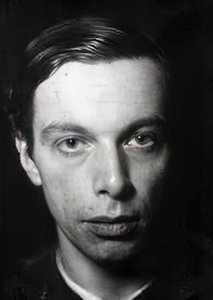
Autoriaus biografija

Ernst Ludwig Kirchner (1880–1938): A Life Forged in Expression

Ernst Ludwig Kirchner, a name inextricably linked to the visceral heart of German Expressionism, wasn’t merely an artist; he was a conduit for anxieties simmering beneath the surface of early 20th-century Europe. Born into Bavaria's Aschaffenburg in 1880, his formative years were shaped by familial mobility – a constant shifting of landscapes dictated by his father’s profession as a paper scientist – fostering within him an inherent sense of displacement that would become a defining characteristic of his oeuvre. From Frankfurt to Perlen and finally settling in Chemnitz, Kirchner absorbed the palpable unease of a nation undergoing rapid modernization, imbibing influences from both philosophical currents and artistic precedents. Initially pursuing architecture at Dresden’s Königliche Technische Hochschule, he swiftly recognized painting as his true vocation—a path illuminated by admiration for masters like Albrecht Dürer and fueled by a resolute rejection of academic formalism. He found solace and camaraderie amongst fellow rebels – Fritz Bleyl, Karl Schmidt-Rottluff, Erich Heckel – forging bonds that would irrevocably alter the trajectory of twentieth-century art history.

The Genesis of Expression: Early Influences & Artistic Formation

Kirchner’s artistic journey began with a profound engagement with nature and observation—a habit instilled by his childhood spent amidst Bavaria's rolling hills. His father’s profession provided him with invaluable insight into the industrial landscape, shaping his worldview and informing his artistic sensibility. He honed his skills at Dresden’s Hochschule für Grafik und Buchdruckschule (School of Graphic Arts), immersing himself in draughtsmanship and perspective drawing—disciplines that would serve as foundational tools for his subsequent explorations. Crucially, Kirchner encountered kindred spirits who shared a fervent belief in the transformative power of art—particularly Fritz Bleyl, Karl Schmidt-Rottluff and Erich Heckel—who would become instrumental in establishing *Die Brücke*, an artistic collective dedicated to shattering conventional aesthetic boundaries. This formative encounter ignited his passion for experimentation and cemented his commitment to confronting societal anxieties through visual language. The influence of Dürer’s meticulous detail and compositional rigor, alongside the expressive dynamism of Vincent van Gogh's brushstrokes—particularly in his depiction of swirling skies—provided Kirchner with invaluable stylistic models.

Die Brücke: A Revolt Against Tradition

In 1905, Kirchner joined *Die Brücke* (“The Bridge”), a revolutionary artistic alliance that fundamentally challenged the prevailing aesthetic norms of German art. Alongside Bleyl, Schmidt-Rottluff and Heckel, Kirchner sought inspiration from sources deemed unacceptable by the established art world—primitive art from Africa and Oceania, mirroring the stylistic impulses of Edvard Munch—and championed bold color palettes and distorted forms as vehicles for conveying psychological turmoil. Rejecting idealized beauty, *Die Brücke* artists embraced dissonance and fragmentation to capture the anxieties inherent in modern urban life. Their manifesto declared a rejection of academic conventions and an affirmation of subjective experience—a stance that resonated deeply with Kirchner’s own worldview. The group's exploration of themes like loneliness, alienation and psychological instability reflected the broader cultural anxieties of the era. Notable works from this period include *The Street* (1908), which powerfully portrays the oppressive atmosphere of Berlin’s urban sprawl and captures the emotional detachment experienced by its inhabitants—a testament to Kirchner’s ability to distill complex psychological states into striking visual imagery.

Exploring Form & Emotion: Kirchner's Distinctive Style

Kirchner’s artistic style is instantly recognizable for its distinctive characteristics—primarily his masterful manipulation of color and brushstroke. He eschewed naturalistic representation, prioritizing emotional impact over accurate depiction—a deliberate rejection of Impressionist ideals. His palette employed vibrant hues that pulsed with intensity, mirroring the turbulent inner landscape he sought to convey. Kirchner’s brushstrokes were energetic and visible, contributing to a palpable sense of immediacy and dynamism—a technique honed through meticulous observation and experimentation. Figures and objects were frequently distorted or elongated, reflecting a subjective rather than objective reality—a stylistic choice that underscored his belief in portraying psychological truths. He drew inspiration from Henri Matisse's use of flattened planes of color and simplified forms, mirroring the stylistic impulses of Fauvism. Furthermore, Kirchner’s fascination with primitive art—particularly sculptures from Africa and Oceania—influenced his approach to form and texture—demonstrating a desire to reconnect with primal energies and reject academic conventions.

Legacy & Recognition: A Lasting Influence

Kirchner's artistic legacy extends far beyond the confines of Expressionism, influencing subsequent generations of artists who embraced bold experimentation and psychological depth. His unflinching portrayal of human experience—characterized by vulnerability, anxiety and a yearning for authenticity—continues to resonate powerfully with contemporary audiences. Despite facing persecution during the Nazi regime—where over 600 of his works were confiscated and deemed “degenerate”—Kirchner’s uncompromising artistic vision endured, securing him a prominent place in art history. His enduring influence can be seen in the work of artists across diverse mediums—from painting to sculpture to printmaking—solidifying his position as one of Germany's most significant modernist figures. Ernst Ludwig Kirchner died tragically in Davos, Switzerland, in 1938—a poignant reminder of the devastating consequences of artistic repression and a testament to the enduring power of art to confront societal injustices.
Ernstas Ludvigas Kiršianas

Ernstas Ludvigas Kiršianas

1880 - 1938 , Գերմանիա

Trumpa informacija

  • Artistic Movement Or Style: Expressionism
  • Artists Who Influenced This Artist:
    • Albrecht Dürer
    • Vincent van Gogh
    • Edvard Munch
  • Date Of Birth: 6 Mai 1880
  • Date Of Death: 15 Gruodžio 1938
  • Full Name: Ernst Ludwig Kirchner
  • Nationality: Germania
  • Notable Artworks:
    • The Street (1908)
    • Leaping Dancer (1912)
    • Self-Portrait (1910)
  • Place Of Birth: Aschaffenburg, Germania
Tyrinėkite meno kūrinius, suskirstytus pagal temas, stilius ir savybes.




































