x

Hand-painted oil on canvas in your size and frame, made to order by our artists.





























Pick from our preset sizes that match the artwork's original proportions.

You may enter your own dimensions to fit a specific frame or space. If your selected size does not match the original image's proportions, we will either crop the artwork or extend the painting with additional hand-painted elements. A digital mockup will be sent for your approval before production begins.
Please note that the on-screen preview does not reflect the actual cropping or extension. Only the mockup will accurately show the final composition.
While custom sizes are available, we recommend selecting a dimension from the predefined list to preserve the original proportions.
Worldwide Delivery () in 3/4 weeks instead of standard 5 weeks. (18 July). No compromise on quality.


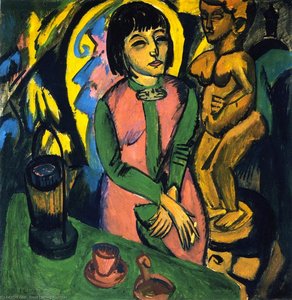
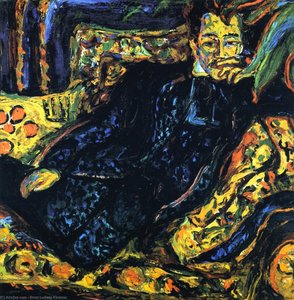
Marzella
Reproduction Size
Ernst Ludwig Kirchner’s “Marzella,” painted in 1909, is more than just a portrait; it's a raw distillation of the anxieties and emotional currents swirling through early Expressionism. This oil on panel work immediately confronts the viewer with a figure – a woman rendered with unsettling intensity – set against a deliberately stark background. The composition itself feels charged, a visual representation of inner turmoil. Kirchner’s masterful use of color—dominant yellows punctuated by deep blues and greens—amplifies this sense of unease, reflecting not just the physical environment but also the psychological state of the subject.

Kirchner’s technique is central to the painting's impact. He employs bold, gestural brushstrokes, deliberately distorting forms to convey emotion rather than adhering to realistic representation. The woman’s face, particularly her eyes, are rendered with an almost feverish intensity, drawing the viewer into a world of subjective experience. Notice how the lines of her clothing and hair seem to vibrate with energy, contributing to the overall sense of agitation. This deliberate distortion aligns perfectly with the Expressionist movement's core philosophy: to express inner feelings through art, often at the expense of objective reality.
"Marzella" was created during a period of profound social and artistic change in Germany. The late 19th and early 20th centuries witnessed rapid industrialization, urbanization, and a growing sense of alienation. Kirchner and his fellow Expressionists responded to these changes by rejecting the prevailing academic styles and seeking new ways to represent the human condition. The painting reflects the anxieties surrounding modernity, the breakdown of traditional values, and the increasing isolation experienced by individuals in an increasingly complex world. It’s a key work demonstrating the shift away from Impressionism towards a more subjective and emotionally charged artistic vision.
Beyond its technical brilliance, “Marzella” is rich in symbolic meaning. The woman's bowed head and melancholic gaze suggest a deep sadness or perhaps a sense of resignation. The yellow background, often associated with anxiety and madness, further intensifies the painting’s emotional impact. Kirchner wasn’t simply depicting a portrait; he was attempting to capture a fleeting moment of profound psychological intensity. “Marzella” continues to resonate with viewers today because it taps into universal themes of loneliness, despair, and the struggle for identity – emotions that remain powerfully relevant in our own time.

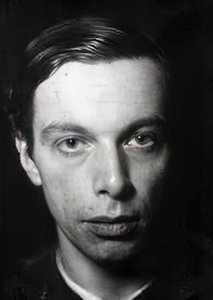
1880 - 1938 , Germany

Explore 10 iconic portrait paintings – from Mona Lisa to Van Gogh’s self-portraits. Discover the stories behind these masterpieces, artistic techniques & find museum-quality art reproductions for your home at Most-Famous-Paintings.com.
Delve into the haunting world of Egon Schiele with our curated selection of his 25 most iconic Expressionist paintings. Explore the artist's life, technique & emotional depth. Find museum-quality Schiele reproductions and elevate your home decor on Most-Famous-Paintings.com.
Explore 10 iconic paintings bathed in golden yellow ochre! From Van Gogh's sunflowers to Monet’s haystacks, discover the stories behind these masterpieces. Find museum-quality art reproductions & elevate your home decor on .

Journey through 25 iconic Claude Monet masterpieces! Explore Impressionism’s beauty, from Water Lilies to Rouen Cathedral. Discover stunning art reproductions & curated decor ideas – explore the full collection online at Most-Famous-Paintings.com.
Journey through 25 iconic artworks by Paul Cézanne – a master of Impressionism and Post-Impressionism. Explore his landscapes, still lifes, and the stories behind these timeless masterpieces. Discover museum-quality reproductions & curated decor at Most-Famous-Paintings.com.


Stay updated with the latest art news, exclusive offers, and decoration ideas.
Tell us about your project and our art experts will provide you with 3 personalized art suggestions.
Let Us Curate 3 Options Just for You - Free!


 Buy print
 Send
Send Share
Share
 Details

 Download
 Similars
 X-Ray
X-Ray Diaporama


 Read More







 Glass option is only available in size under 110 CM