x


 GraphiteOtherScientific Illustration
 Early Modern
 40.0 x 54.0 cm
 Yale Center for British Art
Hand-painted oil on canvas in your size and frame, made to order by our artists.
Pick from our preset sizes that match the artwork's original proportions.

You may enter your own dimensions to fit a specific frame or space. If your selected size does not match the original image's proportions, we will either crop the artwork or extend the painting with additional hand-painted elements. A digital mockup will be sent for your approval before production begins.
Please note that the on-screen preview does not reflect the actual cropping or extension. Only the mockup will accurately show the final composition.
While custom sizes are available, we recommend selecting a dimension from the predefined list to preserve the original proportions.
Worldwide Delivery () in 3/4 weeks instead of standard 5 weeks. (18 July). No compromise on quality.


Study of a Fowl, Lateral View, with skin and underlying fascial layers removed, from 'A Comparative Anatomical Exposition of the Structure of the Human Body with that of a Tiger and a Common Fowl'
Reproduction Size
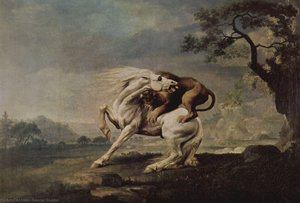
To gaze upon this study is to participate in an act of profound intellectual curiosity. It is not merely a depiction of a fowl, but rather a meticulous excavation of life itself—a moment where the superficial veil of skin and flesh has been carefully drawn back to reveal the intricate machinery beneath. George Stubbs, master anatomist and painter, presents us with a lateral view that arrests the viewer in a state of suspended scientific wonder. The composition is utterly focused, drawing all attention to the delicate interplay between bone, sinew, and fascia. There is an undeniable tension captured here; the bird seems caught mid-motion, its neck arched as if recalling some forgotten flight, even though the study demands absolute stillness for its observation.
The sheer technical brilliance on display is breathtaking. Stubbs employs a vocabulary of line that speaks volumes about his dedication to empirical truth. Observe how the artist has utilized hatching and cross-hatching, not just as shading techniques, but as descriptive tools. These fine, precise lines do more than suggest shadow; they articulate the very texture of muscle fiber, the smooth curve of tendon, and the stark geometry of bone structure. The medium, likely graphite or charcoal on paper, allows for an unparalleled subtlety in tone—a graduation from deep, velvety blacks to the palest whispers of white. This masterful control over value gives the illusion of depth, making the layered anatomy feel almost tangible, as if one could reach out and trace the path of a ligament.
This work situates itself firmly within the grand tradition of scientific illustration from the eighteenth century. During this era, art and science were deeply intertwined; the pursuit of aesthetic beauty often walked hand-in-hand with the relentless drive for objective knowledge. Stubbs’s commitment to comparative anatomy—comparing fowl structure to that of man and tiger in a larger context—places this piece within a rich intellectual lineage. It speaks to an age fascinated by classification, understanding the universal laws governing biological form. For the modern collector or designer, owning such a reproduction is not just acquiring art; it is curating a tangible piece of Enlightenment thought.
While the subject matter—a dissected animal—is inherently clinical and devoid of overt narrative emotion, its impact on the viewer is anything but detached. There is an undeniable pull toward the sublime in this level of detail. It evokes a complex cocktail of emotions: profound respect for life’s engineering, the thrill of discovery, and perhaps a touch of poignant melancholy at the necessary act of dissection required to reveal such secrets. This piece invites contemplation; it asks us to look closer, to appreciate the hidden complexity that supports every graceful movement we take.
For those seeking art for an interior space, this study offers a unique focal point. It transcends mere decoration, acting instead as a sophisticated intellectual anchor. Framed thoughtfully, it introduces a layer of scholarly gravitas and refined naturalism to any room—be it a library, a study, or a gallery-inspired living area. The monochromatic palette ensures that its impact is timeless, complementing rich wood tones, muted textiles, and modern minimalist aesthetics alike. It is an object that rewards prolonged viewing, promising endless moments of quiet, detailed appreciation.


1724 - 1806 , United Kingdom

Explore the life & legacy of John Gould, pioneering ornithologist & artist. Discover his stunning bird illustrations, the impact of chromolithography, and investment opportunities for collectors. Learn more now!

Explore the exquisite botanical illustrations of Jacques Barraband (1767-1809). Discover his stunningly accurate bird paintings, commissioned by Napoleon, and learn about his lasting legacy in art & science. Shop museum-quality reproductions at Most-Famous-Paintings.

Explore the life & art of John James Audubon, pioneer of ornithological illustration! Discover his stunning 'Birds of America' watercolors and complex legacy. Hand-painted reproductions available at Most-Famous-Paintings.
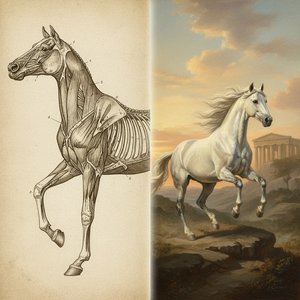
Explore the captivating world of George Stubbs, the 18th-century master renowned for his anatomical precision & Romantic animal paintings. Discover his legacy and investment potential.

Explore the captivating world of George Roux, a pioneer of French Symbolist illustration renowned for his iconic work with Jules Verne. Discover his artistic techniques, enduring legacy, and how to collect his timeless masterpieces.


Stay updated with the latest art news, exclusive offers, and decoration ideas.
Tell us about your project and our art experts will provide you with 3 personalized art suggestions.
Let Us Curate 3 Options Just for You - Free!


 Buy print
 Send
Send Share
Share
 Details

 Download
 Similars
 X-Ray
X-Ray Diaporama
 Read More




































 Glass option is only available in size under 110 CM