x


Hand-painted oil on canvas in your size and frame, made to order by our artists.





























Pick from our preset sizes that match the artwork's original proportions.

You may enter your own dimensions to fit a specific frame or space. If your selected size does not match the original image's proportions, we will either crop the artwork or extend the painting with additional hand-painted elements. A digital mockup will be sent for your approval before production begins.
Please note that the on-screen preview does not reflect the actual cropping or extension. Only the mockup will accurately show the final composition.
While custom sizes are available, we recommend selecting a dimension from the predefined list to preserve the original proportions.
Worldwide Delivery () in 3/4 weeks instead of standard 5 weeks. (18 July). No compromise on quality.


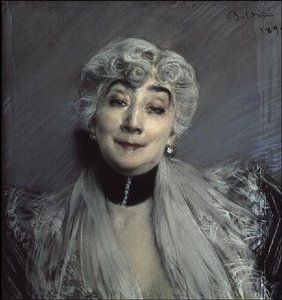
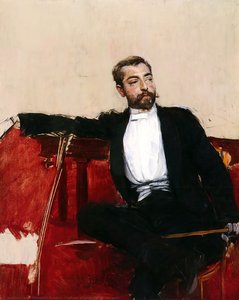
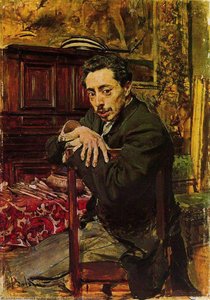
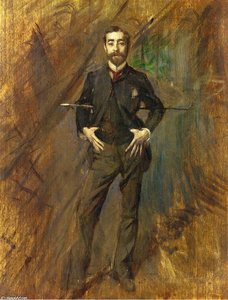
Portrait of Georges de Bellio
Reproduction Size
Giovanni Boldini’s “Portrait of Georges de Bellio” is more than just a likeness; it's a shimmering distillation of Belle Époque elegance and the artist’s signature, almost decadent, style. Painted in 1894, this oil on canvas captures not merely a man’s appearance but an entire atmosphere – the confident bearing of a successful gentleman navigating the vibrant social scene of late 19th-century Paris. The painting immediately draws the eye with its rich palette: deep burgundies and browns ground the composition, offset by flashes of gold in the fabric of De Bellio's suit and the subtle highlights catching the light on his face. Boldini’s masterful use of brushstrokes creates a remarkable sense of movement – a subtle ripple across the velvet jacket, a suggestion of wind in the hair, all contributing to an impression of life and energy.
Boldini was a pivotal figure in Parisian art during this era, earning the somewhat whimsical moniker “The Master of Swish” due to his distinctive technique. He moved away from the rigid academic traditions of earlier portraiture, embracing a looser, more expressive approach influenced by the Macchiaioli movement – Italian painters who prioritized capturing fleeting moments and atmospheric effects. This is evident in Boldini’s use of broken color and rapid brushwork, creating an almost shimmering quality to the surface of the painting. He wasn't interested in photographic realism; instead, he sought to convey a feeling, an essence, about his subject – De Bellio’s self-assuredness, his social standing, and perhaps even a hint of underlying intrigue.
Georges de Bellio (1828-1894) was a prominent figure in Parisian society – a lawyer and businessman with connections to the diplomatic corps. The portrait itself reflects his position, suggesting both wealth and influence. De Bellio’s attire—a dark suit, a crisp white shirt, and a meticulously tied cravat—is impeccably fashionable for the period, indicative of a man accustomed to luxury and social gatherings. His gaze is direct, almost challenging, yet there's also an element of quiet dignity in his expression. Boldini doesn’t simply depict De Bellio; he imbues him with personality, hinting at a complex character beneath the surface.
It’s important to note that Boldini was not merely a recorder of appearances. He was a keen observer of human nature and skillfully used visual cues – posture, expression, and clothing—to communicate his subject's inner world. The subtle tilt of De Bellio’s head, the slight furrow in his brow, all contribute to a sense of thoughtful contemplation. The inclusion of the background figures, blurred into an indistinct haze, further emphasizes De Bellio as the central focus, reinforcing his importance within the scene.
Boldini’s technique is characterized by its remarkable fluidity and dynamism. He employed a ‘broken brushstroke’ method, applying small, distinct dabs of paint that coalesce to create an overall impression rather than meticulously detailed lines. This creates a sense of movement and vibrancy, particularly noticeable in the fabric textures – the velvet jacket, the silk tie, and the sheen of De Bellio's hair. The artist masterfully manipulated light and shadow, using subtle gradations of color to sculpt the form and create an illusion of depth.
Furthermore, Boldini’s use of color is remarkably sophisticated. He avoided overly bright or saturated hues, opting instead for a more muted palette dominated by rich browns, deep reds, and subtle golds. This restrained approach allows the colors to blend seamlessly together, creating a harmonious and elegant composition. The overall effect is one of understated luxury and refined taste – hallmarks of Boldini’s signature style.
"Portrait of Georges de Bellio" offers a captivating glimpse into the social and cultural landscape of Belle Époque Paris. It's a testament to the artist's ability to capture not just a likeness but also the spirit of an era—a time of optimism, extravagance, and artistic innovation. The painting evokes a sense of sophistication, confidence, and perhaps even a touch of melancholy, reflecting the complexities of human experience within a rapidly changing world.
Beyond its aesthetic qualities, the portrait serves as a reminder of Boldini’s enduring legacy as one of the most celebrated portraitists of his time. Reproductions of this masterpiece continue to captivate viewers with their luminous quality and evocative atmosphere, transporting us back to the glamorous salons and bustling streets of 19th-century Paris.


1842 - 1931 , Italy
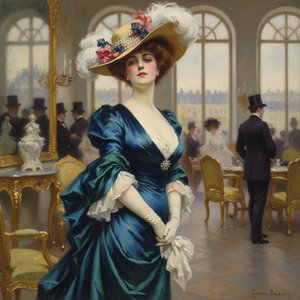
Explore the captivating world of Giovanni Boldini, master of Belle Époque portraiture. Discover his signature style, iconic works like 'Miss Bell,' and lasting influence on art history. Expert analysis for collectors.

Explore the captivating world of Jean-Georges Béraud, master painter of Belle Époque Paris. Discover his iconic scenes, artistic evolution, and social commentary. A deep dive into 19th-century French art.

Explore the art & culture of the Belle Époque! Discover Impressionism, Realism, and iconic Parisian paintings from Degas, Béraud & more. High-quality reproductions at Most-Famous-Paintings.

Explore the art & culture of 1875 Paris – a pivotal year for Impressionism & the Belle Époque. Discover Degas, Béraud, Stewart & more with Most-Famous-Paintings's expert insights.

Explore the refined tastes of European aristocracy from the Renaissance to the Belle Époque. Discover how art collecting shaped history & influenced iconic styles. Expert insights for discerning collectors.


Stay updated with the latest art news, exclusive offers, and decoration ideas.
Tell us about your project and our art experts will provide you with 3 personalized art suggestions.
Let Us Curate 3 Options Just for You - Free!


 Buy print
 Send
Send Share
Share
 Details

 Download
 Similars
 X-Ray
X-Ray Diaporama


 Read More







 Glass option is only available in size under 110 CM