Wishlist Shopping Cart Cart
Buy print Buy printBuy Image Buy Image SendSend
DetailsDetails Add to favorites Add to favorites DownloadDownload SimilarsSimilars X-RayX-Ray DiaporamaDiaporama

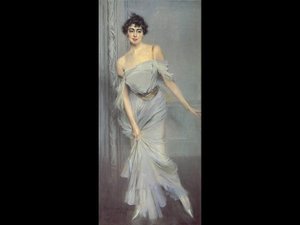
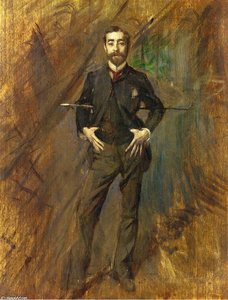
Portrait of Guiseppe Verdi

Giovanni Boldini’s masterful portrait of Verdi embodies Belle Époque elegance—a dignified depiction rendered in muted tones and refined brushstrokes by a Florentine realist painter who championed Impressionistic techniques.

Giovanni Boldini (1842-1931) was an Italian Impressionist painter celebrated for his elegant portraits of Parisian society and flowing, dynamic style. Discover the 'Master of Swish's' art!

Hand Made Oil Reproduction

Hand-painted oil on canvas in your size and frame, made to order by our artists.

P118B $10
P118H $10
P118W $10
P438Z $10
P508JH $12
P508YH $12
P805H $10
P805Z $10
P919BZ $10
P919G $10
P919XJ $10
P959ZH $10
P968JZ $12
W106C $8
W218G $10
W218JH $8
W218Y $10
W307PJ $10
W316G $10
W316PJ $8
W316Y $10
W398PJ $8
W4111J $10
W500HY $15
W500JH $15
W692G $12
W849H $8
W940BG $15
W953PJ $8

Standard
custom
CM
INCH

Pick from our preset sizes that match the artwork's original proportions.

width
height

You may enter your own dimensions to fit a specific frame or space. If your selected size does not match the original image's proportions, we will either crop the artwork or extend the painting with additional hand-painted elements. A digital mockup will be sent for your approval before production begins.
Please note that the on-screen preview does not reflect the actual cropping or extension. Only the mockup will accurately show the final composition.
While custom sizes are available, we recommend selecting a dimension from the predefined list to preserve the original proportions.

Examples of what can be changed: Replace face with customer photo; Add pet (e.g., replace cat with dog); Include hidden message in background; Change background landscape or elements.
After order, Most-Famous-Paintings.com team will email client for instructions and provide a mockup preview

Worldwide Delivery () in 3/4 weeks instead of standard 5 weeks. (18 July). No compromise on quality.

why_choose_icon
Free Worldwide Express Shipping
why_choose_icon
High-Quality Linen Canvas
why_choose_icon
Full Shipping Insurance
why_choose_icon
Customs Tax Refund Guarantee
why_choose_icon
True Color Matching Guarantee
why_choose_icon
60-Day Return Policy (Defects Only)
why_choose_icon
100% Money-Back Guarantee
why_choose_icon
Bulk Discount Offer

Total Price

-

reproduction

Portrait of Guiseppe Verdi

Reproduction Medium

Reproduction Size

-

Total Price

-

Quick Facts

  • Medium: Oil on Canvas
  • Title: Portrait of Giuseppe Verdi
  • Notable elements or techniques: Layered paint, Diffusion
  • Influences:
    • Realism
    • Impressionism
  • Subject or theme: Portraiture
  • Year: 1862
  • Artist: Giovanni Boldini

Art Quiz

There is only one correct answer for each question.

Question 1:
What artistic movement influenced Giovanni Boldini’s landscapes?
Question 2:
The portrait utilizes a predominantly dark color palette. What is the primary purpose of this color scheme?
Question 3:
Which element contributes to the dynamic balance of the composition?
Question 4:
What technique is Boldini employing to achieve a smooth finish and subtle gradations in tone?
Question 5:
The portrait aims for realistic depiction. What stylistic characteristic aligns with this goal?

Artwork Description

Giovanni Boldini’s Portrait of Giuseppe Verdi: A Study in Dignified Elegance

The artwork presented here is Giovanni Boldini's captivating portrait of Giuseppe Verdi, completed circa 1893 and residing within the illustrious Belle Époque era. More than just a depiction of a celebrated composer, this painting embodies the spirit of its time—a fascination with artistic grandeur and an unwavering commitment to capturing human character with meticulous detail. Boldini’s masterful execution elevates it beyond mere likeness, transforming it into a symbol of respect for Verdi's legacy and a testament to the artist’s exceptional skill.

A Window Into Victorian Portraiture

Boldini’s work firmly establishes itself within the tradition of Victorian portraiture, albeit infused with subtle Impressionistic influences. Unlike earlier commissions prioritizing idealized beauty, Boldini sought to portray Verdi as he truly was—a man of intellect and conviction, radiating quiet dignity. The stylistic choices reflect a broader movement away from academic conventions toward a more nuanced observation of reality. This deliberate departure aligns perfectly with the burgeoning interest in capturing fleeting moments and psychological depth that characterized the artistic landscape of Paris during Boldini’s prolific career.

Technique and Material Considerations

The painting itself is executed in oil on canvas, utilizing a technique characterized by layering paint to achieve subtle gradations in tone and texture—a hallmark of Boldini's approach. Visible brushstrokes contribute to an overall impression of refinement, skillfully blended to create a smooth surface that enhances the luminosity of Verdi’s complexion and clothing. The artist’s meticulous attention to detail is evident in the rendering of Verdi’s facial features – particularly his expressive eyes – conveying both seriousness and contemplation. Careful consideration was given to capturing the nuances of light and shadow, furthering the painting's emotive power.

Symbolism and Emotional Resonance

Beyond its technical prowess, Boldini’s portrait carries significant symbolic weight. The formal attire—the dark waistcoat, frock coat, and meticulously crafted hat—represents Verdi’s status as a prominent figure within the musical world. However, it is Verdi’s gaze – direct yet thoughtful – that speaks volumes about his inner life. This unwavering stare embodies confidence and intellectual curiosity, suggesting an artist who sought to understand and portray humanity with profound empathy. The muted color palette reinforces this solemn mood, creating an atmosphere of contemplative reverence for Verdi's accomplishments.

A Legacy Enduring Through Reproduction

Today, a high-quality reproduction of Boldini’s Portrait of Giuseppe Verdi offers art enthusiasts and interior designers alike the opportunity to experience the beauty and sophistication of Victorian artistry firsthand. Its timeless appeal stems from Boldini’s ability to distill complex emotion into a single image—a feat achieved through masterful technique and an unwavering dedication to capturing the essence of his subject. Bringing this iconic artwork into your home is not merely acquiring a beautiful print; it's embracing a piece of artistic history, imbued with the spirit of its era and resonating with enduring emotional depth.

Artist Biography

A Master of Swish: The Life and Art of Giovanni Boldini

Giovanni Boldini, a name synonymous with the elegance and allure of the Belle Époque, was an Italian artist who carved his niche in Parisian society as a celebrated portraitist. Born on December 31, 1842, in Ferrara, Italy, Boldini’s artistic journey began under the guidance of his father, a painter specializing in religious subjects. This early exposure instilled in him a foundational understanding of technique and composition, yet it was his move to Florence in 1862 that truly ignited his creative spirit. There, he encountered the Macchiaioli—a group of Italian realist painters who foreshadowed Impressionism with their emphasis on light, color, and spontaneous execution. This encounter proved pivotal, influencing Boldini’s landscapes with a newfound vibrancy and responsiveness to nature. However, it was in capturing the essence of his subjects through portraiture that he would ultimately achieve lasting renown.

From Florence to Parisian Society

Boldini's artistic path led him first to London, where he quickly gained recognition for his portraits of prominent figures like Lady Holland and the Duchess of Westminster. This early success paved the way for his relocation to Paris in 1872—a city that would become both his home and his muse. In Paris, Boldini immersed himself in the artistic milieu, befriending Edgar Degas and navigating the complex social landscape of the French capital. He developed a distinctive style characterized by its fluidity, dynamism, and an almost theatrical flair. His brushstrokes were not merely descriptive; they seemed to capture movement, personality, and the very air surrounding his subjects. This unique approach earned him the moniker “Master of Swish” in 1933, a testament to the graceful energy that permeated his work. He became *the* portraitist for Parisian high society, immortalizing the glamorous lives of actresses, socialites, and members of the aristocracy.

Technique and Influences

Boldini’s technique was as captivating as the personalities he portrayed. His canvases were often large in scale, allowing him to convey a sense of grandeur and presence. He employed a loose, expressive brushstroke, building up layers of color to create texture and depth. This approach, combined with his keen eye for detail and ability to capture fleeting expressions, resulted in portraits that were both strikingly realistic and imbued with an undeniable sense of style. While influenced by the Macchiaioli’s emphasis on light and spontaneity, Boldini also drew inspiration from artists like John Singer Sargent and Paul Helleu, whose own dynamic brushwork resonated with his artistic sensibilities. He wasn't simply replicating likenesses; he was creating impressions—evocative representations of character and social standing. His portraits weren’t just images; they were statements.

Legacy and Rediscovery

Throughout his career, Boldini exhibited widely, including at the Venice Biennale in 1895, 1903, 1905, and 1912. He received the Légion d'honneur for his contributions to the arts, solidifying his position as a leading figure in the Parisian art world. However, towards the end of his life, Boldini’s popularity waned as artistic tastes shifted. He continued to paint, but his work fell somewhat into obscurity until recent decades have witnessed a remarkable resurgence of interest. The rediscovery of lost works, such as the captivating portrait of Marthe de Florian found hidden away in a Parisian apartment in 2010, has reignited appreciation for Boldini’s artistry and brought renewed attention to his significant contribution to Belle Époque art. The story surrounding this painting—a forgotten treasure unearthed after decades of seclusion—only adds to the mystique that surrounds both the artist and his subjects.

A Lasting Impression

Giovanni Boldini passed away in Paris on January 11, 1931, leaving behind a legacy as one of the most fashionable and innovative portrait painters of his time. His work continues to inspire artists and art enthusiasts alike, offering a glimpse into a bygone era of elegance, sophistication, and artistic brilliance. He wasn’t merely documenting society; he was celebrating it—capturing its beauty, its energy, and its enduring allure on canvas. Boldini's portraits remain powerful testaments to his skill, his vision, and his ability to transform the act of painting into a captivating performance.
  • Boldini’s influence can be seen in contemporary portraiture.
  • His work is featured in major museums worldwide.
  • The rediscovery of lost works continues to fuel scholarly interest.
Giovanni Boldini

Giovanni Boldini

1842 - 1931 , Italy

Quick Facts

  • Artistic Movement Or Style: Impressionism
  • Artists Or Movements Influenced By This Artist: ['John Singer Sargent']
  • Artists Who Influenced This Artist: ['Macchiaioli painters']
  • Date Of Birth: December 31, 1842
  • Date Of Death: July 11, 1931
  • Full Name: Giovanni Boldini
  • Nationality: Italian
  • Notable Artworks:
    • Countess de Rasty
    • The Machine at Marly
  • Place Of Birth: Ferrara, Italy
Explore artworks organized by themes, styles, and characteristics.