x


Museum-quality giclée or canvas print with fast production and flexible finish options.





























Pick from our preset sizes that match the artwork's original proportions.

You may enter your own dimensions to fit a specific frame or space. If your selected size does not match the original image's proportions, we will either crop the artwork or extend the image with a mirrored or solid-fill edge. A digital mockup will be sent for your approval before production begins.
Please note that the on-screen preview does not reflect the actual cropping or extension. Only the mockup will accurately show the final composition.
While custom sizes are available, we recommend selecting a dimension from the predefined list to preserve the original proportions.
Worldwide Delivery () in 2 weeks instead of standard 4/5 weeks. (25 July)


Mrs James Andrew
Reproduction Size
John Constable’s “Mrs. James Andrew,” painted in 1818, is more than just a likeness; it’s a carefully constructed meditation on beauty, domesticity, and the burgeoning Romantic sensibility of early 19th-century England. The painting depicts Mrs. James Andrew, a woman of considerable social standing, rendered with an almost unnerving directness that invites the viewer into her private world. Constable's skill lies not merely in his technical proficiency – though undeniably impressive – but in his ability to imbue the subject with a palpable sense of quiet dignity and restrained emotion.
Constable was deeply influenced by the tenets of the Romantic movement, which prioritized emotion, subjective experience, and a profound connection with nature over the rigid rules of Neoclassicism. This influence is evident in his handling of light and shadow, particularly the soft, diffused illumination that gently caresses Mrs. Andrew’s face and garments. Constable employed a technique known as ‘impasto,’ applying thick layers of paint to create texture and heighten the sense of three-dimensionality. This approach was revolutionary at the time, moving away from the smooth, polished surfaces favored by earlier generations of artists.
His use of color is equally significant. The muted palette – dominated by creams, browns, and subtle blues – contributes to the painting’s overall atmosphere of tranquility and understated elegance. Constable's meticulous observation of light and shadow, a hallmark of his style, allows him to capture the nuances of the scene with remarkable accuracy.
"Mrs. James Andrew" was painted during a period of significant social and economic change in England. The rise of the middle class created new demands for portraiture, and artists like Constable catered to this market by producing works that celebrated domestic virtues and reflected the aspirations of their patrons. The painting can be interpreted as a reflection of the idealized image of womanhood prevalent at the time – one characterized by grace, modesty, and domesticity.
Furthermore, the inclusion of details such as the jewelry and clothing provides valuable insight into the material culture of early 19th-century England. It’s a window into the lives of those who occupied positions of relative privilege, offering a glimpse into their tastes and aspirations.
Ultimately, “Mrs. James Andrew” transcends its status as a mere portrait; it is a powerful evocation of quiet dignity and timeless beauty. Constable’s ability to capture the essence of his subject – her composure, grace, and inherent humanity – ensures that the painting continues to resonate with viewers today. This reproduction offers an exceptional opportunity to experience the artistry and emotional depth of one of England's most beloved landscape painters, bringing a touch of Romantic elegance into any setting.

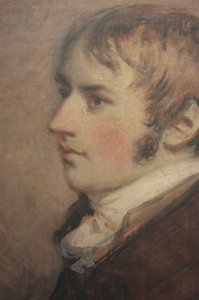
1776 - 1837 , United Kingdom
Journey through John Constable's 25 most celebrated landscapes. Explore Romanticism, Dedham Vale & his masterful use of light in iconic paintings like 'Hay Wain'. Find museum-quality art reproductions and elevate your home decor on Most-Famous-Paintings.com.

Journey through 25 iconic artworks at the Metropolitan Museum of Art! Explore Van Gogh, Monet, Rembrandt & more. Discover art history, inspiring stories, and museum-quality reproductions to elevate your home decor. Explore the full collection on Most-Famous-Paintings.com.
Journey through 25 iconic James Abbott McNeill Whistler paintings! Explore his masterpieces of Aestheticism, from 'Nocturne in Black and Gold' to captivating portraits. Find museum-quality art reproductions & elevate your home decor with Most-Famous-Paintings.com. Discover the full collection online.

Explore 10 iconic portrait paintings – from Mona Lisa to Van Gogh’s self-portraits. Discover the stories behind these masterpieces, artistic techniques & find museum-quality art reproductions for your home at Most-Famous-Paintings.com.

Explore 25 iconic artworks by Dante Gabriel Rossetti, a leading Pre-Raphaelite artist. Discover the stories behind masterpieces like 'Proserpine' & 'Beata Beatrix'. Find museum-quality art reproductions and elevate your home decor with Most-Famous-Paintings.com.


Stay updated with the latest art news, exclusive offers, and decoration ideas.
Tell us about your project and our art experts will provide you with 3 personalized art suggestions.
Let Us Curate 3 Options Just for You - Free!


 Preview
 Buy Painting
 Send
Send Share
Share
 Details

 Download
 Similars
 X-Ray
X-Ray Diaporama

 Read More







 Glass option is only available in size under 110 CM