x

Museum-quality giclée or canvas print with fast production and flexible finish options. ( Buy Hand Made Painting Buy Image)





























Pick from our preset sizes that match the artwork's original proportions.

You may enter your own dimensions to fit a specific frame or space. If your selected size does not match the original image's proportions, we will either crop the artwork or extend the image with a mirrored or solid-fill edge. A digital mockup will be sent for your approval before production begins.
Please note that the on-screen preview does not reflect the actual cropping or extension. Only the mockup will accurately show the final composition.
While custom sizes are available, we recommend selecting a dimension from the predefined list to preserve the original proportions.
Worldwide Delivery () in 2 weeks instead of standard 4/5 weeks. (20 August)


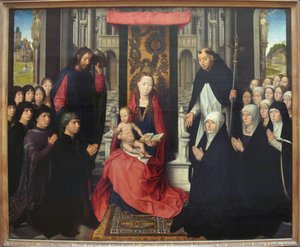
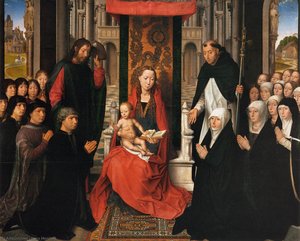
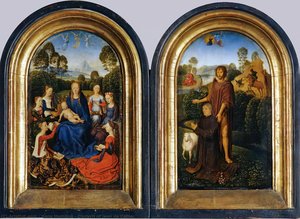
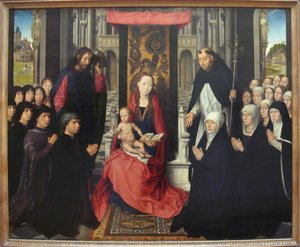
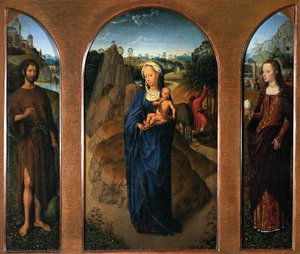
LA FUITE EN EGYPTE
Reproduction Size
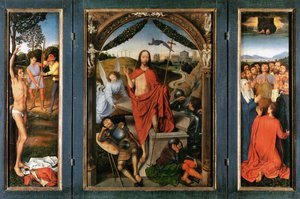
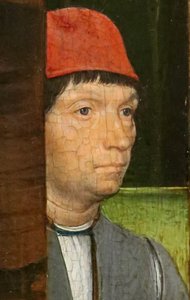
In the quiet, luminous depths of Hans Memling’s "La Fuite en Égypte," viewers are invited into a moment of profound spiritual intimacy and perilous grace. This exquisite triptych, a masterpiece of the Early Netherlandish Renaissance, captures the Holy Family during their flight from persecution. At its heart lies the tender connection between Mary and the infant Jesus; as the child sleeps in peaceful ignorance of the world's dangers, Mary watches over him with a gaze that balances maternal devotion with a heavy awareness of their divine mission. The scene is not merely a biblical illustration but a window into the soul of 15th-century piety, where every element of the composition serves to elevate the narrative from a historical event to a timeless meditation on faith and protection.
The technical mastery displayed in this work is a testament to the golden age of Bruges. Memling, a student of the legendary Rogier van der Weyden, employs the meticulous realism that defines the Flemish tradition. Through the sophisticated use of oil paint on panel, he layers translucent glazes to create a sense of inner radiance. This technique allows light to appear as if it is emanating from within the figures themselves—most notably in the soft glow surrounding Mary, which symbolizes her purity and holiness. The drapery of her garments cascades with a lifelike weight, where every fold and shadow is rendered with such precision that one can almost feel the texture of the heavy fabric, adding a tactile dimension to the ethereal atmosphere.
Beyond the central figures, the painting is a rich tapestry of symbolic meaning designed to instruct and inspire the faithful. Every detail in the periphery whispers of divine providence. Joseph, depicted as a steadfast guardian, holds an olive branch—a poignant emblem of hope and the promise of peace amidst their wandering. The background landscape, stretching toward distant, hazy mountains, serves a dual purpose: it provides a sense of the vast, daunting world the family must traverse, while simultaneously underscoring the infinite dominion of God over all creation. This contrast between the small, vulnerable human figures and the expansive, majestic terrain reinforces the theme of being enveloped in divine care.
For the discerning collector or interior designer, "La Fuite en Égypte" offers more than just historical significance; it provides a profound emotional anchor for any space. The painting’s ability to evoke tranquility through its soft color palettes and balanced composition makes it an ideal centerpiece for rooms intended for reflection or sophisticated repose. Whether viewed as a study in Renaissance technique or as a soulful piece of religious iconography, a high-quality reproduction of this work brings with it the quiet dignity of the Flemish masters, transforming a contemporary setting into a sanctuary of art and history.

Germany

Explore the life & art of Hans Holbein the Younger, a Renaissance master renowned for his strikingly realistic portraits and psychological insight. Discover iconic works like 'The Ambassadors' and delve into his lasting legacy.

Explore the captivating world of Early Netherlandish painting! Discover Jan van Eyck, Hans Memling & more. Uncover symbolism, techniques & the legacy of these Flemish masters. A comprehensive guide for art enthusiasts.

Explore the rich history of biblical art from Giotto to the Renaissance masters with Most-Famous-Paintings. Discover symbolism, techniques & enduring legacies. Museum-quality reproductions & expert insights.

Explore the captivating world of Hans von Aachen, a leading Mannerist painter renowned for his exquisite imperial portraits & mythological scenes. Discover his legacy and influence on 16th-century European art.

Explore the captivating world of Early Netherlandish painting (15th-16th centuries). Discover Jan van Eyck, Hans Memling & more. Uncover revolutionary techniques and hidden symbolism in this definitive guide.


Stay updated with the latest art news, exclusive offers, and decoration ideas.
Tell us about your project and our art experts will provide you with 3 personalized art suggestions.
Let Us Curate 3 Options Just for You - Free!


 Preview
 Send
Send Share
Share
 Details

 Download
 Similars
 X-Ray
X-Ray Diaporama


 Read More







 Glass option is only available in size under 110 CM