x


Hand-painted oil on canvas in your size and frame, made to order by our artists.





























Pick from our preset sizes that match the artwork's original proportions.

You may enter your own dimensions to fit a specific frame or space. If your selected size does not match the original image's proportions, we will either crop the artwork or extend the painting with additional hand-painted elements. A digital mockup will be sent for your approval before production begins.
Please note that the on-screen preview does not reflect the actual cropping or extension. Only the mockup will accurately show the final composition.
While custom sizes are available, we recommend selecting a dimension from the predefined list to preserve the original proportions.
Worldwide Delivery () in 3/4 weeks instead of standard 5 weeks. (18 July). No compromise on quality.


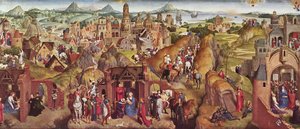
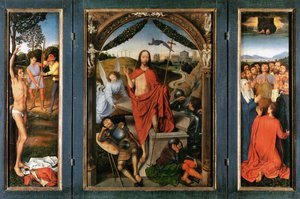
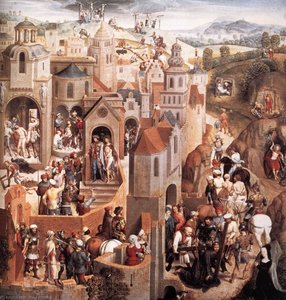
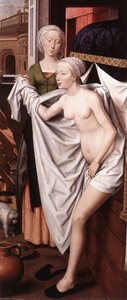
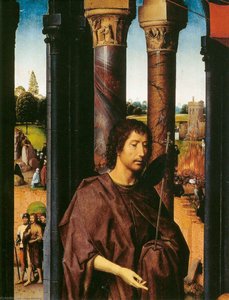
Scenes from the Passion of Christ (detail) (8)
Reproduction Size
Hans Memling's “Scenes from the Passion of Christ,” painted around 1470, is not merely a depiction of biblical events; it’s an immersive narrative unfolding across a meticulously rendered landscape. This monumental work, originally conceived as a devotional piece, draws the viewer into the very heart of Christ’s suffering and ultimate sacrifice. Unlike traditional single-scene depictions, Memling masterfully compresses the entirety of the Passion—from the triumphant entry into Jerusalem to the Resurrection appearances—into one continuous composition. The effect is breathtaking in its scope and emotional intensity.
Memling’s style, deeply rooted in the Early Netherlandish tradition, is characterized by an astonishing attention to detail and a profound sense of realism. He inherited this meticulous approach from his apprenticeship with Rogier van der Weyden, but infused it with a uniquely serene quality. In “Scenes from the Passion,” every figure, every architectural element, even the horses and donkey scattered throughout the scene, is rendered with painstaking accuracy. This isn’t simply about visual fidelity; it's about creating a world that feels palpably real, inviting viewers to step into the narrative. The use of oil paint, perfected by artists in this period, allowed for rich colors, subtle gradations of light and shadow, and an unparalleled level of detail. Notice how Memling uses perspective not to create dramatic illusions, but rather to guide the eye through the complex arrangement of scenes, subtly emphasizing key moments in the story.
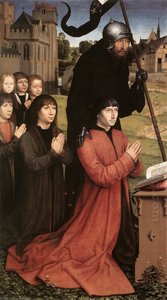
Beyond its narrative power, “Scenes from the Passion” is rich with symbolism. The inclusion of animals – particularly the horses and donkey – isn’t arbitrary. Horses often represent power and earthly concerns, while the donkey carries connotations of humility and Christ's entry as a peaceful king. The sprawling cityscape itself functions symbolically, representing Jerusalem as both a physical location and a spiritual center. Memling doesn’t present a historically accurate depiction of the city; instead, he creates an idealized vision, blending elements from different architectural styles to evoke a sense of timelessness and universality. The donor portraits – Tommaso Portinari and his wife Maria Baroncelli – kneeling in prayer at the lower corners, remind us that this work was commissioned as a deeply personal act of devotion, intended to connect the patrons directly with the sacred narrative unfolding before them. The very act of compressing so many scenes into one panel speaks to the desire to encompass the entirety of Christ’s Passion within a single devotional image.
What truly sets “Scenes from the Passion” apart is its emotional impact. Despite depicting horrific events – betrayal, torture, and crucifixion – Memling avoids sensationalism or excessive drama. Instead, he conveys a sense of profound sorrow and quiet dignity. The figures are not contorted in agony; their expressions are restrained, reflecting an inner suffering that resonates with a deep spiritual understanding. This understated approach allows the viewer to connect with the emotional core of the story on a more personal level. The painting invites contemplation, prompting us to reflect on themes of sacrifice, redemption, and faith. It’s a work that continues to move and inspire viewers centuries after its creation, serving as a powerful testament to Memling's artistic genius and enduring legacy.

Germany

Journey into the world of Early Netherlandish painting! Explore 10 masterpieces by Jan van Eyck, Rogier van der Weyden & more. Discover stunning detail, symbolism & Renaissance art for your home decor. Find museum-quality reproductions on Most-Famous-Paintings.com
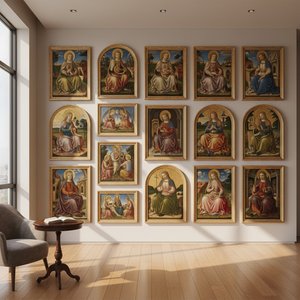
Explore 25 breathtaking masterpieces by Fra Angelico, a Renaissance master. Discover the stories behind his iconic frescoes, Annunciations & religious art. Find museum-quality reproductions and elevate your home decor with Most-Famous-Paintings.com.

Explore the captivating world of Early Netherlandish painting! Discover Jan van Eyck, Hans Memling & more. Uncover symbolism, techniques & the legacy of these Flemish masters. A comprehensive guide for art enthusiasts.
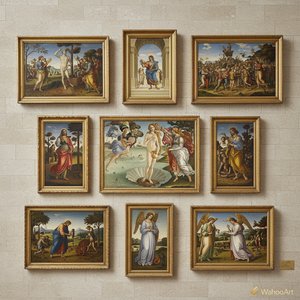
Journey through the Early Renaissance! Explore 10 iconic paintings by Botticelli, Leonardo da Vinci & Michelangelo. Discover their stories, techniques & lasting impact. Find museum-quality art reproductions and elevate your home decor with .

Journey into the Early Netherlandish Renaissance! Explore 10 iconic paintings by Jan van Eyck, Rogier van der Weyden & more. Discover stunning detail, symbolism, and oil painting techniques. Find museum-quality art reproductions for your home at Most-Famous-Paintings.com.


Stay updated with the latest art news, exclusive offers, and decoration ideas.
Tell us about your project and our art experts will provide you with 3 personalized art suggestions.
Let Us Curate 3 Options Just for You - Free!


 Buy print
 Send
Send Share
Share
 Details

 Download
 Similars
 X-Ray
X-Ray Diaporama


 Read More







 Glass option is only available in size under 110 CM