x


 Oil On PanelEarly Netherlandish Painting
 1475Late Medieval
 70.0 x 70.0 cm
 National Gallery
Hand-painted oil on canvas in your size and frame, made to order by our artists.





























Pick from our preset sizes that match the artwork's original proportions.

You may enter your own dimensions to fit a specific frame or space. If your selected size does not match the original image's proportions, we will either crop the artwork or extend the painting with additional hand-painted elements. A digital mockup will be sent for your approval before production begins.
Please note that the on-screen preview does not reflect the actual cropping or extension. Only the mockup will accurately show the final composition.
While custom sizes are available, we recommend selecting a dimension from the predefined list to preserve the original proportions.
Worldwide Delivery () in 3/4 weeks instead of standard 5 weeks. (18 July). No compromise on quality.


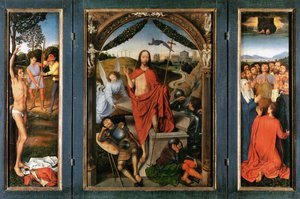
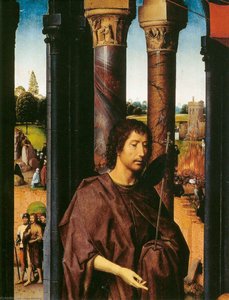
The Donne Triptych
Reproduction Size
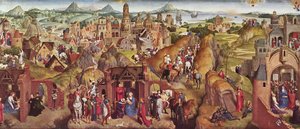
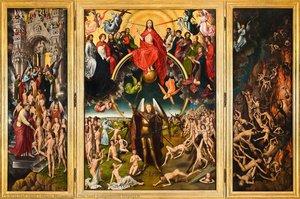
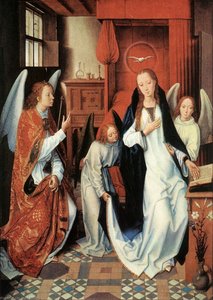
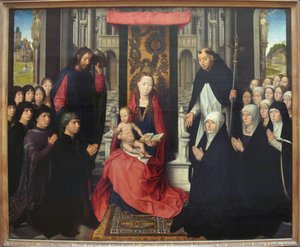
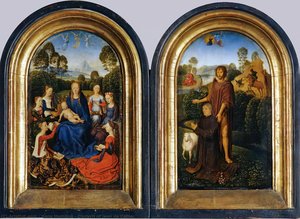
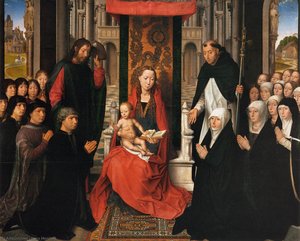
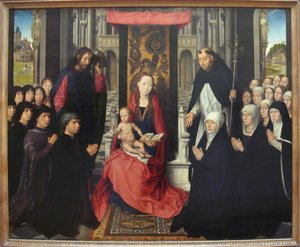
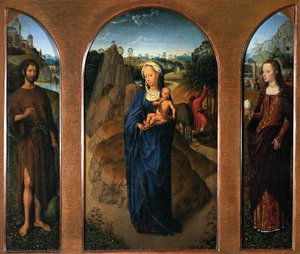
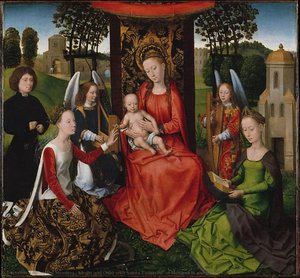
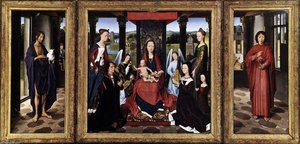
To stand before this magnificent triptych is to step directly into the richly colored, deeply contemplative world of the late 15th century. Hans Memling, the celebrated Bruges Master, has gifted us a composition that transcends mere depiction; it offers an intimate narrative tapestry woven from human interaction and spiritual yearning. The piece immediately draws the eye across its three distinct panels, each vignette presenting a moment suspended in time—a tableau vivant of devotion, scholarship, and communal life. One senses the hushed reverence of the setting, a place where earthly concerns mingle seamlessly with profound spiritual contemplation.
Memling’s technical brilliance is breathtakingly apparent upon close inspection. His handling of oil paint allows for an almost hyper-realistic rendering of textures—the heavy folds of the red garments, the subtle sheen on polished wood, and the delicate quality of skin tones speak to a mastery that only decades of dedicated practice could achieve. The composition itself, spanning three interconnected scenes, demonstrates a sophisticated understanding of pictorial space. Notice how the figures are arranged not just for visual balance, but to guide the viewer's eye through a narrative progression. This meticulous attention to detail is characteristic of the Early Netherlandish school, where every stray thread and every cast shadow contributes to the overall illusion of life.
The subject matter hints at deep theological currents. In one panel, the grouping of figures suggests discourse or perhaps a gathering for instruction, while another captures the quiet intimacy of reading—the book itself often serving as a potent symbol of divine wisdom or learned scripture. The kneeling figures in the third scene evoke postures of prayer and humility before something unseen, drawing the viewer into a shared moment of piety. These are not just people; they are archetypes engaged in acts that speak to the enduring human quest for meaning. For the collector or designer, this depth means the artwork offers conversation pieces far beyond mere decoration.
Dating from 1475, The Donne Triptych anchors us firmly in a period of profound cultural transition—a time when the burgeoning merchant class supported art that was both exquisitely beautiful and deeply meaningful. Memling managed to synthesize the intense spirituality of the Gothic tradition with an emerging naturalism. Owning or reproducing this work brings home not just a painting, but a tangible piece of Northern European artistic history. It possesses a vintage gravity, lending any room it graces an air of established, cultured elegance.
Whether adorning a formal study, a chapel-like drawing-room, or serving as the focal point in a gallery setting, this triptych promises to elevate the atmosphere. The rich palette and narrative complexity ensure that it remains captivating whether viewed from across the room or examined up close. It is an investment in enduring beauty—a piece that invites contemplation, rewards study, and whispers tales of faith and artistry across the centuries.

Germany

Journey into the world of Early Netherlandish painting! Explore 10 masterpieces by Jan van Eyck, Rogier van der Weyden & more. Discover stunning detail, symbolism & Renaissance art for your home decor. Find museum-quality reproductions on Most-Famous-Paintings.com
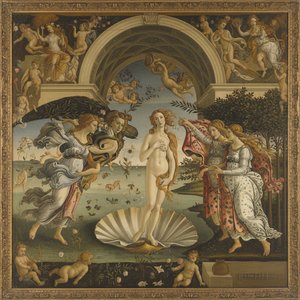
Journey through Botticelli's world with 25 iconic Renaissance paintings. Explore 'Birth of Venus,' 'Primavera,' and more—stories, techniques & timeless beauty. Find museum-quality art reproductions for your home at Most-Famous-Paintings.com.
Journey through Alte Pinakothek's 25 most iconic paintings! Explore masterpieces by Dürer, Rembrandt & Rubens. Discover art history, techniques & find museum-quality reproductions for your home at Most-Famous-Paintings.com.
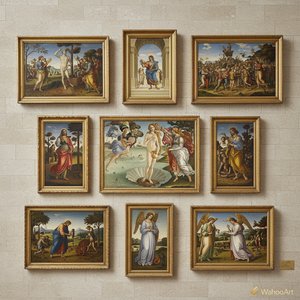
Journey through the Early Renaissance! Explore 10 iconic paintings by Botticelli, Leonardo da Vinci & Michelangelo. Discover their stories, techniques & lasting impact. Find museum-quality art reproductions and elevate your home decor with .

Journey into the Early Netherlandish Renaissance! Explore 10 iconic paintings by Jan van Eyck, Rogier van der Weyden & more. Discover stunning detail, symbolism, and oil painting techniques. Find museum-quality art reproductions for your home at Most-Famous-Paintings.com.


Stay updated with the latest art news, exclusive offers, and decoration ideas.
Tell us about your project and our art experts will provide you with 3 personalized art suggestions.
Let Us Curate 3 Options Just for You - Free!


 Buy print
 Send
Send Share
Share
 Details

 Download
 Similars
 X-Ray
X-Ray Diaporama
 Read More







 Glass option is only available in size under 110 CM