x


 Oil On CanvasWallArtBaroque Painting
 1652
1652 46.0 x 37.0 cm
 Museum Boijmans Van Beuningen
Hand-painted oil on canvas in your size and frame, made to order by our artists.





























Pick from our preset sizes that match the artwork's original proportions.

You may enter your own dimensions to fit a specific frame or space. If your selected size does not match the original image's proportions, we will either crop the artwork or extend the painting with additional hand-painted elements. A digital mockup will be sent for your approval before production begins.
Please note that the on-screen preview does not reflect the actual cropping or extension. Only the mockup will accurately show the final composition.
While custom sizes are available, we recommend selecting a dimension from the predefined list to preserve the original proportions.
Worldwide Delivery () in 3/4 weeks instead of standard 5 weeks. (18 July). No compromise on quality.


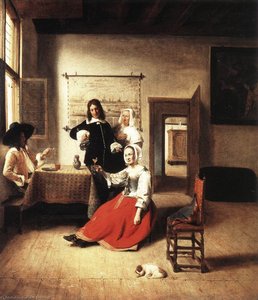
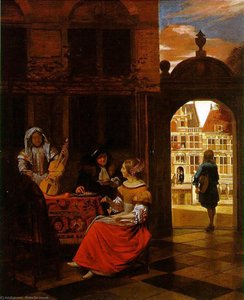
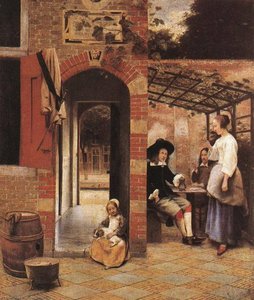
Tavern scene with maid trying to fill the glass of a cavalier (The Empty Glass)
Reproduction Size
Pieter de Hooch's "Tavern Scene with Maid Trying to Fill the Glass of a Cavalier (The Empty Glass)," painted circa 1652, is more than just a depiction of a bustling tavern; it’s a masterful study in light, atmosphere, and the subtle nuances of everyday life – hallmarks of the Dutch Golden Age. This remarkable work, now housed within the esteemed collection of the Museum Boijmans Van Beuningen in Rotterdam, offers a glimpse into the burgeoning middle class and their appreciation for domestic tranquility amidst the vibrant energy of urban society.
The painting immediately draws the eye to its masterful use of light. De Hooch employs a diffused, almost ethereal illumination that seems to emanate from an unseen source, bathing the scene in a warm, inviting glow. This isn’t the dramatic chiaroscuro favored by Caravaggio; instead, it's a delicate, atmospheric light that softens edges and creates a sense of intimacy. Notice how the light pools around the figures, highlighting their faces and gestures while leaving much of the tavern’s interior subtly shadowed – a technique that adds depth and mystery to the composition.
“Tavern Scene with Maid Trying to Fill the Glass of a Cavalier” is firmly rooted in the Dutch Golden Age (roughly 1600-1700), a period of unprecedented economic prosperity, artistic innovation, and cultural flourishing. During this era, the Netherlands emerged as a leading center for trade, science, and art. Genre painting—scenes depicting everyday life—became increasingly popular, reflecting the growing interest in capturing the realities of ordinary people’s experiences.
De Hooch's work aligns with the broader trends of this period. Unlike the grand historical or religious paintings that dominated European art at the time, Dutch genre painters focused on portraying scenes from domestic life, social gatherings, and urban landscapes. This shift reflected a changing societal emphasis on individualism, commerce, and the rise of the middle class. De Hooch’s ability to capture the quiet intimacy of these moments is truly remarkable.
Beyond its aesthetic qualities, “Tavern Scene with Maid Trying to Fill the Glass of a Cavalier” offers subtle insights into 17th-century Dutch society. The tavern itself represents a space of social interaction and entertainment—a microcosm of urban life. The cavalier’s attire suggests his status as a wealthy gentleman, while the maid's role highlights the established social hierarchy. The scene subtly comments on the dynamics of class and gender within this burgeoning mercantile society.
Furthermore, the empty glass – the title itself – is laden with symbolism. It represents fleeting pleasure, transient moments, and perhaps even a hint of indulgence. The act of pouring wine signifies hospitality and generosity, while the empty glass suggests that these pleasures are ultimately ephemeral.
Pieter de Hooch’s “Tavern Scene with Maid Trying to Fill the Glass of a Cavalier” continues to captivate viewers today. High-quality reproductions, such as those offered by Most-Famous-Paintings.com, allow us to appreciate the intricate details and atmospheric beauty of this remarkable painting. The work's enduring appeal lies in its ability to evoke a sense of nostalgia for a bygone era—a time when life moved at a slower pace and social gatherings were filled with warmth, conversation, and the simple pleasures of everyday existence.


1629 - 1694 , Netherlands
Explore the Dutch Golden Age of painting! Discover key artists like Vermeer & ter Borch, their innovative techniques, and the rich cultural context behind these Baroque masterpieces. Learn about collecting & appreciating this iconic art period.

Explore the opulent world of Baroque interior design! Discover key elements, modern applications & how to bring dramatic elegance into your home with 's authentic reproductions.
Explore the captivating world of Pieter de Hooch, a master of Dutch Golden Age painting. Discover his innovative use of light, intimate domestic scenes, and lasting influence on art history. Learn more at Most-Famous-Paintings.

Elevate your wine cellar or tasting room with curated art! Expert guidance on landscape paintings, symbolism & lighting to enhance the oenological experience. Discover how art transforms spaces and tells your winery's story.

Explore the captivating world of Gerard ter Borch, a master of Dutch Golden Age genre painting. Discover his intimate scenes, masterful light, and lasting influence on art history. Learn more at Most-Famous-Paintings.


Stay updated with the latest art news, exclusive offers, and decoration ideas.
Tell us about your project and our art experts will provide you with 3 personalized art suggestions.
Let Us Curate 3 Options Just for You - Free!


 Buy print
 Send
Send Share
Share
 Details

 Download
 Similars
 X-Ray
X-Ray Diaporama
 Read More







 Glass option is only available in size under 110 CM