x


 Oil On CanvasWallArtNeoclassicism
 1781
1781 76.0 x 64.0 cm
 English Heritage
Hand-painted oil on canvas in your size and frame, made to order by our artists.





























Pick from our preset sizes that match the artwork's original proportions.

You may enter your own dimensions to fit a specific frame or space. If your selected size does not match the original image's proportions, we will either crop the artwork or extend the painting with additional hand-painted elements. A digital mockup will be sent for your approval before production begins.
Please note that the on-screen preview does not reflect the actual cropping or extension. Only the mockup will accurately show the final composition.
While custom sizes are available, we recommend selecting a dimension from the predefined list to preserve the original proportions.
Worldwide Delivery () in 3/4 weeks instead of standard 5 weeks. (18 July). No compromise on quality.


John Joseph Merlin (1735–1803)
Reproduction Size
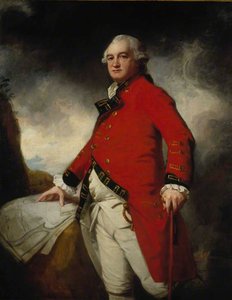
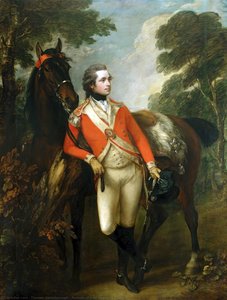
Thomas Gainsborough's 1781 portrait of John Joseph Merlin is more than a simple likeness; it’s a captivating window into the vibrant, intellectually curious world of Georgian England. The painting immediately draws the eye with its subject’s striking presence – a man radiating confidence and an air of quiet authority, seated in a richly appointed interior. Merlin, a celebrated clock-maker, musical instrument innovator, inventor, and Freemason, was a figure of considerable renown during his time, yet Gainsborough's depiction transcends mere documentation, imbuing him with a sense of dignified charm and hinting at the extraordinary mind behind his inventions.
The composition itself is meticulously crafted. Merlin’s posture – relaxed but upright, hand gently tucked into his jacket – speaks volumes about his character. The carefully chosen details—the elegant lace collar, the subtle gleam of a ring on his finger, and most notably, the miniature balance scale resting in his hand—are not merely decorative; they are deliberate symbols that illuminate Merlin’s profession and intellectual pursuits. Gainsborough masterfully uses light and shadow to sculpt the subject's form, creating depth and highlighting key features, particularly the man’s intelligent gaze which seems to engage directly with the viewer.
To fully appreciate Gainsborough’s portrait, it’s essential to understand the extraordinary life of John Joseph Merlin. Born in Huy, Belgium, in 1735, he arrived in London with a remarkable skillset and an ambition that defied convention. He quickly established himself as a sought-after craftsman, working alongside prominent figures like James Cox and contributing significantly to the burgeoning world of mechanical innovation. Merlin’s inventions—ranging from intricate clocks and musical instruments to early roller skates—demonstrated a truly inventive spirit, earning him recognition within scientific circles.
His association with Johann Christian Bach, son of the renowned composer Johann Sebastian Bach, further cemented his place in the cultural landscape of London. Merlin’s instruments were played by some of the most celebrated musicians of the era, and he even designed a harpsichord-piano combination for Empress Catherine the Great. The portrait itself reflects this position within high society; it's not simply a depiction of an inventor but a representation of a man who moved comfortably between the worlds of art, science, and music.
Gainsborough’s technical skill is evident throughout the painting. The artist employs a loose, expressive brushstroke—a hallmark of his style—that captures the texture of fabrics and the subtle nuances of light. The background, rendered with muted tones and atmospheric perspective, provides a sophisticated backdrop that enhances Merlin's presence without distracting from his subject. The inclusion of the balance scale is particularly significant; it’s not just a tool but a visual metaphor for Merlin’s meticulous approach to his craft and his ability to assess value – both material and intellectual.
The choice of red coat with white lace, a fashionable garment of the era, speaks to Merlin's status within Georgian society. The color red signifies wealth and power, while the lace adds an element of elegance and refinement. Gainsborough’s ability to seamlessly blend these elements creates a portrait that is both visually striking and intellectually stimulating.
Today, Gainsborough's portrait of John Joseph Merlin stands as a testament to the ingenuity and cultural vibrancy of Georgian England. Hand-painted reproductions offer an opportunity to experience this remarkable artwork firsthand, allowing us to appreciate the artist’s skill and the subject’s extraordinary life. The painting invites contemplation on the intersection of art, science, and innovation—a theme that continues to resonate with audiences today. It's a captivating image that speaks volumes about a man who dared to push the boundaries of his time.


1727 - 1788 , United Kingdom

Explore 25 iconic John Singer Sargent paintings – from dazzling portraits to Impressionist landscapes. Discover the stories behind Madame X, El Jaleo & more! Find museum-quality art reproductions and elevate your home decor with Most-Famous-Paintings.com.

Explore 10 iconic portrait paintings – from Mona Lisa to Van Gogh’s self-portraits. Discover the stories behind these masterpieces, artistic techniques & find museum-quality art reproductions for your home at Most-Famous-Paintings.com.
Explore 25 captivating portraits by Sir Joshua Reynolds, a master of British art. Discover stories behind his iconic paintings, elegant style & historical influence. Find museum-quality reproductions and elevate your home decor on Most-Famous-Paintings.com.
Journey through John Constable's 25 most celebrated landscapes. Explore Romanticism, Dedham Vale & his masterful use of light in iconic paintings like 'Hay Wain'. Find museum-quality art reproductions and elevate your home decor on Most-Famous-Paintings.com.

Journey through 18th century art! Explore 10 iconic paintings – from Rococo elegance to Neoclassical grandeur. Discover Fragonard, David & more. Find museum-quality reproductions and elevate your home decor on Most-Famous-Paintings.com.


Stay updated with the latest art news, exclusive offers, and decoration ideas.
Tell us about your project and our art experts will provide you with 3 personalized art suggestions.
Let Us Curate 3 Options Just for You - Free!


 Buy print
 Send
Send Share
Share
 Details

 Download
 Similars
 X-Ray
X-Ray Diaporama
 Read More







 Glass option is only available in size under 110 CM