x


Hand-painted oil on canvas in your size and frame, made to order by our artists.





























Pick from our preset sizes that match the artwork's original proportions.

You may enter your own dimensions to fit a specific frame or space. If your selected size does not match the original image's proportions, we will either crop the artwork or extend the painting with additional hand-painted elements. A digital mockup will be sent for your approval before production begins.
Please note that the on-screen preview does not reflect the actual cropping or extension. Only the mockup will accurately show the final composition.
While custom sizes are available, we recommend selecting a dimension from the predefined list to preserve the original proportions.
Worldwide Delivery () in 3/4 weeks instead of standard 5 weeks. (18 July). No compromise on quality.


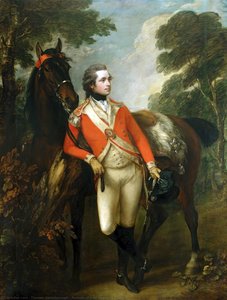
Portrait of Prince Edward, Later Duke of Kent
Reproduction Size
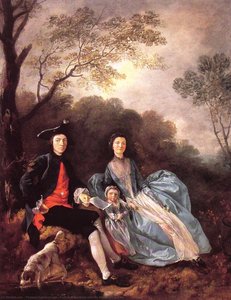
Thomas Gainsborough's "Portrait of Prince Edward, Later Duke of Kent," painted in 1782, is more than just a likeness; it’s a carefully constructed tableau of youthful nobility, imbued with the artist’s signature blend of observation and subtle theatricality. This captivating portrait, currently residing within the Royal Collection at Hampton Court Palace, offers a rare glimpse into the life of a young heir to the British throne – a figure poised between childhood innocence and the weighty responsibilities that awaited him.
Gainsborough’s approach is distinctly Rococo, yet tempered with a burgeoning Romantic sensibility. The composition itself is deceptively simple: Prince Edward, barely fifteen years old, sits in a relaxed posture, his gaze direct and engaging. He wears a sumptuous crimson coat adorned with intricate gold embroidery – a deliberate display of wealth and status, indicative of his future role as Duke of Kent and Strathearn. A delicate white sash encircles his neck, further emphasizing his aristocratic bearing. The background is deliberately muted, allowing the Prince’s figure to command immediate attention, while subtle hints of landscape peek through, grounding him in the familiar comforts of his upbringing.
Gainsborough's mastery lies not just in capturing a likeness but in rendering texture and light with breathtaking skill. He employs loose, expressive brushstrokes – a hallmark of his style – to create a sense of immediacy and vitality. Notice the way he captures the sheen of the velvet fabric, the delicate folds of the coat, and the subtle highlights on Edward’s face. The artist utilizes broken color—small dabs of paint rather than smooth blends—to build up form and depth, creating an illusion of three-dimensionality that is remarkably convincing. This technique, combined with his masterful use of light, gives the portrait a luminous quality, imbuing it with a sense of warmth and serenity.
The painting’s palette is restrained yet sophisticated, dominated by rich reds, deep blues, and subtle greens. Gainsborough's careful attention to detail extends beyond mere color; he meticulously renders every aspect of the Prince’s attire, from the intricate embroidery on his coat to the sheen of his boots. This level of precision reflects not only his artistic skill but also his keen observational abilities – a testament to his ability to capture the essence of his subject with remarkable accuracy.
Beyond its aesthetic qualities, “Portrait of Prince Edward” is rich in symbolic meaning. The youthful appearance of the Prince speaks to the hopes and aspirations of the British monarchy—a desire for a stable succession and a continuation of the line of kings. The portrait was commissioned during a period of significant political and social change, as Britain navigated its colonial empire and grappled with internal tensions. Edward’s position as heir to the throne made him a focal point of national attention, and Gainsborough skillfully captured this sense of importance through his carefully crafted composition.
Furthermore, the portrait reflects the prevailing attitudes towards royalty at the time. While acknowledging the Prince's elevated status, Gainsborough avoids overtly flattering or idealized depictions. Instead, he presents Edward as a young man—a thoughtful and dignified individual with a quiet strength. This approach aligns with the emerging Romantic ideals of portraying subjects with honesty and realism, rather than resorting to conventional courtly conventions.
Today, “Portrait of Prince Edward” remains a captivating work of art—a testament to Gainsborough’s genius and a poignant reminder of a pivotal moment in British history. High-quality reproductions offer an accessible way to bring this masterpiece into your home or office, allowing you to appreciate its beauty and historical significance for years to come. Whether displayed as a statement piece or a subtle accent, this portrait embodies the elegance, grace, and enduring appeal of one of Britain’s greatest artists.


1727 - 1788 , United Kingdom

Explore 25 iconic John Singer Sargent paintings – from dazzling portraits to Impressionist landscapes. Discover the stories behind Madame X, El Jaleo & more! Find museum-quality art reproductions and elevate your home decor with Most-Famous-Paintings.com.

Explore the captivating world of Sir Edward Poynter, a leading figure of Aestheticism & Victorian art. Discover his archaeological narratives, iconic paintings like 'Day Dream Fine,' and lasting influence on British art history.

Explore the life & art of Philip de László, master portraitist of European aristocracy. Discover his stunning paintings, royal commissions, and enduring legacy. A guide for discerning collectors.

Explore the life & art of Edward Seago, a celebrated British Impressionist painter known for evocative landscapes & seascapes. Discover his captivating works and find high-quality reproductions at Most-Famous-Paintings.

Explore the captivating art of William Stewart MacGeorge, a key figure of the Kirkcudbright School. Discover his fusion of Scottish tradition with Aesthetic and Japonisme influences. Learn about his portraits & landscapes.


Stay updated with the latest art news, exclusive offers, and decoration ideas.
Tell us about your project and our art experts will provide you with 3 personalized art suggestions.
Let Us Curate 3 Options Just for You - Free!


 Buy print
 Send
Send Share
Share
 Details

 Download
 Similars
 X-Ray
X-Ray Diaporama


 Read More







 Glass option is only available in size under 110 CM