


x

 Oil On CanvasWallArt18th-century British landscape
 1756
1756 76.0 x 63.0 cm
 Gainsborough's House
Hand-painted oil on canvas in your size and frame, made to order by our artists. ( Buy Print Buy Image)





























Pick from our preset sizes that match the artwork's original proportions.

You may enter your own dimensions to fit a specific frame or space. If your selected size does not match the original image's proportions, we will either crop the artwork or extend the painting with additional hand-painted elements. A digital mockup will be sent for your approval before production begins.
Please note that the on-screen preview does not reflect the actual cropping or extension. Only the mockup will accurately show the final composition.
While custom sizes are available, we recommend selecting a dimension from the predefined list to preserve the original proportions.
Worldwide Delivery () in 3/4 weeks instead of standard 5 weeks. (25 August). No compromise on quality.


Thomas Vere
Reproduction Size
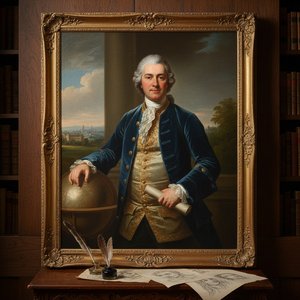
Thomas Gainsborough’s “Thomas Vere,” painted in 1756, isn't merely a portrait; it’s a carefully constructed tableau vivant – a snapshot of Georgian society frozen in time. Measuring just over 76 x 63 centimeters, this oil-on-canvas work resides within the hallowed halls of Gainsborough’s House in Sudbury, offering a rare glimpse into the life and aspirations of a gentleman of his era. The subject himself, Thomas Vere, is presented with an understated yet compelling dignity. His attire – a meticulously tailored suit featuring a crisp white lapel – speaks volumes about his social standing, while the powdered wig subtly references the formality and tradition of the period. But it’s not just the outward appearance that captivates; there's a quiet intensity in Vere’s gaze as he meets the viewer’s eye, inviting us to contemplate his thoughts and experiences.

Gainsborough's mastery lies not just in his ability to capture a likeness but in his remarkable command of light and shadow. Notice how he employs loose, expressive brushstrokes – a hallmark of his style – to create a sense of atmospheric depth. The subtle gradations of color, particularly in the folds of Vere’s clothing and the background, are rendered with exquisite delicacy. This technique wasn't simply decorative; it was integral to Gainsborough’s approach to portraying reality. He prioritized observation above all else, meticulously studying his subjects and their surroundings before committing them to canvas. The painting is a testament to his ability to capture not just what he *saw*, but also the feeling of being present in that moment.
Furthermore, Gainsborough’s use of color is remarkably restrained, favoring muted tones of brown, grey, and ochre – colors that evoke the quiet elegance of the Georgian interior. The white lapel provides a striking contrast, drawing the eye to this detail and reinforcing Vere's status. The composition itself is carefully balanced, with Vere positioned slightly off-center, creating a dynamic and engaging visual experience.
“Thomas Vere” offers a valuable window into the social and cultural landscape of 18th-century England. The portrait reflects the values and priorities of the landed gentry – a class defined by its wealth, status, and adherence to tradition. The emphasis on formality in dress, the carefully arranged setting, and the dignified demeanor of the subject all speak to this worldview. It’s important to remember that Gainsborough was not simply painting a man; he was documenting an entire social order.
Interestingly, research reveals connections to other prominent figures within Gainsborough's circle. The artist’s sister, Mary Gainsborough, and her husband, John Vere, were also subjects of his work (as evidenced by the available reproductions on Most-Famous-Paintings.com). This suggests a personal connection and perhaps an exploration of familial relationships within the context of Georgian society.
While seemingly straightforward, “Thomas Vere” is rich in subtle symbolism. The subject’s direct gaze invites introspection, suggesting a quiet contemplation of his place in the world. The restrained elegance of his attire speaks to his social standing, while the lack of overt ornamentation hints at a preference for understated sophistication. Ultimately, the painting evokes a sense of dignified reserve – a portrait that captures not just a man’s appearance but also his character and bearing. It's a powerful reminder of the enduring appeal of portraiture as a means of preserving memory and celebrating human individuality.


1727 - 1788 , United Kingdom
Explore the life & work of Thomas Hudson, a leading 18th-century British portraitist. Discover his mastery of the 'Grand Manner,' influential style, and lasting impact on British art. Learn about his notable portraits like Judge William Noel & Alexander Van Aken.

Explore the world of 18th-century portraiture with Most-Famous-Paintings. Discover symbolism, artistic innovation & societal values reflected in masterpieces by Reynolds, Hogarth & more. Expert insights for collectors.

Journey through 18th century art! Explore 10 iconic paintings – from Rococo elegance to Neoclassical grandeur. Discover Fragonard, David & more. Find museum-quality reproductions and elevate your home decor on Most-Famous-Paintings.com.

Explore the rich history of formal portraiture & its enduring power to capture identity and shape perception. Discover investment-worthy artworks, expert appraisals, and custom reproduction services at Most-Famous-Paintings.

Explore the life & work of Thomas Phillips (1770-1845), a leading Victorian portrait painter renowned for his captivating portrayals of Britain's 'men of genius'. Discover his artistic journey, patronage, and lasting legacy.


Stay updated with the latest art news, exclusive offers, and decoration ideas.
Tell us about your project and our art experts will provide you with 3 personalized art suggestions.
Let Us Curate 3 Options Just for You - Free!


 Preview
 Send
Send Share
Share
 Details

 Download
 Similars
 X-Ray
X-Ray Diaporama
 Read More







 Glass option is only available in size under 110 CM


