x


 Oil On CanvasWallArtAbstract Expressionism
 1981
1981 100.0 x 70.0 cm
 Ibrahimi Collection
Hand-painted oil on canvas in your size and frame, made to order by our artists.





























Pick from our preset sizes that match the artwork's original proportions.

You may enter your own dimensions to fit a specific frame or space. If your selected size does not match the original image's proportions, we will either crop the artwork or extend the painting with additional hand-painted elements. A digital mockup will be sent for your approval before production begins.
Please note that the on-screen preview does not reflect the actual cropping or extension. Only the mockup will accurately show the final composition.
While custom sizes are available, we recommend selecting a dimension from the predefined list to preserve the original proportions.
Worldwide Delivery () in 3/4 weeks instead of standard 5 weeks. (18 July). No compromise on quality.


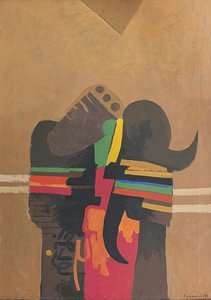
Desert Scene No. 2
Reproduction Size
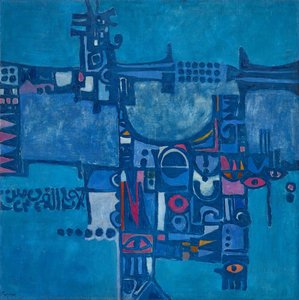
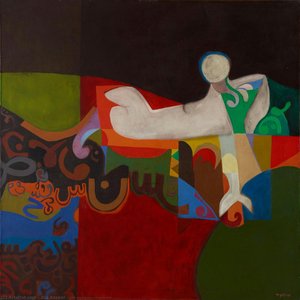
Dia al-Azzawi’s “Desert Scene No. 2,” painted in 1981, is more than a depiction of a landscape; it’s a resonant echo of Iraqi heritage and the enduring spirit of resilience against a backdrop of political turmoil. Measuring 100 x 70 cm, this oil on canvas work presents a striking abstraction of an elephant within a desert setting, rendered with bold shapes, flat planes of color, and a deliberate simplification that transcends mere representation. The artwork invites us to contemplate themes of strength, memory, and the profound connection between culture and identity—a connection deeply rooted in al-Azzawi’s own life experiences.
Al-Azzawi's artistic vocabulary is one of geometric clarity. The composition is dominated by a powerful central figure – the elephant, rendered in dark tones that anchor the piece—contrasting sharply with a lighter background. This visual weight is balanced by a large triangular shape occupying the upper right corner, creating a dynamic tension within the frame. Horizontal lines bisecting the canvas add structure and stability to this otherwise fluid arrangement. The color palette itself speaks volumes; earthy browns, beiges, and reds evoke the arid landscape, while darker accents of black, green, and blue define the elephant's form with striking precision. A delicate line of yellow provides a subtle spark of brightness, preventing the composition from becoming overly somber. Noticeably absent are detailed textures or shading—the paint is applied smoothly, emphasizing the flatness and graphic quality of the work. This deliberate lack of traditional rendering techniques aligns with al-Azzawi’s broader artistic project: to distill complex narratives into their essential forms.
Born in Baghdad in 1939, al-Azzawi's life has been inextricably linked to the history and culture of Iraq. His formative years were steeped in Iraqi folklore and the remnants of ancient Mesopotamian civilizations—a rich heritage that profoundly shaped his artistic vision. “Desert Scene No. 2” can be seen as a visual embodiment of this legacy, with the elephant itself carrying symbolic weight within Middle Eastern cultures, often representing strength, wisdom, and memory. The artwork’s style draws from both early modernism and simplified folk art traditions, creating a unique aesthetic that is both timeless and deeply personal. It's a testament to al-Azzawi’s ability to synthesize diverse influences—from classical European painting studied during his formal training to the vibrant artistic currents of his native Iraq—into a cohesive and compelling visual language. The work was created in 1981, a period marked by significant political upheaval in the Middle East, adding another layer of complexity to its interpretation.
Beyond its formal qualities, “Desert Scene No. 2” resonates with an emotional depth that speaks to universal themes of resilience and endurance. The solitary elephant traversing a vast desert landscape evokes a sense of quiet strength in the face of adversity—a powerful metaphor for the Iraqi people navigating periods of conflict and change. Al-Azzawi’s abstraction allows for multiple interpretations, inviting viewers to project their own experiences and emotions onto the canvas. It is an artwork that lingers in the mind long after viewing, prompting reflection on the enduring power of culture, memory, and the human spirit.

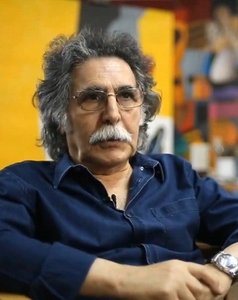
1939 - , Iraq
Explore 25 iconic Edward Hopper paintings & their stories. Discover American realism, urban loneliness, and timeless beauty through his masterpieces. Find museum-quality art reproductions & curated decor ideas at Most-Famous-Paintings.com.
Explore 25 breathtaking masterpieces by Fra Angelico, a Renaissance master. Discover the stories behind his iconic frescoes, Annunciations & religious art. Find museum-quality reproductions and elevate your home decor with Most-Famous-Paintings.com.

Explore 25 iconic Sir Alfred Munnings paintings! Discover the beauty of British Impressionism, equine art & rural England. Find museum-quality reproductions and elevate your home decor with Most-Famous-Paintings. Explore the full collection online.

Explore the rich history of genre painting! Discover Dutch Masters & European artists who captured everyday life with stunning realism. Learn about symbolism, techniques & lasting influence.

Explore 25 breathtaking artworks by Giotto di Bondone, a Renaissance master. Discover the stories behind iconic frescoes & paintings like the Scrovegni Chapel cycle. Find museum-quality Giotto reproductions and elevate your home decor with Most-Famous-Paintings.com.


Stay updated with the latest art news, exclusive offers, and decoration ideas.
Tell us about your project and our art experts will provide you with 3 personalized art suggestions.
Let Us Curate 3 Options Just for You - Free!


 Buy print
 Send
Send Share
Share
 Details

 Download
 Similars
 X-Ray
X-Ray Diaporama
 Read More







 Glass option is only available in size under 110 CM