Wishlist Shopping Cart Cart
Buy print Buy printBuy Image Buy Image SendSend
DetailsDetails Add to favorites Add to favorites DownloadDownload SimilarsSimilars X-RayX-Ray DiaporamaDiaporama

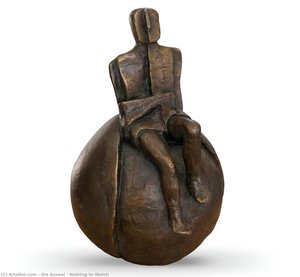
Guarding his Mysterious Gift 1

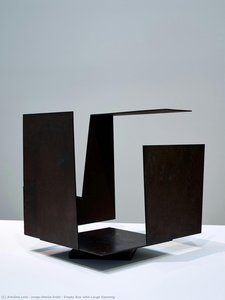
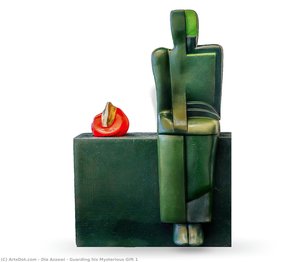
Explore 'Guarding his Mysterious Gift 1' by Dia al-Azzawi (2007). A striking abstract sculpture in dark greens & red, embodying protection & Iraqi heritage. Modern Arab art.

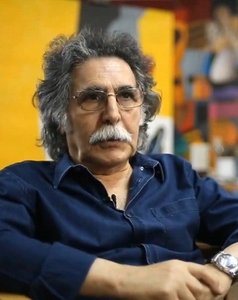
Dia al-Azzawi (b. 1939) is a pioneering Iraqi artist renowned for his fusion of Arabic calligraphy, bold colors & exploration of Arab identity, conflict & heritage. Founder of the New Vision group.

Hand Made Oil Reproduction

Hand-painted oil on canvas in your size and frame, made to order by our artists.

P118B $10
P118H $10
P118W $10
P438Z $10
P508JH $12
P508YH $12
P805H $10
P805Z $10
P919BZ $10
P919G $10
P919XJ $10
P959ZH $10
P968JZ $12
W106C $8
W218G $10
W218JH $8
W218Y $10
W307PJ $10
W316G $10
W316PJ $8
W316Y $10
W398PJ $8
W4111J $10
W500HY $15
W500JH $15
W692G $12
W849H $8
W940BG $15
W953PJ $8

Standard
custom
CM
INCH

Pick from our preset sizes that match the artwork's original proportions.

width
height

You may enter your own dimensions to fit a specific frame or space. If your selected size does not match the original image's proportions, we will either crop the artwork or extend the painting with additional hand-painted elements. A digital mockup will be sent for your approval before production begins.
Please note that the on-screen preview does not reflect the actual cropping or extension. Only the mockup will accurately show the final composition.
While custom sizes are available, we recommend selecting a dimension from the predefined list to preserve the original proportions.

Examples of what can be changed: Replace face with customer photo; Add pet (e.g., replace cat with dog); Include hidden message in background; Change background landscape or elements.
After order, Most-Famous-Paintings.com team will email client for instructions and provide a mockup preview

Worldwide Delivery () in 3/4 weeks instead of standard 5 weeks. (18 July). No compromise on quality.

why_choose_icon
Free Worldwide Express Shipping
why_choose_icon
High-Quality Linen Canvas
why_choose_icon
Full Shipping Insurance
why_choose_icon
Customs Tax Refund Guarantee
why_choose_icon
True Color Matching Guarantee
why_choose_icon
60-Day Return Policy (Defects Only)
why_choose_icon
100% Money-Back Guarantee
why_choose_icon
Bulk Discount Offer

Total Price

-

reproduction

Guarding his Mysterious Gift 1

Reproduction Medium

Reproduction Size

-

Total Price

-

Quick Facts

  • Influences: Mesopotamian Heritage
  • Title: Guarding his Mysterious Gift 1
  • Medium: Sculpted Ceramic
  • Subject or theme: Guardian Figure & Secret Object
  • Movement: Abstract Figurative
  • Year: 2007
  • Artist: Dia al-Azzawi

Art Quiz

There is only one correct answer for each question.

Question 1:
What is the predominant color palette used in ‘Guarding his Mysterious Gift 1’?
Question 2:
The sculpture's composition emphasizes which element?
Question 3:
Dia al-Azzawi’s artistic training included exposure to what influential art historical movement?
Question 4:
What technique is primarily employed in creating the sculpture's texture and depth?
Question 5:
The small red object symbolizes what thematic element within the artwork?

Artwork Description

Dia al-Azzawi’s “Guarding His Mysterious Gift” – A Sculptural Echo of Mesopotamian Soul

Dia al-Azzawi's "Guarding His Mysterious Gift" isn’t merely a sculpture; it’s a distilled essence of Iraqi artistic heritage, born from the fertile soil of a childhood steeped in tales of Gilgamesh and the grandeur of ancient Mesopotamia. Al-Azzawi’s approach transcends simple representation, prioritizing evocative symbolism and capturing the spirit of his cultural roots—a legacy he skillfully translates into a strikingly minimalist yet profoundly impactful visual experience.

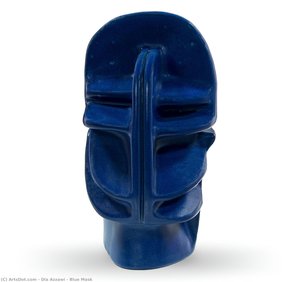
  • Composition & Perspective: The sculpture commands attention with its vertical axis, anchoring the eye upwards and conveying stability. Positioned centrally, it achieves balance while subtly directing gaze towards the diminutive red object perched atop—a deliberate focal point that invites contemplation about secrecy and protection. Despite presenting a two-dimensional image, depth is achieved through overlapping forms and tonal variations, hinting at a tactile dimension reminiscent of Mesopotamian reliefs.
  • Color Palette & Material: Dominating the artwork’s palette are shades of dark greens and blacks—colors traditionally associated with resilience and contemplation—contrasted by the vibrant splash of red. The sculpture is conceived in ceramic or plaster, skillfully crafted to achieve a smooth surface finish that enhances textural illusion through subtle shading. This choice reflects not only aesthetic considerations but also nods to the enduring materiality of Iraqi art history.
  • Style & Technique: “Guarding His Mysterious Gift” firmly establishes itself within the realm of abstract figurative art. Simplified forms and geometric shapes—primarily rectangular blocks—capture the human figure with remarkable precision, eschewing detailed realism for a more conceptual exploration of form and gesture. The sculptor’s technique prioritizes textural suggestion rather than explicit depiction, mirroring the understated elegance characteristic of Mesopotamian sculpture.
  • Symbolic Resonance: Beyond its formal qualities, the artwork speaks volumes about deeper themes. The guardian figure embodies vigilance and safeguarding—a motif prevalent in Mesopotamian mythology—while the red object symbolizes vitality and perhaps a hidden treasure. Together, they encapsulate the spirit of Iraqi cultural heritage and invite viewers to ponder questions of preservation and revelation.
  • Emotional Impact: Viewing “Guarding His Mysterious Gift” evokes a sense of solemnity and quiet intensity. The sculpture’s stillness encourages introspection, mirroring the contemplative traditions rooted in Mesopotamian art and philosophy. Its understated beauty resonates with an enduring fascination for timeless symbols—a testament to Dia al-Azzawi's ability to distill complex ideas into a powerfully evocative visual form.

This artwork’s meticulous attention to detail—from the directional lighting that sculpts shadows onto its surface to the deliberate use of geometric lines and shapes—underscores Al-Azzawi’s commitment to honoring his artistic heritage. “Guarding His Mysterious Gift” stands as a compelling reminder that art can transcend mere visual representation, communicating profound ideas about identity, history, and the enduring power of symbolism.

Artist Biography

A Life Forged in Mesopotamian Echoes

Dia al-Azzawi, born in Baghdad in 1939, is more than just a painter; he’s a visual poet of the Arab world, an artist whose life and work are inextricably linked to the turbulent history and enduring cultural heritage of Iraq. His formative years unfolded amidst a period of profound political and social change, a backdrop that would deeply inform his artistic vision. From early childhood experiences steeped in Iraqi folklore and the majestic remnants of Mesopotamia’s ancient civilizations, al-Azzawi developed an acute sensitivity to the power of symbolism and narrative. This foundation led him to the Institute of Fine Arts in Baghdad, where he received formal training, mastering technical skills while simultaneously absorbing the currents of art history – a knowledge base he would later brilliantly synthesize with his own unique aesthetic language. Even then, it was clear that al-Azzawi wasn’t simply aiming to replicate existing styles; he sought to excavate and revitalize the visual culture of his ancestors.

The Birth of a Distinctive Vision

Al-Azzawi's artistic journey began with explorations in abstract expressionism, but this phase proved merely a stepping stone towards something far more distinctive. He quickly gravitated toward an innovative style that boldly integrated Arabic calligraphy into his compositions. This wasn’t mere ornamentation; it was a deliberate act of reclamation, a powerful assertion of Arab identity within the global art landscape. Al-Azzawi became a central figure in the *Hurufiyya* movement, a collective endeavor to liberate Arabic letters from their traditional linguistic function and explore their inherent aesthetic potential as abstract forms. His canvases began to pulse with the energy of ancient scripts, transformed into dynamic shapes and patterns that resonated with both historical weight and contemporary relevance. The palette he employed was often vibrant and emotionally charged, reflecting not only his personal intensity but also a deep engagement with the political realities surrounding him. He didn’t shy away from confronting difficult themes; instead, he channeled them into works of profound beauty and unsettling power.

Forging New Paths: The New Vision Group

In 1963, recognizing the need for a more progressive artistic voice in Iraq, al-Azzawi co-founded the New Vision group (Jama’at al-Ru’ya al-Jadida). This collective of Iraqi artists aimed to break free from conventional norms and modernize Arab art. It was a bold undertaking, challenging established institutions and advocating for experimentation. Al-Azzawi's leadership within the group proved instrumental in fostering a vibrant artistic community and inspiring a new generation of creatives. The New Vision group wasn’t simply about stylistic innovation; it was about redefining what it meant to be an Arab artist in a rapidly changing world, forging a path toward greater cultural autonomy and self-expression. Through exhibitions, publications, and collaborative projects, they sought to elevate the profile of modern Iraqi art both domestically and internationally.

Themes of Heritage, Conflict, and Exile

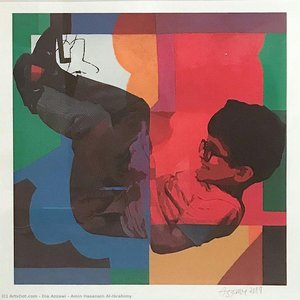
Throughout his prolific career, Dia al-Azzawi has consistently addressed themes of heritage, identity, conflict, and exile – subjects deeply resonant with the experiences of the Arab world. His work serves as a poignant reflection of the political turmoil and social upheaval that have marked Iraq’s history and continue to shape its present. He masterfully navigates diverse media—painting, sculpture, printmaking, and digital art—demonstrating an unwavering commitment to artistic innovation. Notable works like “Amin Hasanain Al-Ibrahimy,” a moving tribute to the renowned Iraqi poet, and the harrowing “Nasheed Al Jassad (Bodily Anthem) Tel el Zaatar” series, commemorating the victims of the Tel al-Zaatar refugee camp massacre in Lebanon, stand as powerful testaments to his artistic conscience. His collaborative spirit is also evident in projects like the Nabu Museum in Lebanon, a testament to his dedication to preserving and promoting Arab art and culture for future generations.

A Legacy Etched in Calligraphy and Courage

Today, Dia al-Azzawi is rightfully regarded as one of the most important and influential artists of the modern Arab world. His pioneering use of Arabic calligraphy, coupled with his unflinching exploration of complex socio-political themes, has left an indelible mark on subsequent generations of artists. Though he now resides in London, he remains a vital voice in contemporary art, continuing to advocate for Arab artistic expression on a global stage. His work is exhibited internationally and held in numerous prestigious collections, solidifying his place as a significant figure not only within the context of Middle Eastern art but also within the broader narrative of global art history. Dia al-Azzawi’s legacy isn't just about aesthetic innovation; it’s about courage—the courage to confront difficult truths, to reclaim cultural identity, and to use art as a powerful tool for social change.
Dia al-Azzawi

Dia al-Azzawi

1939 - , Iraq

Quick Facts

  • Artistic Movement Or Style: Hurufiyya, Abstract Expressionism
  • Artists Or Movements Influenced By This Artist: ['Modern Arab artists']
  • Date Of Birth: 1939
  • Full Name: Dia al-Azzawi
  • Nationality: Iraqi
  • Notable Artworks:
    • Amin Hasanain Al-Ibrahimy
    • Nasheed Al Jassad
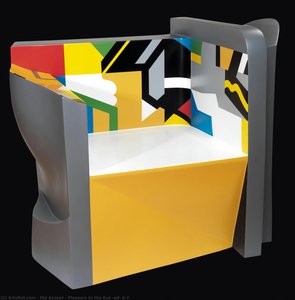
    • Pleasure to the Eye
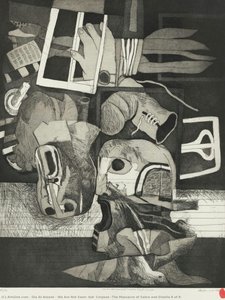
    • We Are Not Seen But Corpses
  • Place Of Birth: Baghdad, Iraq
Explore artworks organized by themes, styles, and characteristics.