x


 Oil On CanvasWallArtRococo
 1784
1784 76.0 x 64.0 cm
 National Trust
Hand-painted oil on canvas in your size and frame, made to order by our artists.





























Pick from our preset sizes that match the artwork's original proportions.

You may enter your own dimensions to fit a specific frame or space. If your selected size does not match the original image's proportions, we will either crop the artwork or extend the painting with additional hand-painted elements. A digital mockup will be sent for your approval before production begins.
Please note that the on-screen preview does not reflect the actual cropping or extension. Only the mockup will accurately show the final composition.
While custom sizes are available, we recommend selecting a dimension from the predefined list to preserve the original proportions.
Worldwide Delivery () in 3/4 weeks instead of standard 5 weeks. (18 July). No compromise on quality.


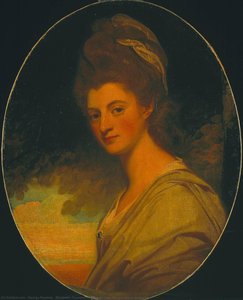
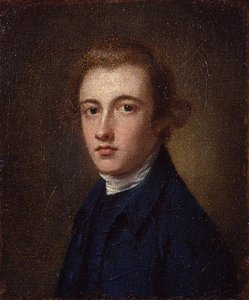
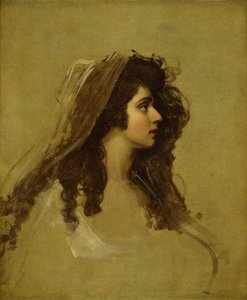
Jemima Yorke (1763–1804), Mrs Reginald Pole Carew
Reproduction Size
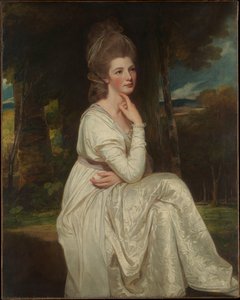
George Romney’s “Jemima Yorke (1763–1804), Mrs Reginald Pole-Carew,” painted in 1784, is more than just a likeness; it's a carefully constructed tableau of Regency elegance and understated power. The portrait captures Jemima Yorke, a woman of considerable social standing within the circles of London’s elite, rendered with a remarkable sensitivity to light, texture, and psychological nuance. Romney, already establishing himself as one of Britain’s foremost portrait painters, masterfully employs his signature technique – a blend of direct observation and subtle manipulation – to create an image that is both strikingly realistic and imbued with a quiet dignity.
The composition itself speaks volumes. Jemima sits in a relaxed yet poised posture, her hands gently crossed before her, a gesture suggesting both self-possession and a hint of vulnerability. Her gaze, directed slightly off-center to the left, invites the viewer into her world, creating an immediate connection. The soft lighting, characteristic of Romney’s work, washes over her features, highlighting the delicate curve of her cheekbones and the subtle sheen of her skin. The background, deliberately muted in tones of grey and brown, serves not as a distraction but rather to amplify Jemima's presence – she is undeniably the focal point.
To fully appreciate “Jemima Yorke,” it’s essential to understand the social landscape of 1784 England. The Regency period, named after King George III's reign, was a time of immense change and refinement. Portraiture flourished as a means of solidifying social status and demonstrating wealth and influence. Commissioning a portrait wasn’t merely about capturing one’s image; it was an investment in reputation and a testament to one’s position within the hierarchy. Romney skillfully navigated this complex environment, catering to the demands of his aristocratic patrons while simultaneously injecting his own artistic sensibilities into each work.
The inclusion of Reginald Pole-Carew, Jemima's husband, in the background subtly reinforces her social standing and family connections. His presence, though partially obscured, underscores the importance of lineage and established wealth within Regency society. The painting, therefore, becomes a visual representation of a carefully constructed social narrative – a story of status, connection, and refined taste.
Romney’s masterful use of color and texture is particularly noteworthy. He employs a delicate palette of creams, browns, and subtle blues to create an atmosphere of understated luxury. The fabric of Jemima's dress – a rich, dark material – is rendered with meticulous detail, showcasing Romney’s ability to capture the nuances of texture and drape. The pearl necklace, a symbol of wealth and refinement, adds another layer of visual interest.
Furthermore, Romney’s technique—often described as “deadpan realism”—involved building up layers of paint through numerous glazes, creating a luminous quality that is both remarkably lifelike and subtly ethereal. This layering process also contributes to the painting's depth and richness, inviting close examination and revealing new details with each viewing. The subtle variations in tone and color create an illusion of three-dimensionality, drawing the viewer into the scene.
“Jemima Yorke (1763–1804), Mrs Reginald Pole-Carew” remains a captivating example of Regency portraiture. It’s a testament to George Romney's artistic skill, his understanding of social dynamics, and his ability to capture the essence of his subject – a woman of grace, intelligence, and quiet confidence. Reproductions of this iconic painting continue to resonate with art lovers today, offering a glimpse into a bygone era of elegance and refinement.


1734 - 1802 , United Kingdom
Explore 25 iconic Georges Braque paintings that revolutionized Cubism & modern art. Discover the stories behind his masterpieces, from Fauvism to Analytical Cubism. Find museum-quality reproductions & elevate your home decor with Most-Famous-Paintings.com.

Journey through 25 iconic artworks at the Metropolitan Museum of Art! Explore Van Gogh, Monet, Rembrandt & more. Discover art history, inspiring stories, and museum-quality reproductions to elevate your home decor. Explore the full collection on Most-Famous-Paintings.com.
Explore 25 iconic Georges Seurat paintings & discover the brilliance of Pointillism. From 'La Grande Jatte' to his harbor scenes, delve into art history with Most-Famous-Paintings.com. Find museum-quality reproductions for your home decor. Explore the full collection online!

Explore 10 iconic portrait paintings – from Mona Lisa to Van Gogh’s self-portraits. Discover the stories behind these masterpieces, artistic techniques & find museum-quality art reproductions for your home at Most-Famous-Paintings.com.

Journey through 25 iconic artworks at the Detroit Institute of Arts! Explore Van Gogh, Monet, Rembrandt & more. Discover art history, stunning techniques & find museum-quality reproductions to elevate your home decor on Most-Famous-Paintings.com.


Stay updated with the latest art news, exclusive offers, and decoration ideas.
Tell us about your project and our art experts will provide you with 3 personalized art suggestions.
Let Us Curate 3 Options Just for You - Free!


 Buy print
 Send
Send Share
Share
 Details

 Download
 Similars
 X-Ray
X-Ray Diaporama
 Read More







 Glass option is only available in size under 110 CM