x


 Oil On CanvasWallArtRomantic Portraiture
 180019th Century
 41.0 x 36.0 cm
 English Heritage
Hand-painted oil on canvas in your size and frame, made to order by our artists.





























Pick from our preset sizes that match the artwork's original proportions.

You may enter your own dimensions to fit a specific frame or space. If your selected size does not match the original image's proportions, we will either crop the artwork or extend the painting with additional hand-painted elements. A digital mockup will be sent for your approval before production begins.
Please note that the on-screen preview does not reflect the actual cropping or extension. Only the mockup will accurately show the final composition.
While custom sizes are available, we recommend selecting a dimension from the predefined list to preserve the original proportions.
Worldwide Delivery () in 3/4 weeks instead of standard 5 weeks. (18 July). No compromise on quality.


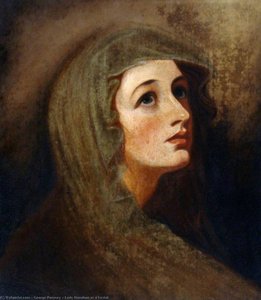
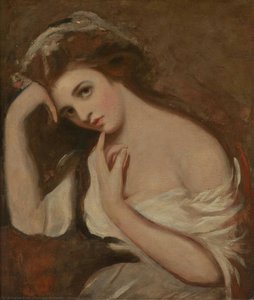
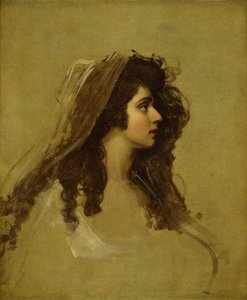
Lady Hamilton as a Vestal
Reproduction Size
George Romney’s “Lady Hamilton as a Vestal,” completed in 1800, transcends mere portraiture; it embodies the spirit of Georgian England – elegance, aristocratic patronage, and an obsession with idealized beauty. Executed on canvas measuring 41 x 36 cm, this oil painting resides within the halls of English Heritage in London, offering visitors a glimpse into a pivotal moment in British art history. Romney’s masterful technique—characterized by soft brushstrokes and luminous glazing—captures Emma Hamilton's serene gaze as she leans slightly forward, her hand resting delicately on a draped shawl. The pose itself is deliberately reminiscent of Vestal Virgins, Roman priestesses dedicated to purity and piety, symbolizing virtue and devotion within the context of Hamilton’s affair with Admiral Nelson.
Romney's style aligns closely with Neoclassical ideals prevalent during his time, prioritizing clarity of form and restrained emotion. Unlike the exuberant Baroque fervor that preceded him, Romney favored a subtle palette—primarily muted reds, creams, and browns—creating an atmosphere of understated grandeur. His meticulous attention to detail is evident in the rendering of fabric folds, hair strands, and Emma Hamilton’s skin tones, achieved through painstaking layering of thin glazes – a technique honed during his formative years studying under Christopher Steele in Paris. This careful approach elevates the painting beyond a simple likeness, transforming it into an embodiment of refined aesthetic sensibilities.
The painting’s creation coincided with Emma Hamilton and Admiral Nelson's passionate romance, a scandalous affair that captivated London society. Romney skillfully navigated this delicate situation by portraying Hamilton not as overtly sensual but rather imbued with spiritual grace – mirroring the symbolism of the Vestal Virgin archetype. The commission itself speaks volumes about the patronage system of Georgian England, where artists relied heavily on aristocratic benefactors to sustain their careers. Lord Nelson’s unwavering support ensured Romney's continued success and cemented his reputation as a painter capable of capturing both physical beauty and inner tranquility.
The deliberate allusion to Vestal Virgins is arguably the painting’s most profound symbolic element. Traditionally, Vestals guarded sacred flame symbolizing Rome’s divine authority and purity. Romney subtly elevates Hamilton's image beyond mere femininity, associating her with virtues considered paramount in Georgian society – chastity, piety, and devotion. This juxtaposition underscores the complexities of Hamilton’s life—a woman defying societal conventions while simultaneously achieving artistic renown.
“Lady Hamilton as a Vestal” continues to resonate with viewers today due to its ability to evoke feelings of serenity, contemplation, and understated beauty. Romney's masterful execution captures not just Emma Hamilton’s physical appearance but also her inner state—a quiet dignity that speaks volumes about resilience and grace under pressure. It serves as a poignant reminder of the transformative power of art – its capacity to transcend time and convey enduring emotional truths.


1734 - 1802 , United Kingdom

Journey through 25 iconic artworks at the Metropolitan Museum of Art! Explore Van Gogh, Monet, Rembrandt & more. Discover art history, inspiring stories, and museum-quality reproductions to elevate your home decor. Explore the full collection on Most-Famous-Paintings.com.

Journey through 25 iconic James Abbott McNeill Whistler paintings! Explore his masterpieces of Aestheticism, from 'Nocturne in Black and Gold' to captivating portraits. Find museum-quality art reproductions & elevate your home decor with Most-Famous-Paintings.com. Discover the full collection online.
Explore 25 iconic artworks from Washington DC's National Gallery of Art! Discover masterpieces by Cézanne, Matisse & Picasso. Find museum-quality art reproductions and elevate your home decor with timeless paintings. Explore the full collection online at Most-Famous-Paintings.com.
Explore 25 captivating portraits by Sir Joshua Reynolds, a master of British art. Discover stories behind his iconic paintings, elegant style & historical influence. Find museum-quality reproductions and elevate your home decor on Most-Famous-Paintings.com.

Explore 10 iconic portrait paintings – from Mona Lisa to Van Gogh’s self-portraits. Discover the stories behind these masterpieces, artistic techniques & find museum-quality art reproductions for your home at Most-Famous-Paintings.com.


Stay updated with the latest art news, exclusive offers, and decoration ideas.
Tell us about your project and our art experts will provide you with 3 personalized art suggestions.
Let Us Curate 3 Options Just for You - Free!


 Buy print
 Send
Send Share
Share
 Details

 Download
 Similars
 X-Ray
X-Ray Diaporama
 Read More







 Glass option is only available in size under 110 CM