x


Hand-painted oil on canvas in your size and frame, made to order by our artists.





























Pick from our preset sizes that match the artwork's original proportions.

You may enter your own dimensions to fit a specific frame or space. If your selected size does not match the original image's proportions, we will either crop the artwork or extend the painting with additional hand-painted elements. A digital mockup will be sent for your approval before production begins.
Please note that the on-screen preview does not reflect the actual cropping or extension. Only the mockup will accurately show the final composition.
While custom sizes are available, we recommend selecting a dimension from the predefined list to preserve the original proportions.
Worldwide Delivery () in 3/4 weeks instead of standard 5 weeks. (18 July). No compromise on quality.


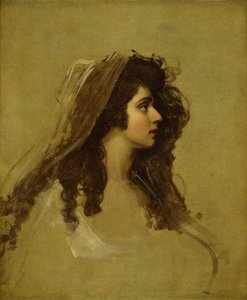
Portrait of Charlotte Smith
Reproduction Size
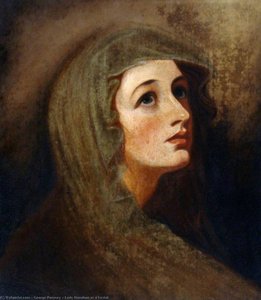
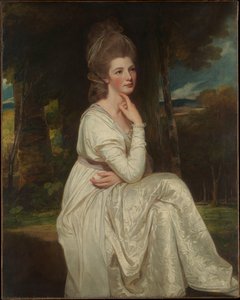
The canvas before you presents more than just a likeness; it’s a carefully constructed tableau of the late 18th century, capturing the essence of a celebrated poet and novelist within the refined atmosphere of Georgian society. This portrait of Charlotte Smith, painted by the masterful George Romney around 1792, is a testament to his skill in portraying both outward appearance and subtle inner character – a hallmark of his most enduring works. It’s a piece that invites contemplation, revealing layers of social context, artistic technique, and the quiet dignity of its subject.
Romney, a leading figure in London's art scene during this period, was renowned for his ability to render the fashionable elite with remarkable accuracy and an underlying sense of psychological depth. He moved beyond mere likeness, striving instead to capture the spirit of his sitters – their personalities, social standing, and even their moods. In Smith’s case, he has achieved precisely this, presenting her not as a static subject but as a woman engaged in thought, her gaze directed outwards with an expression that suggests both intelligence and a hint of melancholy. The composition is deliberately restrained; Romney avoids excessive ornamentation or dramatic gestures, focusing instead on the quiet power of her presence.
Romney’s choice of medium – pastel on paper – is crucial to understanding the portrait's unique character. Pastel offered a remarkable degree of subtlety and nuance, allowing him to build up layers of tone and color with astonishing precision. This technique was particularly well-suited for capturing the delicate textures of Smith’s gown, the sheen of her hair, and the subtle play of light on her face. The soft, hazy quality of the pastel lends a dreamlike atmosphere to the portrait, enhancing its emotional resonance. Furthermore, this style was popular during the Georgian era, reflecting a shift away from the heavier oils favored by earlier generations of portrait painters.
The composition itself adheres closely to established conventions of the Georgian portraiture. Smith is positioned in a three-quarter view, her body turned slightly towards the viewer, creating an immediate connection. The arrangement of her hands – one resting gracefully on a book, the other supporting her chin – subtly communicates her intellectual pursuits and contemplative nature. Romney’s masterful use of light and shadow further emphasizes these details, drawing attention to Smith's face and hands while maintaining a sense of atmospheric depth.
Charlotte Smith was a significant figure in the Romantic literary movement, celebrated for her novels and particularly her elegiac sonnets. Her work explored themes of love, loss, nature, and social critique, often imbued with a strong sense of emotion and personal experience. Romney’s portrait reflects this intellectual and emotional depth, suggesting that she is not merely a fashionable lady but a woman of considerable wit and sensibility. The book in her hands – likely one of her own works – symbolizes her dedication to literature and her role as a writer.
The setting within the room—a glimpse of a luxurious interior—hints at Smith’s social standing and the comforts afforded by her literary success. It's a space that speaks to her position within Georgian society, yet Romney subtly resists portraying her as overly opulent or extravagant. The focus remains firmly on her character and intellect, rather than on material possessions.
Ultimately, this portrait of Charlotte Smith by George Romney transcends the conventions of its time. It’s a deeply affecting image that captures not only the outward appearance of a prominent woman but also the quiet strength and intellectual curiosity that defined her life and work. The delicate pastel technique, combined with Romney's masterful composition and psychological insight, creates a portrait that continues to resonate with viewers today – a testament to the enduring power of art to capture both beauty and character.


1734 - 1802 , United Kingdom

Explore 25 iconic Georges Braque paintings that revolutionized Cubism & modern art. Discover the stories behind his masterpieces, from Fauvism to Analytical Cubism. Find museum-quality reproductions & elevate your home decor with Most-Famous-Paintings.com.
Explore 25 iconic Georges Seurat paintings & discover the brilliance of Pointillism. From 'La Grande Jatte' to his harbor scenes, delve into art history with Most-Famous-Paintings.com. Find museum-quality reproductions for your home decor. Explore the full collection online!

Explore 10 iconic portrait paintings – from Mona Lisa to Van Gogh’s self-portraits. Discover the stories behind these masterpieces, artistic techniques & find museum-quality art reproductions for your home at Most-Famous-Paintings.com.

Explore the life & art of George Romney, leading portraitist of Georgian England. Discover his style, famous patrons like Emma Hamilton, and legacy in British society. Expert insights for collectors.

Explore the captivating world of vintage portrait art! Discover styles, techniques & the enduring appeal of 19th-century masterpieces. Expert restoration, custom reproductions & appraisal services at Most-Famous-Paintings.


Stay updated with the latest art news, exclusive offers, and decoration ideas.
Tell us about your project and our art experts will provide you with 3 personalized art suggestions.
Let Us Curate 3 Options Just for You - Free!


 Buy print
 Send
Send Share
Share
 Details

 Download
 Similars
 X-Ray
X-Ray Diaporama

 Read More







 Glass option is only available in size under 110 CM