x


 Oil On CanvasWallArtEarly Netherlandish Renaissance
 1475
1475 31.0 x 24.0 cm
Hand-painted oil on canvas in your size and frame, made to order by our artists.





























Pick from our preset sizes that match the artwork's original proportions.

You may enter your own dimensions to fit a specific frame or space. If your selected size does not match the original image's proportions, we will either crop the artwork or extend the painting with additional hand-painted elements. A digital mockup will be sent for your approval before production begins.
Please note that the on-screen preview does not reflect the actual cropping or extension. Only the mockup will accurately show the final composition.
While custom sizes are available, we recommend selecting a dimension from the predefined list to preserve the original proportions.
Worldwide Delivery () in 3/4 weeks instead of standard 5 weeks. (18 July). No compromise on quality.


St. Veronica
Reproduction Size
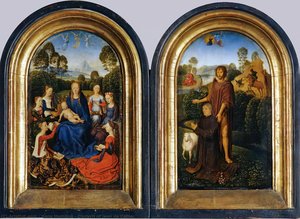
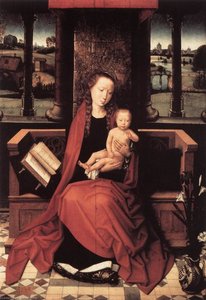
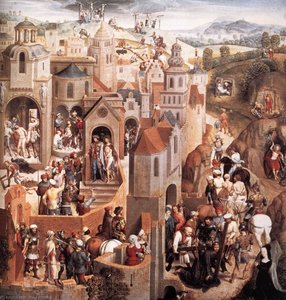
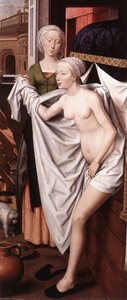
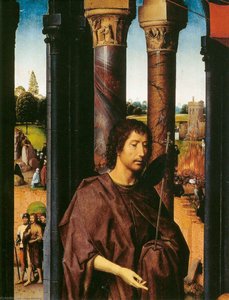
Hans Memling's “St. Veronica,” painted in 1475, stands as a cornerstone of Early Netherlandish art—a movement that prioritized meticulous detail and spiritual contemplation alongside breathtaking realism. More than just a portrait, it’s an immersive experience into the heart of fifteenth-century piety, capturing the profound reverence felt for religious iconography.
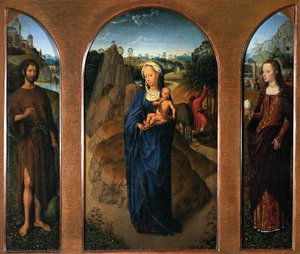
The painting depicts St. Veronica, a disciple of Jesus Christ who miraculously possessed a veil bearing his likeness after he carried his crucifix down Calvary. Memling skillfully portrays Veronica kneeling in prayerful devotion, her gaze fixed upon the veil—a poignant symbol of compassion and humility. The composition is carefully balanced, featuring two figures flanking St. Veronica: one standing upright, radiating authority, and the other seated beneath him, offering a sense of serenity and contemplation. A rocky outcrop serves as an understated yet significant backdrop, grounding the scene in the natural world and reinforcing its spiritual atmosphere.
Memling's approach aligns perfectly with the broader stylistic trends of the Flemish Primitives—a movement that distinguished itself from its Italian counterpart by prioritizing independent artistic exploration. He achieved unparalleled realism through masterful oil painting technique, utilizing glazing layers to create luminous surfaces and capturing subtle nuances of light and shadow. The artist’s meticulous attention to detail extends beyond mere representation; it embodies a desire to convey the inner life of his subjects—a characteristic that would become synonymous with Northern Renaissance art.
The central element – Jesus' face on the veil – transcends its visual depiction. It represents Christ’s suffering endured during his crucifixion and, crucially, embodies the promise of redemption offered through faith. Memling’s deliberate choice to portray Veronica with unwavering devotion underscores the importance of humility and compassion in Christian spirituality. The veil itself symbolizes purity and divine grace—a testament to the transformative power of encountering God.
"St. Veronica" continues to resonate powerfully with viewers today, eliciting feelings of serenity, contemplation, and reverence. Memling’s work profoundly influenced subsequent generations of artists, establishing a precedent for portraying religious figures with dignity and sensitivity. His legacy extends beyond individual masterpieces; it resides in his contribution to shaping the artistic landscape of Europe during a period marked by intellectual curiosity and spiritual renewal—a testament to the enduring beauty and significance of Early Netherlandish art.

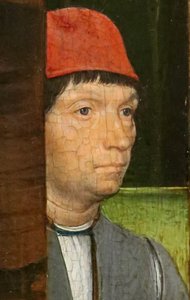
Germany

Journey into the world of Early Netherlandish painting! Explore 10 masterpieces by Jan van Eyck, Rogier van der Weyden & more. Discover stunning detail, symbolism & Renaissance art for your home decor. Find museum-quality reproductions on Most-Famous-Paintings.com
Explore 10 legendary 'Oil on Board' masterpieces by Van Gogh, Monet & more! Discover art history, iconic styles like Impressionism, and find museum-quality reproductions to elevate your home decor. Explore the full collection online at Most-Famous-Paintings.com.

Journey through 25 iconic artworks at the Metropolitan Museum of Art! Explore Van Gogh, Monet, Rembrandt & more. Discover art history, inspiring stories, and museum-quality reproductions to elevate your home decor. Explore the full collection on Most-Famous-Paintings.com.

Journey into the Early Netherlandish Renaissance! Explore 10 iconic paintings by Jan van Eyck, Rogier van der Weyden & more. Discover stunning detail, symbolism, and oil painting techniques. Find museum-quality art reproductions for your home at Most-Famous-Paintings.com.
Journey through Henri Matisse's 25 most iconic paintings! Explore Fauvism, vibrant colors & the stories behind masterpieces like 'The Dance'. Find museum-quality art reproductions and curated decor ideas to elevate your space. Discover all masterpieces on Most-Famous-Paintings.com.


Stay updated with the latest art news, exclusive offers, and decoration ideas.
Tell us about your project and our art experts will provide you with 3 personalized art suggestions.
Let Us Curate 3 Options Just for You - Free!


 Buy print
 Send
Send Share
Share
 Details

 Download
 Similars
 X-Ray
X-Ray Diaporama
 Read More







 Glass option is only available in size under 110 CM