x


 Oil On CanvasWallArtDutch Golden Age
 1677Renaissance
 83.0 x 68.0 cm
 National Gallery
Hand-painted oil on canvas in your size and frame, made to order by our artists.





























Pick from our preset sizes that match the artwork's original proportions.

You may enter your own dimensions to fit a specific frame or space. If your selected size does not match the original image's proportions, we will either crop the artwork or extend the painting with additional hand-painted elements. A digital mockup will be sent for your approval before production begins.
Please note that the on-screen preview does not reflect the actual cropping or extension. Only the mockup will accurately show the final composition.
While custom sizes are available, we recommend selecting a dimension from the predefined list to preserve the original proportions.
Worldwide Delivery () in 3/4 weeks instead of standard 5 weeks. (18 July). No compromise on quality.


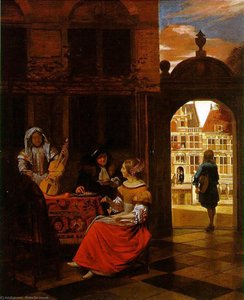
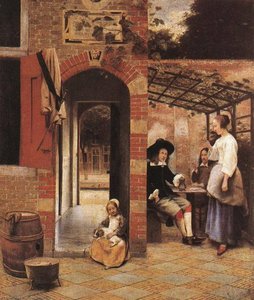
A Musical Party in a Courtyard
Reproduction Size
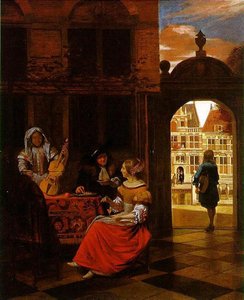
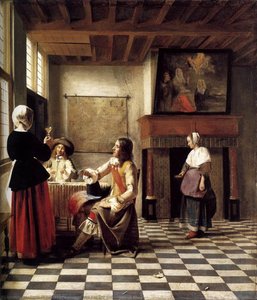
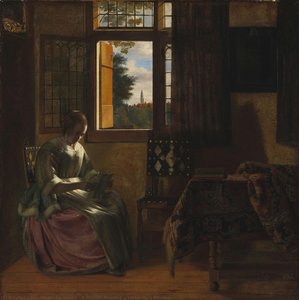
Pieter de Hooch’s “A Musical Party in a Courtyard,” painted in 1677, offers a remarkably intimate glimpse into the daily life of 17th-century Amsterdam. This captivating scene, rendered in meticulous detail and bathed in soft light, transcends mere representation; it's a poignant meditation on social interaction, leisure, and the burgeoning prosperity of the Dutch Republic. The painting’s subject – a group gathered for music within a private courtyard – was a common motif during this era, reflecting the growing importance of domesticity and refined entertainment amongst the city’s wealthy merchant class. De Hooch masterfully captures not just the visual elements but also the subtle nuances of human behavior, creating an atmosphere brimming with quiet conversation and gentle amusement.
The painting’s creation coincides with a period of significant social and economic change in Amsterdam. The city was experiencing an unprecedented boom, fueled by trade and maritime expansion. This prosperity fostered a growing middle class eager to embrace the arts and cultivate refined tastes. Notably, the inclusion of the tablet bearing the date 1620 and referencing Hendrick de Keyser – a prominent Delft painter – subtly anchors the scene within the artistic landscape of the time. De Hooch’s work is considered a direct continuation of De Keyser's style, demonstrating his deep understanding of Delft’s artistic traditions and his ability to synthesize them with his own innovative approach.
Beyond its technical brilliance, “A Musical Party” resonates with a profound sense of human connection. The figures are not grand heroes or historical personages; they are ordinary individuals engaged in a simple pleasure – the enjoyment of music and companionship. The woman seated on the bench, clutching her handbag, evokes a feeling of quiet contemplation, while the musician lost in his performance embodies the spirit of artistic expression. The painting’s overall mood is one of tranquility and warmth, inviting viewers to share in this intimate moment of social grace. It's a testament to De Hooch's ability to capture not just what he saw, but also the very essence of human experience.


1629 - 1694 , Netherlands
Delve into the world of Francisco Goya with Most-Famous-Paintings. Explore 25 iconic paintings – from 'The Third of May' to his haunting Black Paintings. Discover the stories, techniques & emotions behind these Spanish masterpieces. Find museum-quality art reproductions for your home at Most-Famous-Paintings.com!
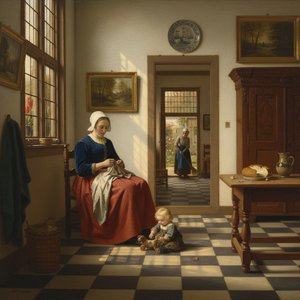
Explore the captivating world of Pieter de Hooch, a master of Dutch Golden Age painting. Discover his innovative use of light, intimate domestic scenes, and lasting influence on art history. Learn more at Most-Famous-Paintings.

Journey into the Dutch Golden Age! Explore 10 iconic paintings by Rembrandt, Vermeer & Hals. Discover the stories behind these Baroque masterpieces and find museum-quality art reproductions to elevate your home decor on .
Explore the Dutch Golden Age of painting! Discover key artists like Vermeer & ter Borch, their innovative techniques, and the rich cultural context behind these Baroque masterpieces. Learn about collecting & appreciating this iconic art period.

Discover the captivating maritime paintings of Willem van de Velde the Elder, a master chronicler of the Dutch Golden Age. Explore his unparalleled realism and lasting influence on naval art history.


Stay updated with the latest art news, exclusive offers, and decoration ideas.
Tell us about your project and our art experts will provide you with 3 personalized art suggestions.
Let Us Curate 3 Options Just for You - Free!


 Buy print
 Send
Send Share
Share
 Details

 Download
 Similars
 X-Ray
X-Ray Diaporama
 Read More







 Glass option is only available in size under 110 CM