x


 OilWallArtBaroque
 1658Early Modern
 73.0 x 63.0 cm
Hand-painted oil on canvas in your size and frame, made to order by our artists.





























Pick from our preset sizes that match the artwork's original proportions.

You may enter your own dimensions to fit a specific frame or space. If your selected size does not match the original image's proportions, we will either crop the artwork or extend the painting with additional hand-painted elements. A digital mockup will be sent for your approval before production begins.
Please note that the on-screen preview does not reflect the actual cropping or extension. Only the mockup will accurately show the final composition.
While custom sizes are available, we recommend selecting a dimension from the predefined list to preserve the original proportions.
Worldwide Delivery () in 3/4 weeks instead of standard 5 weeks. (18 July). No compromise on quality.


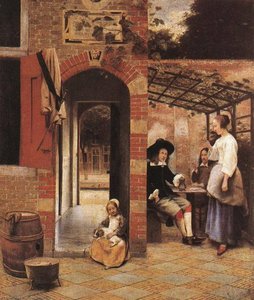
A woman and a child on a Bleichwiese
Reproduction Size
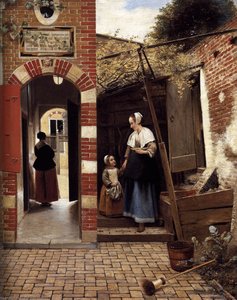
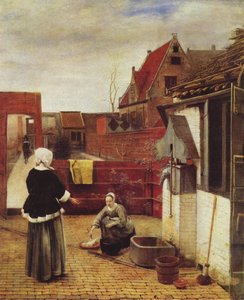
In the quiet, sun-drenched moments of the seventeenth century, Pieter de Hooch captured more than just scenery; he captured the very soul of Dutch domesticity and communal life. His masterpiece, "A woman and a child on a Bleichwiese," painted in 1658, serves as a breathtaking portal into a bygone era. The scene unfolds upon a dusty road, where the warmth of a bustling village breathes through every brushstroke. At the heart of this composition, a woman in a striking red dress stands alongside a child, their presence anchoring the viewer amidst the gentle movement of a town in motion. This is not merely a portrait of individuals, but a celebration of the interconnectedness of life, where the intimate bond between mother and child exists in harmony with the wider world of neighbors, travelers, and the rhythmic pulse of daily labor.
The composition is masterfully layered, drawing the eye through a series of receding planes that create an extraordinary sense of depth. Beyond the central figures, the viewer discovers a tapestry of human activity: distant figures engaged in conversation, the steady presence of a horse near the center, and the architectural grandeur of a brick building topped by a towering church steeple. This structural arrangement does more than provide perspective; it creates a narrative arc that leads from the personal to the communal. The inclusion of the steeple serves as a silent sentinel, symbolizing the spiritual oversight and the enduring stability of the community, while the dirt road acts as a literal and metaphorical path connecting the private lives of the subjects to the public sphere of the village.
De Hooch was a virtuoso of light, and in this work, his technique reaches a pinnacle of Dutch Golden Age naturalism. The way light spills across the Bleichwiese—a bleaching field—is nothing short of poetic. He employs a subtle, soft illumination that avoids harsh shadows, opting instead for a luminous glow that softens the edges of the brickwork and illuminates the textures of the clothing. This mastery of light serves to unify the disparate elements of the painting, bathing the bustling crowd and the architectural landmarks in a shared, golden atmosphere. The artist’s ability to render the tactile quality of the earth, the weight of the red fabric, and the distant, hazy silhouettes of the townspeople demonstrates a profound command over oil medium.
For the discerning collector or interior designer, this piece offers an unparalleled emotional resonance. It evokes a sense of nostalgia for a simpler, more grounded existence, making it a profound addition to any curated space. The painting does not demand attention through loud colors or chaotic movement; rather, it commands respect through its quiet dignity and atmospheric depth. Whether placed in a sunlit gallery or as a focal point in a sophisticated living space, the work invites contemplation. It brings with it an air of historical prestige and a serene, timeless beauty that can transform the ambiance of a room, offering a window into a world where every detail, no matter how mundane, is treated with reverence and artistic grace.


1629 - 1694 , Netherlands
Delve into the world of Francisco Goya with Most-Famous-Paintings. Explore 25 iconic paintings – from 'The Third of May' to his haunting Black Paintings. Discover the stories, techniques & emotions behind these Spanish masterpieces. Find museum-quality art reproductions for your home at Most-Famous-Paintings.com!
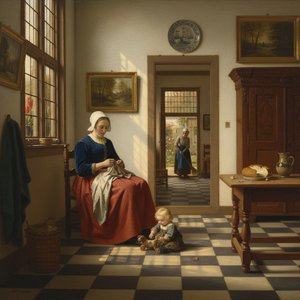
Explore the captivating world of Pieter de Hooch, a master of Dutch Golden Age painting. Discover his innovative use of light, intimate domestic scenes, and lasting influence on art history. Learn more at Most-Famous-Paintings.

Journey into the Dutch Golden Age! Explore 10 iconic paintings by Rembrandt, Vermeer & Hals. Discover the stories behind these Baroque masterpieces and find museum-quality art reproductions to elevate your home decor on .
Explore the Dutch Golden Age of painting! Discover key artists like Vermeer & ter Borch, their innovative techniques, and the rich cultural context behind these Baroque masterpieces. Learn about collecting & appreciating this iconic art period.

Journey through the Golden Age with our guide to the Top 10 Dutch Baroque masterpieces! Explore iconic paintings by Rembrandt, Vermeer & Frans Hals. Find museum-quality art reproductions and elevate your home decor at Most-Famous-Paintings.com.


Stay updated with the latest art news, exclusive offers, and decoration ideas.
Tell us about your project and our art experts will provide you with 3 personalized art suggestions.
Let Us Curate 3 Options Just for You - Free!


 Buy print
 Send
Send Share
Share
 Details

 Download
 Similars
 X-Ray
X-Ray Diaporama
 Read More







 Glass option is only available in size under 110 CM