x

 Giclée PrintDigital
 1667
1667 68.0 x 56.0 cm
 Taft Museum of Art
Hand-painted oil on canvas in your size and frame, made to order by our artists.
Pick from our preset sizes that match the artwork's original proportions.

You may enter your own dimensions to fit a specific frame or space. If your selected size does not match the original image's proportions, we will either crop the artwork or extend the painting with additional hand-painted elements. A digital mockup will be sent for your approval before production begins.
Please note that the on-screen preview does not reflect the actual cropping or extension. Only the mockup will accurately show the final composition.
While custom sizes are available, we recommend selecting a dimension from the predefined list to preserve the original proportions.
Worldwide Delivery () in 3/4 weeks instead of standard 5 weeks. (18 July). No compromise on quality.


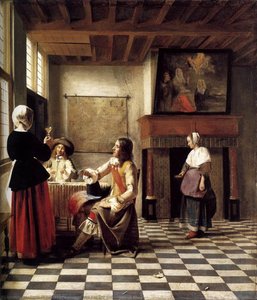
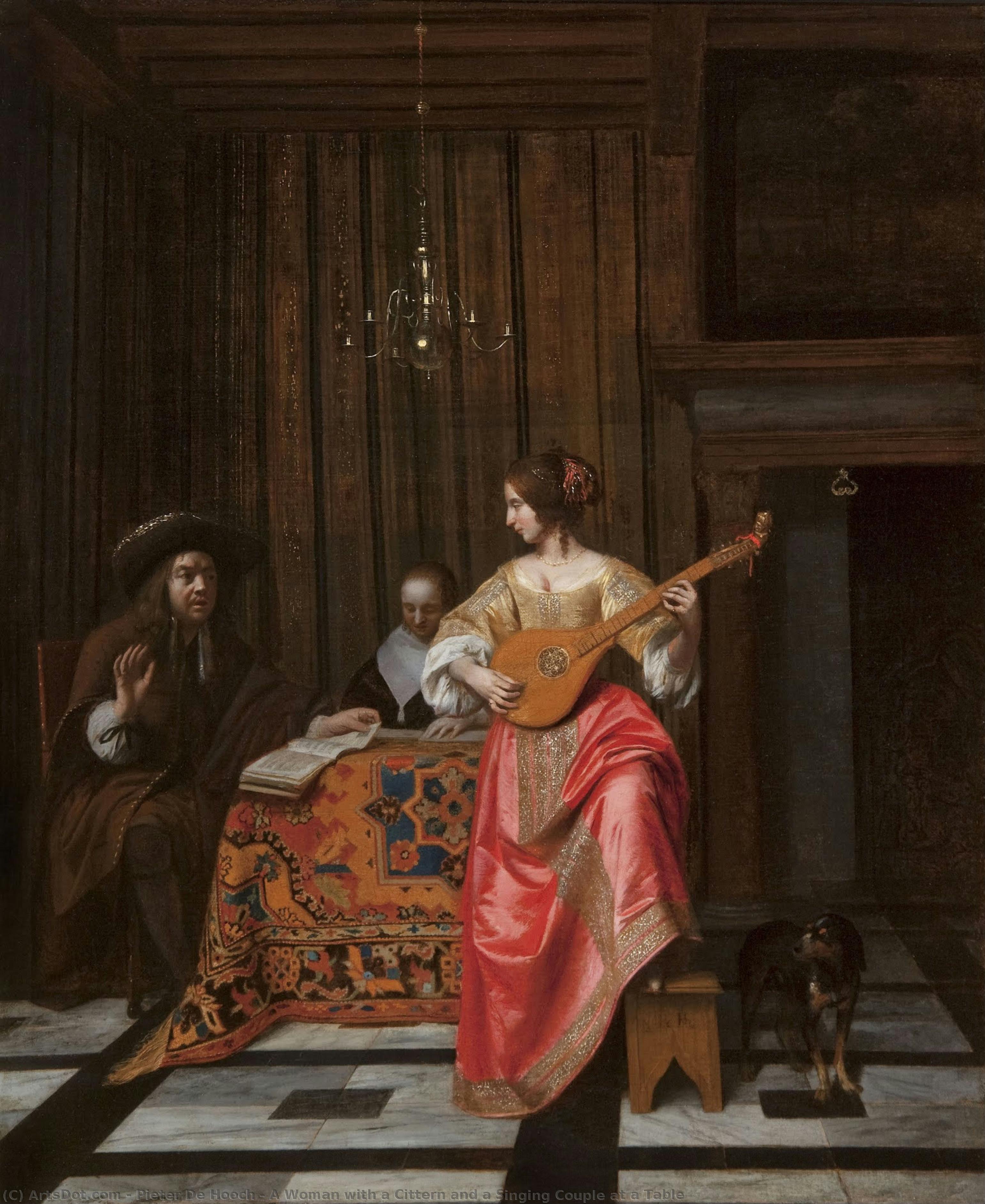
A Woman with a Cittern and a Singing Couple at a Table
Reproduction Size
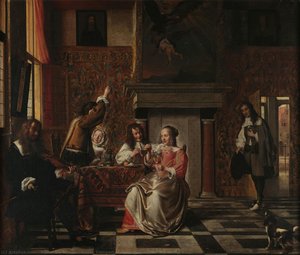
Pieter de Hooch's "A Woman with a Cittern and a Singing Couple at a Table," painted in 1667, isn’t merely a depiction of an afternoon gathering; it’s a masterful distillation of the burgeoning middle-class life within the Dutch Golden Age. This intimate scene, now housed within the Taft Museum of Art in Cincinnati, offers a rare glimpse into the domestic sphere – a world of quiet conversation, shared entertainment, and subtle social dynamics. De Hooch, a key figure in the Delft School, eschewed grand historical narratives or dramatic religious scenes, instead focusing on the everyday realities of his time, imbuing them with an extraordinary level of detail and psychological insight.
The painting immediately draws the eye to the central female figure, poised gracefully as she plays a cittern – a precursor to the guitar – its strings suggesting a melody both lively and intimate. Her attire, in salmon and gold satin, speaks to her status and wealth, while her attentive gaze directs attention towards the man beside her, likely a teacher or acquaintance. The other figures, a woman absorbed in a songbook and a small dog observing the scene, contribute to a tableau of relaxed conviviality. De Hooch’s skill lies not just in rendering these individuals with remarkable accuracy – note the delicate folds of fabric, the subtle expressions on their faces – but also in conveying an atmosphere of comfortable familiarity.
De Hooch was a master of *chiaroscuro*, employing light and shadow to create depth and drama within his interiors. The room is bathed in soft, diffused light filtering through an unseen window, casting gentle shadows that define the forms of furniture and figures. This technique isn’t merely decorative; it subtly directs the viewer's eye, emphasizing key elements like the woman with the cittern and highlighting the intimate space itself. His use of muted colors – predominantly browns, creams, and blues – further enhances this sense of quietude and reinforces the painting’s overall mood.
The artist’s meticulous attention to detail is evident in every aspect of the composition. The table cloth, a rich Turkish carpet, adds texture and visual interest. The placement of the book, the chair positioned close to the left side, and the bench on the right all contribute to a sense of spatial realism, grounding the scene within a believable environment. De Hooch’s brushwork is remarkably subtle, creating an illusion of softness and fluidity that contributes significantly to the painting's overall charm.
Beyond its aesthetic qualities, “A Woman with a Cittern and a Singing Couple at a Table” offers a glimpse into the social values of 17th-century Holland. The scene reflects the growing importance of the middle class, who were increasingly seeking to emulate the lifestyles of the wealthy elite through domestic interiors and refined leisure activities. The presence of the dog, often associated with fidelity or even illicit desire in Dutch art, adds a layer of subtle symbolism – perhaps hinting at the complexities of relationships within this social context.
Furthermore, the act of music-making itself held significant meaning. Shared musical entertainment was a common pastime for families and friends, representing connection, companionship, and intellectual stimulation. De Hooch’s depiction captures this spirit perfectly, presenting a scene that is both visually appealing and subtly imbued with social commentary.
Most-Famous-Paintings offers meticulously hand-painted reproductions of “A Woman with a Cittern and a Singing Couple at a Table,” allowing you to bring this exquisite work of art into your home. Our skilled artists replicate De Hooch’s masterful technique, capturing the nuances of light, shadow, and color with remarkable precision. Whether displayed in a formal living room or a cozy study, this reproduction will serve as a timeless reminder of the beauty and tranquility found within the everyday moments of life – a testament to the enduring legacy of Pieter de Hooch.


1629 - 1694 , Netherlands
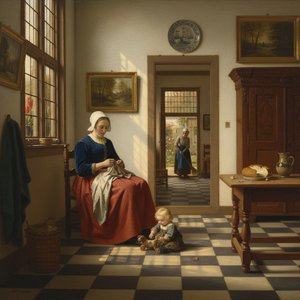
Explore the captivating world of Pieter de Hooch, a master of Dutch Golden Age painting. Discover his innovative use of light, intimate domestic scenes, and lasting influence on art history. Learn more at Most-Famous-Paintings.
Delve into the world of Francisco Goya with Most-Famous-Paintings. Explore 25 iconic paintings – from 'The Third of May' to his haunting Black Paintings. Discover the stories, techniques & emotions behind these Spanish masterpieces. Find museum-quality art reproductions for your home at Most-Famous-Paintings.com!

APS ofrece reproducciones de bellas artes y encargos personalizados desde 2004. Confían en nosotros corporaciones, hoteles y coleccionistas selectos para obras de arte de calidad museística, servicio discreto y soluciones artísticas completas. ¡Póngase en contacto con nosotros para obtener un presupuesto personalizado!

Explore the Dutch Golden Age of painting! Discover key artists like Vermeer & ter Borch, their innovative techniques, and the rich cultural context behind these Baroque masterpieces. Learn about collecting & appreciating this iconic art period.

Journey into the Dutch Golden Age! Explore 10 iconic paintings by Rembrandt, Vermeer & Hals. Discover the stories behind these Baroque masterpieces and find museum-quality art reproductions to elevate your home decor on .


Stay updated with the latest art news, exclusive offers, and decoration ideas.
Tell us about your project and our art experts will provide you with 3 personalized art suggestions.
Let Us Curate 3 Options Just for You - Free!


 Buy print
 Send
Send Share
Share
 Details

 Download
 Similars
 X-Ray
X-Ray Diaporama
 Read More




































 Glass option is only available in size under 110 CM