x


 Oil On CanvasWallArtRomanticism
 76.0 x 100.0 cm
 Bolton Museum And Art Gallery
Hand-painted oil on canvas in your size and frame, made to order by our artists.





























Pick from our preset sizes that match the artwork's original proportions.

You may enter your own dimensions to fit a specific frame or space. If your selected size does not match the original image's proportions, we will either crop the artwork or extend the painting with additional hand-painted elements. A digital mockup will be sent for your approval before production begins.
Please note that the on-screen preview does not reflect the actual cropping or extension. Only the mockup will accurately show the final composition.
While custom sizes are available, we recommend selecting a dimension from the predefined list to preserve the original proportions.
Worldwide Delivery () in 3/4 weeks instead of standard 5 weeks. (18 July). No compromise on quality.


Alonso, King of Naples and Another Figure (fragment of 'The Tempest Act I, Scene 1')
Reproduction Size
George Romney’s “Alonso, King of Naples and Another Figure (fragment of ‘The Tempest Act I, Scene 1’)” isn’t merely a portrait; it’s a captured moment of profound emotional turmoil. Painted circa 1789-1791, this oil on canvas fragment, currently residing in the Bolton Museum, offers a tantalizing glimpse into a pivotal scene from William Shakespeare's “The Tempest.” Romney, a master of capturing human expression and social grace during his prolific career, here eschews the polished formality often associated with his aristocratic sitters to deliver something far more raw and compelling. The painting’s power lies not in its complete narrative—it’s an excerpt—but in the intensely concentrated drama it conveys: a silent explosion of grief, anger, and impending doom.
_-_Alonso,_King_of_Naples_and_Another_Figure_(fragment_of_%27The_Tempest_Act_I%2C_Scene_1%27)_-_BOLMG-1891.2.3.b_-_Bolton_Museum.jpg)
The composition immediately draws the eye to Alonso, the aging King of Naples, rendered with a remarkable sensitivity. His face, etched with lines of sorrow and authority, is turned towards the viewer, his hand raised as if issuing a command or desperately grasping for something lost. The stark white hair and beard speak not just of age but also of a profound loss – the presumed death of his son, Ferdinand, at sea. Beside him stands another figure, likely a loyal servant or advisor, mirroring Alonso’s agitation with an upward gaze and outstretched arm. This subtle mirroring amplifies the sense of shared grief and impending catastrophe. Romney masterfully uses light and shadow to accentuate these contrasts; the darker tones enveloping Alonso create a feeling of isolation and despair, while the brighter areas around the other figure suggest a flicker of hope or perhaps simply a desperate attempt to maintain composure.
Romney’s work falls squarely within the Romantic movement, an era characterized by a heightened interest in emotion, nature, and the sublime. “Alonso” embodies this spirit through its focus on intense human feeling and its dramatic portrayal of a tragic event. The painting's subject matter—a fragment from Shakespeare’s beloved play—further anchors it within this artistic context. Shakespeare’s "The Tempest" itself is a complex exploration of themes like revenge, forgiveness, and the consequences of ambition, all powerfully reflected in Romney’s depiction. The setting, though somewhat ambiguous, evokes a stormy seascape – a visual metaphor for the emotional tempest raging within Alonso's heart.
Romney’s skill as a portraitist is evident in every brushstroke. He meticulously captures the texture of Alonso’s clothing, the weight of his years, and the subtle nuances of his expression. The detail extends to the background—a simple room with a clock and a table—which serves not merely as a setting but as a visual reminder of time passing and the relentless march towards mortality. The use of oil paint allows for rich colors and deep shadows, contributing significantly to the painting’s dramatic effect. Romney's ability to convey such profound emotion through seemingly simple forms is a testament to his artistic genius.
“Alonso, King of Naples and Another Figure (fragment of ‘The Tempest Act I, Scene 1’)” transcends the boundaries of mere portraiture. It’s a poignant meditation on loss, grief, and the enduring power of human emotion. Reproductions of this captivating artwork offer a unique opportunity to bring this moment of dramatic intensity into any space, serving as a reminder of the complexities of human experience and the timeless themes explored in Shakespeare's masterpiece. Its evocative quality makes it an ideal addition to both private collections and art-filled interiors.


1734 - 1802 , United Kingdom

Explore 25 iconic Georges Braque paintings that revolutionized Cubism & modern art. Discover the stories behind his masterpieces, from Fauvism to Analytical Cubism. Find museum-quality reproductions & elevate your home decor with Most-Famous-Paintings.com.
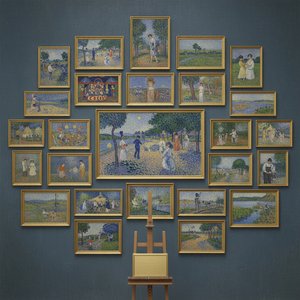
Explore 25 iconic Georges Seurat paintings & discover the brilliance of Pointillism. From 'La Grande Jatte' to his harbor scenes, delve into art history with Most-Famous-Paintings.com. Find museum-quality reproductions for your home decor. Explore the full collection online!

Journey through 25 iconic artworks at the Metropolitan Museum of Art! Explore Van Gogh, Monet, Rembrandt & more. Discover art history, inspiring stories, and museum-quality reproductions to elevate your home decor. Explore the full collection on Most-Famous-Paintings.com.

Journey through 25 iconic James Abbott McNeill Whistler paintings! Explore his masterpieces of Aestheticism, from 'Nocturne in Black and Gold' to captivating portraits. Find museum-quality art reproductions & elevate your home decor with Most-Famous-Paintings.com. Discover the full collection online.
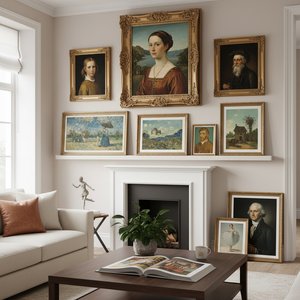
Explore 25 iconic artworks from Washington DC's National Gallery of Art! Discover masterpieces by Cézanne, Matisse & Picasso. Find museum-quality art reproductions and elevate your home decor with timeless paintings. Explore the full collection online at Most-Famous-Paintings.com.


Stay updated with the latest art news, exclusive offers, and decoration ideas.
Tell us about your project and our art experts will provide you with 3 personalized art suggestions.
Let Us Curate 3 Options Just for You - Free!


 Buy print
 Send
Send Share
Share
 Details

 Download
 Similars
 X-Ray
X-Ray Diaporama
 Read More







 Glass option is only available in size under 110 CM