Wishlist Shopping Cart Cart
Buy print Buy printBuy Image Buy Image SendSend
DetailsDetails Add to favorites Add to favorites DownloadDownload SimilarsSimilars X-RayX-Ray DiaporamaDiaporama

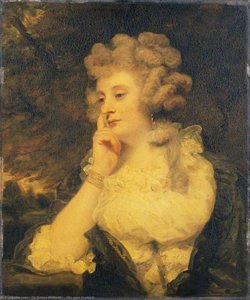
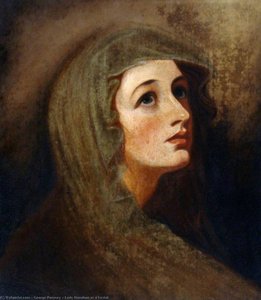
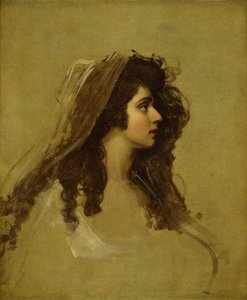
Portrait of a Lady

Admire George Romney’s ‘Portrait of a Lady,’ a captivating 1780 oil painting showcasing elegant portraiture & Romanticism. Explore its soft lighting, classical style & subtle symbolism.

Discover George Romney (1734-1802), the celebrated British portrait painter of high society! Explore his elegant style, captivating portraits & muse, Emma Hamilton. Shop reproductions now!

Hand Made Oil Reproduction

Hand-painted oil on canvas in your size and frame, made to order by our artists.

P118B $10
P118H $10
P118W $10
P438Z $10
P508JH $12
P508YH $12
P805H $10
P805Z $10
P919BZ $10
P919G $10
P919XJ $10
P959ZH $10
P968JZ $12
W106C $8
W218G $10
W218JH $8
W218Y $10
W307PJ $10
W316G $10
W316PJ $8
W316Y $10
W398PJ $8
W4111J $10
W500HY $15
W500JH $15
W692G $12
W849H $8
W940BG $15
W953PJ $8

Standard
custom
CM
INCH

Pick from our preset sizes that match the artwork's original proportions.

width
height

You may enter your own dimensions to fit a specific frame or space. If your selected size does not match the original image's proportions, we will either crop the artwork or extend the painting with additional hand-painted elements. A digital mockup will be sent for your approval before production begins.
Please note that the on-screen preview does not reflect the actual cropping or extension. Only the mockup will accurately show the final composition.
While custom sizes are available, we recommend selecting a dimension from the predefined list to preserve the original proportions.

Examples of what can be changed: Replace face with customer photo; Add pet (e.g., replace cat with dog); Include hidden message in background; Change background landscape or elements.
After order, Most-Famous-Paintings.com team will email client for instructions and provide a mockup preview

Worldwide Delivery () in 3/4 weeks instead of standard 5 weeks. (18 July). No compromise on quality.

why_choose_icon
Free Worldwide Express Shipping
why_choose_icon
High-Quality Linen Canvas
why_choose_icon
Full Shipping Insurance
why_choose_icon
Customs Tax Refund Guarantee
why_choose_icon
True Color Matching Guarantee
why_choose_icon
60-Day Return Policy (Defects Only)
why_choose_icon
100% Money-Back Guarantee
why_choose_icon
Bulk Discount Offer

Total Price

-

reproduction

Portrait of a Lady

Reproduction Medium

Reproduction Size

-

Total Price

-

Quick Facts

  • Artistic style: Classical Portraiture
  • Year: 1780
  • Artist: George Romney
  • Subject or theme: Self-portrait
  • Influences: European Tradition
  • Medium: Oil on canvas

Artwork Description

A Portrait of Quiet Dignity: George Romney’s ‘Portrait of a Lady’

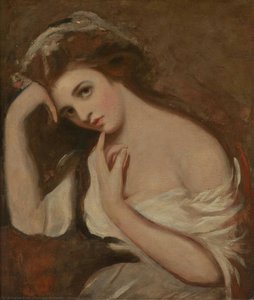
George Romney's “Portrait of a Lady,” painted circa 1780, is more than just a likeness; it’s a carefully constructed meditation on beauty, introspection, and the burgeoning Romantic sensibility. This captivating oil painting, rendered with a masterful hand, immediately draws the viewer into an intimate space, dominated by the subject's face – a woman of striking presence with flowing red hair that seems to catch the light itself. The composition, centered around her head and shoulders, employs a classic pyramidal structure, lending stability while simultaneously emphasizing her vulnerability. It’s a scene steeped in the atmosphere of the late 18th century, reflecting Romney's position as one of Britain’s most sought-after portrait painters during a period of significant social and artistic change.

Technique and Style: Romanticism in Detail

  • Romantic Brushwork: Romney’s technique is characterized by loose, expressive brushstrokes that contribute to the painting's hazy, atmospheric quality. This deliberate lack of sharp definition aligns with the emerging Romantic movement, which prioritized emotion and subjective experience over strict academic rules.
  • Impasto Texture: Noticeable variations in texture – particularly in the hair and background – reveal an impasto application of paint. This technique, where thick layers of pigment are built up on the canvas, adds a tactile quality to the work and enhances the sense of depth and volume.
  • Soft Lighting: The use of diffused light, originating from the upper left, is crucial to the painting’s mood. It casts subtle shadows that define the contours of her face and hair, creating an almost dreamlike effect. This careful manipulation of light and shadow was a hallmark of Romney's style.

Symbolism and Emotional Resonance

Beyond its technical brilliance, “Portrait of a Lady” is rich in subtle symbolism. The woman’s gaze, direct yet melancholic, invites contemplation and suggests a depth of emotion – perhaps a quiet sadness or an introspective awareness. This focus on the individual's inner life was a key characteristic of Romantic portraiture, moving away from the formal, idealized representations favored by earlier artistic traditions. The warm earth tones, punctuated by flashes of red and gold, further contribute to the painting’s emotional impact, evoking feelings of warmth, richness, and perhaps even a hint of danger.

Historical Context: Romney and the Rise of Portraiture

Painted in 1780, this portrait reflects George Romney's pivotal role in shaping British portraiture. Following his apprenticeship with Christopher Steele, Romney quickly established himself as a leading figure in London’s artistic scene, catering to the tastes of the wealthy and influential. His ability to capture not just physical likenesses but also the personality and character of his subjects – a skill honed through years of observation and practice – cemented his reputation. “Portrait of a Lady” stands as a testament to Romney's talent and his contribution to the evolution of portraiture during a period of immense social and artistic change, embodying the spirit of Romanticism’s emphasis on individual expression.


Artist Biography

A Life in Portraiture: The World of George Romney

Born in the picturesque landscape of Dalton-in-Furness, Lancashire, on December 15th, 1734, George Romney ascended to become one of the most sought-after portrait painters of his era. His journey from a cabinet maker’s son to the favored artist of British high society is a compelling narrative of innate talent and unwavering ambition. Early life offered little indication of the artistic path he would forge; initially apprenticed to his father, it was an inherent inclination towards drawing and craftsmanship that led him to Christopher Steele, a local portraitist who had studied in Paris. This apprenticeship proved pivotal, providing Romney with foundational skills and an introduction to European artistic traditions. He quickly surpassed his master, however, demonstrating a precocious talent demanding further cultivation. A brief, unhappy marriage and subsequent separation propelled him towards London in 1762, a city brimming with opportunity but also fierce competition.

Establishing a Reputation: Style and Technique

London proved to be a crucible for Romney’s artistic development. He swiftly established himself as a formidable portraitist, challenging the dominance of artists like Thomas Gainsborough and Sir Joshua Reynolds. While he never sought membership in the Royal Academy – a decision that perhaps limited his access to certain patronage – his success was undeniable. Romney's style evolved over time, initially reflecting the influence of Steele and his Parisian training, but soon blossomed into something distinctly his own. He possessed an exceptional ability to capture not merely the likeness, but also the personality and social standing of his sitters. His portraits are characterized by elegant poses, a refined use of light and shadow, and a subtle psychological insight that set him apart. Romney’s technique was marked by a delicate touch and a preference for flowing lines, often drawing inspiration from classical sculpture. He skillfully employed color to convey texture and depth, creating portraits that were both visually striking and emotionally resonant. His ability to flatter his subjects while maintaining artistic integrity earned him the loyalty of an elite clientele. He understood the power of suggestion, hinting at character rather than explicitly defining it, a quality that appealed to those who valued discretion and refinement.

The Muse and Her Influence: Emma Hamilton

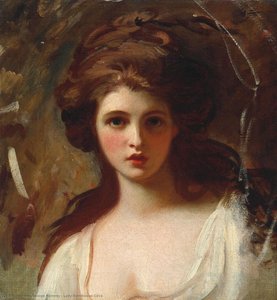
Romney’s life took a dramatic turn with his encounter with Emma Hart, later known as Lady Hamilton, in 1782. She became not only his most celebrated model but also his muse, profoundly influencing his artistic output. Emma's beauty, intelligence, and theatrical flair captivated Romney, inspiring a series of portraits that explored themes of classical mythology, dramatic narrative, and feminine grace. He depicted her in various roles – as a spinner, as the tragic Miranda from Shakespeare’s *The Tempest*, and in numerous allegorical scenes that showcased her expressive range. These works demonstrate Romney's willingness to experiment with composition and symbolism, moving beyond conventional portraiture into more imaginative territory. The Tempest series, in particular, reveals a Romantic sensibility at play, anticipating the emotional intensity of later artists. The relationship was intense and all-consuming for Romney, though ultimately unfulfilled romantically; Emma eventually became the mistress of Lord Nelson, a union that cemented her place in history. Nevertheless, their artistic collaboration left an indelible mark on both their lives and produced some of Romney’s most enduring masterpieces. It is said he painted over 80 portraits of her, each revealing a different facet of her captivating personality.

Legacy and Historical Significance

George Romney's impact on British portraiture is undeniable. He helped shape the aesthetic sensibilities of the late 18th century, contributing to a style that emphasized elegance, psychological depth, and artistic flair. His portraits offer invaluable insights into the lives and tastes of the British elite during his time, providing a visual record of their social customs, fashion, and intellectual pursuits. While he faced periods of self-doubt and struggled with mental health issues in later life – leading to a decline in productivity before his death in Kendal in 1802 – his legacy endures through the hundreds of paintings and drawings that remain as testaments to his skill. His work continues to be admired for its technical brilliance and emotional resonance. Romney’s influence can be seen in the portraits of subsequent generations of British artists. The enduring fascination with his relationship with Emma Hamilton adds another layer of intrigue to his story. He remains a significant figure in the history of art, a master portraitist who captured the spirit of an age and left behind a body of work that continues to captivate and inspire. Romney’s portraits are not merely representations of individuals; they are windows into a vanished world.
George Romney

George Romney

1734 - 1802 , United Kingdom

Quick Facts

  • Artistic Movement Or Style: Portraiture, Romanticism
  • Artists Or Movements Influenced By This Artist: ['British portraitists']
  • Artists Who Influenced This Artist:
    • Christopher Steele
    • Carle Vanloo
    • Raphael
    • Titian
    • Correggio
  • Date Of Birth: Dec 15, 1734
  • Date Of Death: Nov 15, 1802
  • Full Name: George Romney
  • Nationality: British
  • Notable Artworks:
    • Peter and James Romney
    • Portrait of G. Cowper
    • The Death of General Wolfe
    • Mrs. Carwardine & Son
  • Place Of Birth: Dalton-in-Furness, UK
Explore artworks organized by themes, styles, and characteristics.