x


Hand-painted oil on canvas in your size and frame, made to order by our artists.





























Pick from our preset sizes that match the artwork's original proportions.

You may enter your own dimensions to fit a specific frame or space. If your selected size does not match the original image's proportions, we will either crop the artwork or extend the painting with additional hand-painted elements. A digital mockup will be sent for your approval before production begins.
Please note that the on-screen preview does not reflect the actual cropping or extension. Only the mockup will accurately show the final composition.
While custom sizes are available, we recommend selecting a dimension from the predefined list to preserve the original proportions.
Worldwide Delivery () in 3/4 weeks instead of standard 5 weeks. (18 July). No compromise on quality.


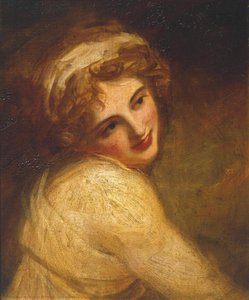
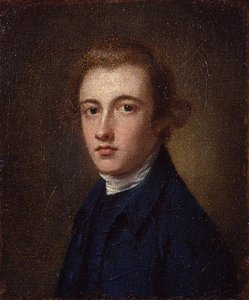
Tom Hayley as Robin Goodfellow
Reproduction Size
George Romney's "Tom Hayley as Robin Goodfellow," painted in 1789, isn’t merely a portrait; it’s a carefully constructed tableau of folklore and Romantic sensibility. The subject, a young man with an arresting gaze and a cascade of curly hair, is rendered not as a static representation but as a figure deeply immersed in contemplation – his hands gently resting on his face, suggesting both vulnerability and profound thought. This isn't the polished formality typical of many aristocratic portraits of the era; instead, Romney imbues the scene with an intimate, almost conspiratorial quality, inviting the viewer into a private moment.
The painting’s setting is deliberately ambiguous, shrouded in a warm, swirling background that hints at both earthly and ethereal realms. The use of muted golds, browns, and soft greens creates a sense of atmospheric depth, drawing attention to the central figure while simultaneously suggesting a world beyond the immediate frame. This deliberate blurring of boundaries – between reality and imagination, the tangible and the intangible – is characteristic of the Romantic movement, which sought to capture the sublime beauty of nature and the power of emotion.
Romney's skill lies not just in his ability to capture likeness but in his masterful manipulation of light and shadow. He employs a technique reminiscent of Rembrandt, utilizing chiaroscuro – dramatic contrasts between light and dark – to sculpt the figure’s form and create a sense of three-dimensionality. Notice how the light catches the curve of his cheekbone or illuminates the texture of his hair, while the surrounding darkness subtly defines his features and adds depth to the composition. This careful attention to detail, combined with his loose brushwork, gives the painting a remarkably lifelike quality, yet simultaneously retains an element of artistic freedom.
The choice of oil paint on canvas is crucial to Romney’s style. Oil allowed for layering and blending, enabling him to achieve the subtle gradations of tone and color that define his portraits. The texture of the paint itself contributes to the painting's richness and depth, adding a tactile quality to the image.
The title “Tom Hayley as Robin Goodfellow” immediately connects the portrait to English folklore. Robin Goodfellow, also known as Puck in Shakespeare’s *A Midsummer Night's Dream*, is a mischievous sprite and trickster figure associated with the wildness of nature and the unpredictable forces of magic. Romney’s depiction suggests that Tom Hayley embodies this spirit – not through overt displays of mischief, but through an air of quiet contemplation and a connection to something beyond the ordinary.
The wreath or crown of leaves adorning his head further reinforces this association with nature and folklore. It symbolizes his connection to the wild, untamed aspects of human experience, suggesting that he is both grounded in reality and attuned to the mysteries of the unseen world. The painting, therefore, becomes a meditation on the interplay between reason and imagination, order and chaos.
“Tom Hayley as Robin Goodfellow” stands as a pivotal work in George Romney’s oeuvre and a quintessential example of late 18th-century portraiture. It reflects the growing influence of the Romantic movement, which emphasized emotion, imagination, and the beauty of nature. Romney's ability to capture not just the outward appearance but also the inner life of his subjects—his thoughtful gaze, his quiet demeanor—elevates this painting beyond a simple likeness into a profound exploration of human character and experience. Reproductions of this captivating work continue to resonate with viewers today, offering a glimpse into a world where folklore, art, and the spirit of Romanticism converge.


1734 - 1802 , United Kingdom

Explore the captivating world of Anne-Louis Girodet, a pivotal figure bridging Neoclassicism & Romanticism. Discover his masterpieces and unique artistic vision with Most-Famous-Paintings.
Journey through the National Gallery London's 25 most iconic paintings! Explore Van Gogh, Monet, Rembrandt & more. Discover art history, techniques & find museum-quality reproductions for your home decor on Most-Famous-Paintings.com.

Discover the perfect artistic style for your wedding portrait! Explore realism, impressionism & more. Commission a timeless heirloom with expert guidance. Learn from .

Explore the life & art of George Romney, leading portraitist of Georgian England. Discover his style, famous patrons like Emma Hamilton, and legacy in British society. Expert insights for collectors.

Explore 10 legendary 'Acrylic on Paper' masterpieces by artists like Helen Frankenthaler & Gerhard Richter. Discover abstract expressionism, color field painting & the evolution of modern art. Find museum-quality reproductions for your home at Most-Famous-Paintings.com.


Stay updated with the latest art news, exclusive offers, and decoration ideas.
Tell us about your project and our art experts will provide you with 3 personalized art suggestions.
Let Us Curate 3 Options Just for You - Free!


 Buy print
 Send
Send Share
Share
 Details

 Download
 Similars
 X-Ray
X-Ray Diaporama


 Read More







 Glass option is only available in size under 110 CM